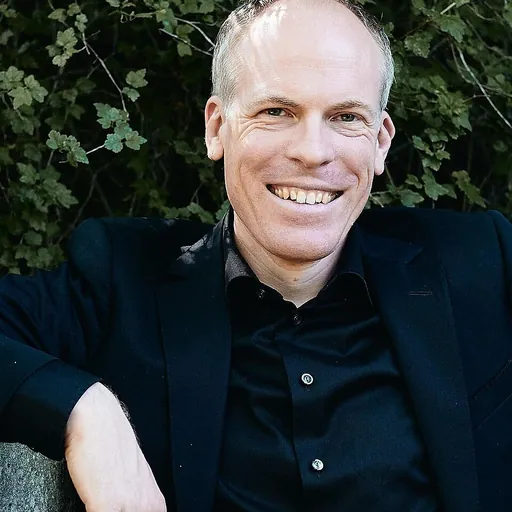
About Bernhard Ruchti
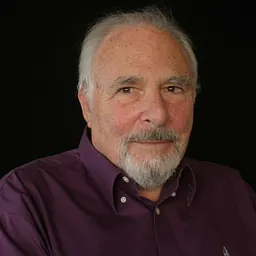
Born 1974. Bernhard Ruchti is a Swiss pianist, organist, composer and musicologist.
Bernhard Ruchti (born in 1974 in Berkeley, California, US) is a Swiss pianist, organist, composer and music researcher.
Life Ruchti studied piano with Eckart Heiligers and organ with Rudolf Scheidegger, Stefan Johannes Bleicher, and Bernhard Haas. Since 2013, he has been organist at the ev.-ref. Stadtkirche St. Laurenzen in St. Gallen.
During his time as a student he became interested in the performance practice and playing technique of the 19th century. Inspired by his studies with Bernhard Haas, he published an essay "Thoughts on the stimulation of organ playing by a pianistic playing technique" in 2006.
In 2010 and 2011, Ruchti spent a sabbatical in the United States and lived in San Francisco for 10 months. He began composing music and wrote a number of piano pieces, including "Five Songs of The Wind." These were released on his album "Liszt & The Black Hills" in 2012. He released another album of his own works ("Echoes from Chrysospilia") in 2017.
In 2017 he was awarded by the city of St. Gallen with the Förderpreis Kultur.
In 2018, the world premiere of his choral cantata "Auf die Tiefe: ein irdisch Fahrtenlied" on a text by Bernd Gonner took place. The same year, he began his "A Tempo Project".
The "A Tempo Project" Since 2018, Ruchti has been conducting his "A Tempo Project," The focus is on Franz Liszt's performance practice.
His work started with the exploration of the academically controversial "double beat theory" by Willem Retze Talsma, which postulates an alternative use of the metronome and subsequently a much slower interpretation of classical music. Ruchti sees a historical justification for the idea of “double-beat” but takes a critical distance to the double-beat-theory itself. He uses it for the reinterpretation of classical works such as Frédéric Chopin's Études or Robert Schumann’s Fantasy in C-major.
In 2021, Ruchti published a book on the performance practice of Franz Liszt's Fantasy and Fugue on Ad nos, ad salutarem undam for organ. The book presents the history surrounding the composition, premiere, and reception of the work in the 19th century. It provides insight into Liszt's performance practices, specifically about tempo. The starting point is the duration of the work of 45 minutes documented at the time it was first performed. This duration differs from modern interpretations by more than 15 minutes. Ruchti also recorded the work on the Ladegast organ at Merseburg Cathedral, on which Liszt premiered the work.
Starting with Volume V of the A Tempo Project, Ruchti does not explore the “double-beat-theory” anymore but turns more to the musical aspects of tempo through historically documented duration, with works by Franz Liszt and Ludwig van Beethoven.
The music at the City Church of St. Laurenzen and the development of the Surround Organ Since 2014, Ruchti has been the head of the musical activities at St. Laurenzen church.
Starting in 2016, Ruchti developed the idea of a surround organ for the Stadtkirche St. Laurenzen in St. Gallen. The existing organ in the church by Orgelbau Kuhn (III/Ped, 45 stops) is supplemented by three new pipe locations corresponding to the three main timbres of an organ (principals, flutes, strings). These new pipe divisions are located on the three galleries of the church, creating a surround effect. The new organ, inaugurated in September 2023, was built by Orgelbau Goll from Lucerne, Switzerland.
Discography 2012: Liszt & The Black Hills 2017: Echoes from Chrysospilia 2019: Beethoven A Tempo I (Piano Sonatas Op. 2 No. 1 and Op. 110) 2019: Liszt A Tempo I (Fantasy and Fugue on Ad nos, ad salutarem undam) 2020: Schumann A Tempo (Fantasy in C major Op. 17) 2021: Chopin A Tempo (Études Op. 10) 2021: Liszt A Tempo II (Années de Pèlerinage, Italie) 2022: Beethoven A Tempo II ("Hammerklavier Sonata" Op. 106) 2023: Beethoven A Tempo III (Piano Sonatas Op. 13, 27 and 90) 2023: Liszt A Tempo III (Piano Sonata in B minor)
Don’t just read it —
keep it.
Full-length biographies made to live with: read them, listen on the way to work, watch them tonight.
- E-book
- Audio
- Video
Instant download · yours to keep · every purchase keeps this site free
Important facts
People in Bernhard Ruchti's life
Named in this biography and alive at the same time

Related people
Same field, nearest in time



Contemporaries
People whose lives overlapped Bernhard Ruchti's




Frequently asked questions
Who is Bernhard Ruchti?
Swiss pianist, composer and organist
When was Bernhard Ruchti born?
Bernhard Ruchti was born in 1974 in Berkeley.
What is Bernhard Ruchti's occupation?
Bernhard Ruchti is a pianist, organist, composer and musicologist.
What nationality is Bernhard Ruchti?
Bernhard Ruchti is Swiss.
Sources & further reading
Cite this page
APA: Biography.guide. (2026). Bernhard Ruchti. https://biography.guide/bernhard-ruchti/
MLA: "Bernhard Ruchti." Biography.guide, https://biography.guide/bernhard-ruchti/.
Chicago: "Bernhard Ruchti." Biography.guide. https://biography.guide/bernhard-ruchti/.
Data last updated: 2026-09-22 · Spot an error? Report a correction.
Portrait: Wikimedia Commons · author & licence
Page generated 2026-09-27 05:04 UTC