
About Bernardo Pinheiro Correia de Melo
Lived 1855 – 1911 (aged 55). Bernardo Pinheiro Correia de Melo was a Portuguese military officer, writer and diplomat.
Bernardo Pinheiro Correia de Melo, first Count of Arnoso, (1855 –1911), was a Portuguese writer and personal secretary to King Carlos.
Early life Bernardo Pinheiro Correia de Melo was born in Guimarães, Portugal on 27 May 1855. He was the second son of João Machado Pinheiro Correia de Melo, 1st Viscount of Pindela, and of Eulália Estelita de Freitas Rangel de Quadros. At the age of seven he was sent to the Portuguese capital of Lisbon to stay with family friends and study at the English College, a school attached to a Catholic monastery. He studied mathematics at the University of Coimbra, completing his studies at the Army School. He joined the army in November 1871, eventually reaching the rank of Brigadier General in 1908. For much of the time he was Chief Officer of the Royal House under Kings D. Luiz I and King Carlos.
Career In 1887, he was appointed Secretary of the Extraordinary Embassy of Portugal to the Imperial Court of Beijing. He took the opportunity to visit many places, both in China and during his journeys there and back, including Egypt, Singapore, Macau, Hong Kong, Shanghai, Tianjin, Japan and the United States. Using the pseudonym of Bernardo Pindela, his impressions were initially published in the Revista de Portugal, founded and directed by the novelist José Maria de Eça de Queirós and, later, in a volume entitled Jornadas pelo Mundo (Journeys around the World), published in Porto, by Livraria Magalhães & Moniz, in 1895. Correia de Melo also wrote for other magazines such as A Imprensa, A Semana de Lisboa, and Brasil-Portugal. De Braço Dado (Arm in Arm - 1894) in collaboration with his brother-in-law the Count of Sabugosa. Jornadas pelo Mundo, 1895. Companhia Portugueza Editora, Porto. (Published in the name of Count of Arnoso). O Talisman (1897) A Primeira Nuvem (The First Cloud – 1902), play. O Suave Milagre (The Mild Miracle – 1902), in collaboration with Alberto de Oliveira, an adaptation of a short story by Eça de Queirós, for which he was rewarded by King Carlos with one of his own watercolours, depicting a scene from the play. Elogio do Conde de Ficalho (In Praise of the Count of Ficalho -1903). Vila Viçosa, a chapter of Art and Nature in Portugal, 1904. Justice! His speech to Parliament following the Regicide, 1909.
Don’t just read it —
keep it.
Full-length biographies made to live with: read them, listen on the way to work, watch them tonight.
- E-book
- Audio
- Video
Instant download · yours to keep · every purchase keeps this site free
Important facts
Related people
Same field, nearest in time
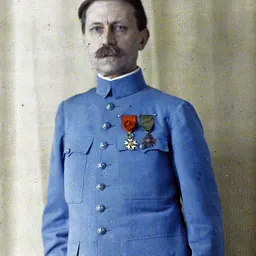





Contemporaries
People whose lives overlapped Bernardo Pinheiro Correia de Melo's
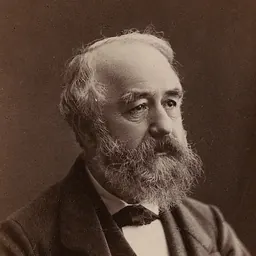



Frequently asked questions
Who was Bernardo Pinheiro Correia de Melo?
Portuguese writer (1855-1911)
When was Bernardo Pinheiro Correia de Melo born?
Bernardo Pinheiro Correia de Melo was born on 27 May 1855 in Guimarães.
When did Bernardo Pinheiro Correia de Melo die?
Bernardo Pinheiro Correia de Melo died on 21 May 1911 in Vila Nova de Famalicão.
What was Bernardo Pinheiro Correia de Melo's occupation?
Bernardo Pinheiro Correia de Melo was a military officer, writer and diplomat.
What nationality was Bernardo Pinheiro Correia de Melo?
Bernardo Pinheiro Correia de Melo was Portuguese.
Sources & further reading
· Wikipedia: Bernardo Pinheiro Correia de Melo
· DBpedia: Bernardo Pinheiro Correia de Melo
Cite this page
APA: Biography.guide. (2026). Bernardo Pinheiro Correia de Melo. https://biography.guide/bernardo-pinheiro-correia-de-melo/
MLA: "Bernardo Pinheiro Correia de Melo." Biography.guide, https://biography.guide/bernardo-pinheiro-correia-de-melo/.
Chicago: "Bernardo Pinheiro Correia de Melo." Biography.guide. https://biography.guide/bernardo-pinheiro-correia-de-melo/.
Data last updated: 2026-09-26 · Spot an error? Report a correction.
Page generated 2026-09-27 05:13 UTC