
About Bernard Haisch
Born 2000. Bernard Haisch is an American physicist, astrophysicist, astronomer, ufologist and editor.
Bernard Michael Haisch is a German-born American astrophysicist who has researched solar-stellar astrophysics, quantum electrodynamics (QED), observational X-ray and ultraviolet astronomy, and stochastic electrodynamics. Haisch, with Alfonso Rueda, developed a quantum vacuum inertia hypothesis proposing that the electromagnetic zero-point field contributes to inertial mass.
In 2002, Haisch became Chief Science Officer of ManyOne Networks. Since 2004, he has served as president of the Digital Universe Foundation, which aimed to create a peer-reviewed online encyclopedia as an alternative to Wikipedia. In 2006, Haisch published The God Theory: Universes, Zero-Point Fields and What's Behind It All, proposing that consciousness creates matter rather than vice versa, and that discoveries in quantum physics point to an underlying intelligence in the universe. Haisch attributes his spiritual interests to his studies at the Latin School of Indianapolis and the Saint Meinrad Seminary and School of Theology.
Career Haisch was born in Stuttgart, Germany, he spent a year in a minor seminary and earned a Ph.D. in astronomy from the University of Wisconsin–Madison in 1975. He then spent three years as a postdoctoral fellow at the Joint Institute for Laboratory Astrophysics at the University of Colorado at Boulder.
Haisch has worked at the Solar & Astrophysics Laboratory at Lockheed Martin in Palo Alto, California and as deputy director of the Center for Extreme Ultraviolet Astrophysics Laboratory at the University of California, Berkeley.
In 1999, Haisch founded the California Institute for Physics and Astrophysics in Palo Alto, California, an organization mainly devoted to studying the electromagnetic quantum vacuum and funded by private philanthropic money. The institute formerly employed five full-time physicists researching string theory, general relativity and stochastic electrodynamics. Haisch served as the institute's director from 1999 until 2002.
In 2002, Haisch became the Chief Science Officer of ManyOne Networks.
Research Haisch has published over 130 scientific papers. He served as a scientific editor of the Astrophysical Journal from 1993-2002, He has been listed in American Men & Women of Science under general physics. The inertialess "SHARP drive" in Arthur C. Clarke's 3001: The Final Odyssey was named for Andrei Sakharov, Haisch, Rueda, and Harold E. Puthoff.
In 2006, he proposed that quantum fields that pervade all of space could give rise to consciousness in systems of sufficient complexity, a view inspired in part by the ideas of physicist Roger Penrose.
Theological and philosophical writings Haisch was a Catholic seminarian in the past. Haisch's writings on science and theology propose that scientific and spiritual worldviews can be reconciled through an understanding of the universe as both physical and conscious. His 2006 book The God Theory: Universes, Zero-Point Fields, and What's Behind It All presents a model in which consciousness is a fundamental aspect of reality rather than an accidental byproduct of matter.
In the follow-up, The Purpose-Guided Universe: Believing in Einstein, Darwin, and God (2010), Haisch argues for a synthesis of scientific discovery and spiritual understanding, maintaining that belief in a universal intelligence is compatible with evolutionary and cosmological science. Reviewer Julia Ann Charpentier described the book as “an enlightening exploration of creation and the human being’s existence on Earth” that bridges the perceived gap between religion and science.
Haisch's works often explore ideas related to panpsychism and the fine-tuning of physical constants, engaging with debates about the role of consciousness in the cosmos and the philosophical implications of quantum physics.
Selected publications
Don’t just read it —
keep it.
Full-length biographies made to live with: read them, listen on the way to work, watch them tonight.
- E-book
- Audio
- Video
Instant download · yours to keep · every purchase keeps this site free
Important facts
People in Bernard Haisch's life
Named in this biography and alive at the same time
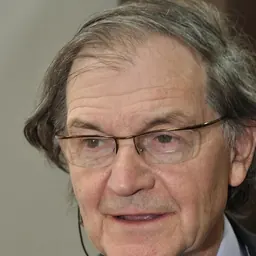



Related people
Same field, nearest in time




Contemporaries
People whose lives overlapped Bernard Haisch's
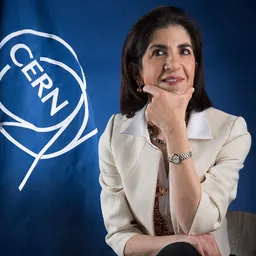




Frequently asked questions
Who is Bernard Haisch?
American astrophysicist
When was Bernard Haisch born?
Bernard Haisch was born in 2000 in Stuttgart.
What is Bernard Haisch's occupation?
Bernard Haisch is a physicist, astrophysicist, astronomer, ufologist and editor.
What nationality is Bernard Haisch?
Bernard Haisch is American.
Sources & further reading
Cite this page
APA: Biography.guide. (2026). Bernard Haisch. https://biography.guide/bernard-haisch/
MLA: "Bernard Haisch." Biography.guide, https://biography.guide/bernard-haisch/.
Chicago: "Bernard Haisch." Biography.guide. https://biography.guide/bernard-haisch/.
Data last updated: 2026-09-20 · Spot an error? Report a correction.
Page generated 2026-09-27 05:30 UTC