
About Bernard DeVoto
Lived 1897 – 1955 (aged 58). Bernard DeVoto was an American historian and writer.
Bernard Augustine DeVoto (January 11, 1897 – November 13, 1955) was an American historian, conservationist, essayist, columnist, teacher, editor, and reviewer. He was the author of a series of Pulitzer-Prize-winning popular histories of the American West and for many years wrote The Easy Chair, an influential column in Harper's Magazine. DeVoto also wrote several well-regarded novels and during the 1950s served as a speech-writer for Adlai Stevenson. His friend and biographer, Wallace Stegner described DeVoto as "flawed, brilliant, provocative, outrageous... often wrong, often spectacularly right, always stimulating, sometimes infuriating, and never, never dull."
Early life and education
DeVoto was born on January 11, 1897, in Ogden, Utah, to Florian and Rhoda DeVoto. DeVoto's father was a Catholic of Italian descent, an educated, impoverished man; his mother was the daughter of a Mormon farmer; and their son was not accepted by either community. DeVoto attended Ogden High School and worked briefly at the Ogden Standard after graduating.
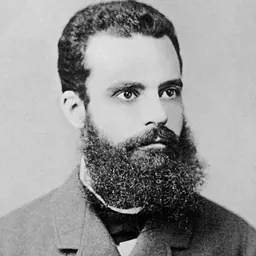
Career DeVoto began his career in 1922 as an English instructor at Northwestern University. He also began publishing articles and novels (under the pseudonyms "John August" and "Cady Hewes"). In 1927 he resigned from Northwestern. He and his wife Avis moved to Massachusetts in order to attempt to earn his living from writing along with part-time instructing at Harvard University. (His ambition of attaining a permanent position at Harvard was never realized.) He also edited the Harvard Graduates' Magazine from 1930 to 1932. A series of articles he published in Harper's Magazine is credited with bringing the influential work of Italian economist Vilfredo Pareto to wide audiences. This led to a regular Harper's column, "The Easy Chair," which DeVoto wrote from 1935 until his death.
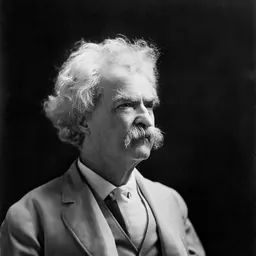
DeVoto was also an authority on Mark Twain and served as a curator and editor for Twain's papers; this work culminated in several publications, including the best-selling Letters From the Earth, which appeared only in 1962. From 1936 to 1938, he worked in New York City, where he was editor of the Saturday Review of Literature, after which he returned to Massachusetts. According to DeVoto, Wolfe's writing was "hacked and shaped and compressed into something resembling a novel by [his editor] Mr. Perkins and the assembly-line at Scribners." Although in passing acknowledging Wolfe's genius, DeVoto excoriated his lack of artistry, "Mr. Wolfe ... has written some of the finest fiction in our day. But a great part of what he writes is not fiction at all: it is only material with which he has struggled but which has defeated him... Until Mr. Wolfe develops more craftsmanship, he will not be the important novelist he is now widely accepted as being." DeVoto's essay was a decisive factor in Wolfe's subsequent cutting ties with Scribners and editor Maxwell Perkins shortly before his death in 1938 and had a devastating effect on Wolfe's posthumous literary reputation.
The decade between 1943 and 1953 saw the completion of what John L. Thomas called DeVoto's "magnificent trilogy of the discovery, settling, and exploitation of the West": The Year of Decision: 1846 (1943); Across the Wide Missouri (1947); The Course of Empire (1952). Across the Wide Missouri was the recipient of the Pulitzer Prize for History and the inaugural Bancroft Prize in 1948 and The Course of Empire received National Book Award for Nonfiction in 1953. DeVoto was the first Utahn to win a Pulitzer.
Accusations of Communism As early as 1938, when the Dies Committee was investigating radical professors and a Soviet takeover of America, DeVoto "mocked the conspiracy nuts" and yet was called "fascist" by the liberal critics. In the 1950s, he felt "a Communist or two on any faculty constituted a far smaller danger than the procedures that would be necessary to keep them off." He also opposed the outlawing of the Communist Party USA. "Historian Bernard DeVoto spoke for many liberals" in disdaining "the prominence ex-communists had gained in public life during the Cold War." He argued that despite the new-found patriotism of conservative ex-Communists, their commitments to absolutism and authoritarianism remained the same and continued to threaten freedom.
In April 1953, DeVoto's Easy Chair column criticized "The Case of the Censorious Congressman" during Senate Internal Security Subcommittee and House Un-American Activities Committee hearings of teachers. U.S. Representative Carroll D. Kearns called DeVoto "pro-Communist."
DeVoto died on November 13, 1955, at age 58.
Works
The Crooked Mile (1924) novel The Chariot of Fire (1926) novel (1928) novel Mark Twain's America (1932) We Accept With Pleasure (1934) novel Genius is not Enough (1936) criticism Forays and Rebuttals (1936) essays Mark Twain, Letters from the Earth (1938), editor Troubled Star, by John August (1939) novel Rain Before Seven, by John August (1940) novel Mark Twain in Eruption (1940), editor Minority Report (1940) essays Mark Twain at Work (1942), editor Advance Agent, by John August (1942) novel (1942) The Literary Fallacy (1944), criticism The Portable Mark Twain (1946, editor) Across the Wide Missouri, With an Account of the Discovery of the Miller Collection (1947) [Pulitzer Prize winner] Mountain Time (1946) novel The Hour: A Cocktail Manifesto (1951) The World of Fiction (1950) The Course of Empire (1952) [National Book Award] The Journals of Lewis and Clark (1953, editor) The Easy Chair (1955) essays Women and Children First by Cady Hewes (1956) essays The Letters of Bernard DeVoto (1975, edited by Wallace Stegner) The Western Paradox (2001, edited by Douglas Brinkley and Patricia Nelson Limerick) DeVoto's West: History, Conservation, and the Public Good (2002, edited by Edward K. Muller) The Selected Letters of Bernard DeVoto and Katharine Sterne (2012, edited by Mark DeVoto)
Don’t just read it —
keep it.
Full-length biographies made to live with: read them, listen on the way to work, watch them tonight.
- E-book
- Audio
- Video
Instant download · yours to keep · every purchase keeps this site free
Important facts
Family & relationships
People in Bernard DeVoto's life
Named in this biography and alive at the same time



Related people
Same field, nearest in time
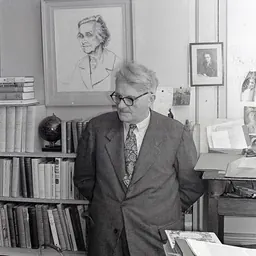

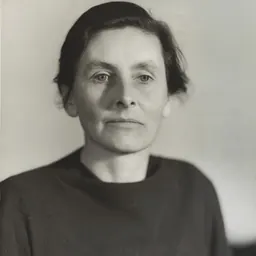
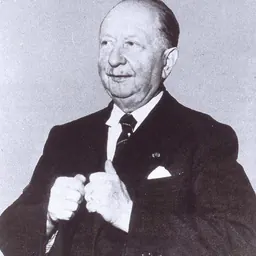
Contemporaries
People whose lives overlapped Bernard DeVoto's

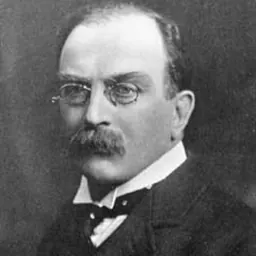


Frequently asked questions
Who was Bernard DeVoto?
American historian and author (1897–1955)
When was Bernard DeVoto born?
Bernard DeVoto was born on 11 January 1897 in Ogden.
When did Bernard DeVoto die?
Bernard DeVoto died on 13 November 1955 in New York City.
What was Bernard DeVoto's occupation?
Bernard DeVoto was a historian and writer.
What nationality was Bernard DeVoto?
Bernard DeVoto was American.
Sources & further reading
Cite this page
APA: Biography.guide. (2026). Bernard DeVoto. https://biography.guide/bernard-devoto/
MLA: "Bernard DeVoto." Biography.guide, https://biography.guide/bernard-devoto/.
Chicago: "Bernard DeVoto." Biography.guide. https://biography.guide/bernard-devoto/.
Data last updated: 2026-09-20 · Spot an error? Report a correction.
Page generated 2026-09-27 04:59 UTC