
About Benny Tai
Born 1964. Benny Tai is a Chinese docent, politician, teacher and jurist.
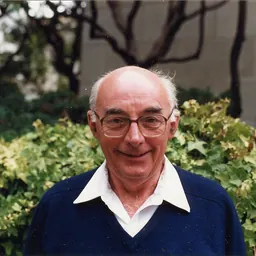
Benny Tai Yiu-ting (; born 12 July 1964) is a Hong Kong legal scholar, political figure, and democracy activist. He was an associate professor of law at the University of Hong Kong.
From 2013, Tai launched and is known for his initiation of the Occupy Central with Love and Peace, as he considered Hong Kong to lack "true universal suffrage" and should participate in an Occupy movement to win universal suffrage in the 2017 Hong Kong Chief Executive election. His suggestion ultimately resulted in the eruption of the Umbrella Movement the following year, as a result of which he was found guilty of "conspiracy to commit public nuisance" and "inciting others to commit public nuisance" and sentenced to six months in prison. Citing this conviction, in July 2020, the University of Hong Kong's governing council controversially fired Tai.
After the protests, Tai repeatedly campaigned to pressure for greater electoral reforms in Hong Kong, launching "Operation ThunderGo" in the 2016 Legislative Council election, a "smart voter" mechanism aiming at getting the most pro-democracy candidates elected to the Legislative Council. He also initiated "Project Storm" for the pro-democrats to win the majority in the 2019 District Council elections.
On 6 January 2021, Tai was arrested along with 54 other pro-democracy campaigners, activists, social workers, and former legislators on suspicion of "subversion of state power" under the national security law for organising the 2020 pro-democracy primaries. In a national security trial in 2024, a Hong Kong court sentenced Tai to 10 years in jail for subversion.
Academic background Tai was educated at the Diocesan Boys' School and then graduated from the University of Hong Kong with a law degree and a Postgraduate Certificate in Laws, followed by a Master of Laws from the London School of Economics. His classmates included Rimsky Yuen and Keith Yeung.
He joined the Faculty of Law of the University of Hong Kong in 1990, became an assistant professor in 1991 and an associate professor in 2001. He was also the Associate Dean of the law faculty from 2000 to 2008.
Tai has been active in promoting civic education in the community, having served on the Hong Kong Basic Law Consultative Committee as a student representative from 1988 to 1990 and a member of the Committee on the Promotion of Civil Education and the Bilingual Laws Advisory Committee from 1995 to 2003. He was also a part-time member of the Hong Kong government's Central Policy Unit in 2007.
He and sociology scholar Chan Kin-man and pro-democracy priest Reverend Chu Yiu-ming founded the Occupy Central with Love and Peace (OCLP) on 27 March 2013. The plan was supported by the pan-democracy camp and rounds of deliberations were held among the Occupy participants from 2013 to 2014 before an referendum on the electoral reform proposal in June 2014. The plan was strongly condemned by the Beijing authorities.
In response to the decision on constitutional reform proposal of the National People's Congress Standing Committee (NPCSC) which set the restrictive framework on the electoral method of the 2017 Chief Executive election, Tai announced the official start of the Occupy Central with Love and Peace civil disobedience campaign on 28 September 2014 after the student activists' storming of the forecourt of the government headquarters led by Joshua Wong on the last day of the class boycott campaign.
As the occupation ended its first month, Tai and Chan Kin-man resumed their teaching duties at their respective universities and OCLP handed over the command of its medic, marshal and supplies teams to the student groups, the Hong Kong Federation of Students and Scholarism. On 3 December 2014, the Occupy Central trio, along with 62 other key figures turned themselves in to the police, admitting taking part in an unauthorised assembly as originally planned. They declared that they did so to fulfil their promise to bear legal responsibility and uphold the rule of law, as well as to affirm their principles of love and peace.
In March 2017, he and eight other Occupy leaders were arrested on the rare charges of conspiracy to cause public nuisance, inciting others to cause public nuisance, and inciting people to incite others to cause public nuisance. University of Hong Kong principal law lecturer Eric Cheung Tat-ming and criminal defence lawyer Jonathan Midgley described the charges as "not at all common".
In April 2019, Tai was found guilty of conspiracy to cause public nuisance and inciting others to cause public nuisance. For the functional constituencies, Tai suggested that besides retaining the current six trade-based functional constituencies and three territory-wide directly elected District Council (Second) super seats, the camp needed to target three additional seats in Medical, Engineering and Architectural, Surveying, Planning and Landscape.
Tai also worked on a "smart voters" system involving 25,000 voters who would indicate their preferences on an interactive poll and would be informed of the popularity of candidates according to polls the day before the official vote and which would be updated through exit polling two and a half hours before polls closed. Such "smart voters" would delay voting until 8 pm and then be signalled to support candidates whose numbers were weaker instead of wasting votes on stronger candidates who were already through.
Tai's Operation ThunderGo was blamed as he released on the election day a list of recommended pro-democratic candidates based on pre-polling. It drew a large number of voters to vote for the candidates who were on the brink of losing as shown in the polls from other candidates, which resulted in the high votes received by fresh faces Eddie Chu, Lau Siu-lai and Nathan Law at other veteran democrats' expenses including Lee Cheuk-yan, Cyd Ho and Frederick Fung who failed to retain their seats.
Remarks on Hong Kong independence
In a seminar in Taipei organised by the Taiwan Youth Anti-Communist Corps in March 2018, Tai was recorded making an argument that following the end of "dictatorship" in China, the country's various ethnic groups could exercise their right to self-determination and decide how they could link up with each other. "We could consider going independent, being part of a federal system or a confederation system similar to that of the European Union," he said. The Hong Kong and Macau Affairs Office (HKMAO) and the Liaison Office also issued strongly worded comments condemning Tai, stating that a "small number of people in Hong Kong have colluded with external separatist forces" to advocate the city's independence. "They have fully exposed their attempts to split the country and violated the national constitution, the Hong Kong Basic Law, and the relevant laws in Hong Kong. They are challenging the bottom line of 'one country, two systems'. Such activities must not be ignored or tolerated." Hong Kong member of the National People's Congress Standing Committee (NPCSC) Tam Yiu-chung asked if it was still appropriate for Tai to keep his job at HKU. Tai responded by saying his comments were "imaginations of the future", which in his opinion did not violate any criminal laws. He also added that he does not support independence. He warned that a "Cultural Revolution-style denouncement could have started against me. It will quickly spread to affect all Hong Kong people." He expressed fears for his personal safety as he suspected that he was being followed by officers from "powerful" mainland agencies who may be posing as journalists, and that the police were unable to help him.
Project Storm
In April 2017, Tai proposed the "Project Storm" to win the majority of the District Council seats for the pro-democrats in the 2019 Hong Kong local elections. He stated that by winning a majority of the some 400 District Council seats, pro-democrats could gain an additional 117 seats of the District Council subsectors on the 1,200-member Election Committee which elects the Chief Executive. Tai believed that by making it harder for Beijing to control the Chief Executive election, it would compel Beijing to restart the stalled political reform after its restrictive proposal was voted down in 2015.
Arrest for role in 2020 democratic primaries
On 6 January 2021, Tai was among 55 members of the pro-democratic camp who were arrested under the national security law, specifically its provision regarding subversion. The group stood accused of organising and participating in unofficial primary elections held by the camp in July 2020. Tai was released on bail on 7 January. In 2024, following a national security trial in Hong Kong, he was sentenced to 10 years in prison for "subversion".
Personal life Benny Tai is married with one daughter and two sons.
Don’t just read it —
keep it.
Full-length biographies made to live with: read them, listen on the way to work, watch them tonight.
- E-book
- Audio
- Video
Instant download · yours to keep · every purchase keeps this site free
Important facts
People in Benny Tai's life
Named in this biography and alive at the same time



Related people
Same field, nearest in time




Contemporaries
People whose lives overlapped Benny Tai's


Frequently asked questions
Who is Benny Tai?
Hong Kong activist and writer
When was Benny Tai born?
Benny Tai was born on 12 July 1964 in British Hong Kong.
What is Benny Tai's occupation?
Benny Tai is a docent, politician, teacher and jurist.
What nationality is Benny Tai?
Benny Tai is Chinese.
Sources & further reading
Cite this page
APA: Biography.guide. (2026). Benny Tai. https://biography.guide/benny-tai/
MLA: "Benny Tai." Biography.guide, https://biography.guide/benny-tai/.
Chicago: "Benny Tai." Biography.guide. https://biography.guide/benny-tai/.
Data last updated: 2026-09-20 · Spot an error? Report a correction.
Page generated 2026-09-27 05:33 UTC