
About Benjamin Willis
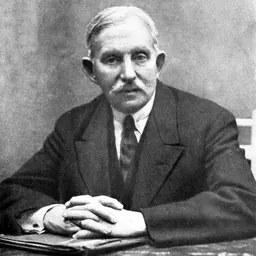
Lived 1901 – 1988 (aged 86). Benjamin Willis was an American educator.
Benjamin Coppage Willis (December 23, 1901 – August 27, 1988) was an educator and school administrator who served as superintendent of various school districts, most notably
Early career Willis began his career as a teacher and principal of a four-room schoolhouse in Henderson, Maryland in 1922 and 1923. From 1932 through 1934, he served as a principal in Cantonsville High School. He departed this position in July 1947 in order to become superintendent in Yonkers, New York.
His tenure here, together with his previous stint as superintendent in Caroline County, helped to earn him a reputation as a leader in the field of education.
Superintendent of Yonkers Public Schools On July 1, 1947, Willis became superintendent Yonkers Public Schools,
In 1953, he gave his support to efforts by the Board of Regents of the New York State Education Department to create educational television channels. He gave his support amid these efforts having faced negative allegations that the channels would be used for propaganda, mind control, and would function as state media.
He took an unpopular position in reorganizing the city's schools by proposing the closure of two long-standing high schools, and the repurposing of their structures. Despite many residents' dislike of this proposal, the local Urban League supported it, and it was ultimately implemented.
Willis was given high regard during his stint in Buffalo, and his tenure was seen as successful.
Superintendent of Chicago Public Schools In 1953, he was appointed superintendent of Chicago Public Schools. and becoming the highest-paid educator in the United States at the time Along with the pay raise, during his 1957 contract renewal he also received a promise from Board of Education President William B. Traynor that he would be given free rein in running the schools.
For his first eight years in the job, despite encountering some problems related to the growth of school system, Willis received strong public support.
During his first year, he negotiated a new salary schedule for teachers, which included raises and which put in place a six-hour day for all teachers.
Willis was hailed for his construction of new schools. In his tenure, he streamlined the construction of new school buildings and built over 100 new school buildings, which earned him the nickname "Big Ben the Builder". By 1963, 40% of students attended school in new or modernized structures.
Willis acquired a reputation for asserting his authority. The use of these mobile units was approved by the Chicago Board of Education in December 1961.
Between 1963 and 1965, civil rights leaders and others actively protested against Willis. In 1963, future United States senator Bernie Sanders, was arrested while protesting segregation in the Chicago Public Schools. The 1969 U.S. Supreme Court case of Gregory v. City of Chicago related to charges against Dick Gregory stemming from his conduct during a 1965 protest demanding Willis' ouster as superintendent.
In 1961, Willis created a permissive transfer plan to allow students at schools with an average class size over forty to move to a school with an average class size under thirty. However, the transfer plan required that the families of students provide their own transportation. That year, he also conducted a survey of schools and quality of education on a three-member panel serving alongside Robert J. Havighurst and Eldridge T. McSwain.
In 1963, a lawsuit was filed by twenty parents of Black school children over Willis' refusal to integrate. Instead of going to trial, the Chicago Board of Education agreed to make an out-of-court legal settlement in which they would commission a study to recommend measures for integration. While approved in principle in 1964, the study's recommendations were never actually implemented. In May 1966, he announced his resignation, to be effective August 31, 1966, four months prior to the scheduled end of his term.
After retiring, he did some educational consulting work. a position he held for a number of years.
Willis was also a member of the President's Science Advisory Committee from 1962 through 1966.
From 1955 through 1960, he was president of the Great Cities School Improvement Study.
Don’t just read it —
keep it.
Full-length biographies made to live with: read them, listen on the way to work, watch them tonight.
- E-book
- Audio
- Video
Instant download · yours to keep · every purchase keeps this site free
Important facts
People in Benjamin Willis's life
Named in this biography and alive at the same time


Related people
Same field, nearest in time



Contemporaries
People whose lives overlapped Benjamin Willis's


Frequently asked questions
Who was Benjamin Willis?
American educator
When was Benjamin Willis born?
Benjamin Willis was born on 23 December 1901 in Baltimore.
When did Benjamin Willis die?
Benjamin Willis died on 27 August 1988 in Florida, Plantation, Florida.
What was Benjamin Willis's occupation?
Benjamin Willis was an educator.
What nationality was Benjamin Willis?
Benjamin Willis was American.
Sources & further reading
· DBpedia: Benjamin Willis (educator)
Cite this page
APA: Biography.guide. (2026). Benjamin Willis. https://biography.guide/benjamin-willis/
MLA: "Benjamin Willis." Biography.guide, https://biography.guide/benjamin-willis/.
Chicago: "Benjamin Willis." Biography.guide. https://biography.guide/benjamin-willis/.
Data last updated: 2026-09-20 · Spot an error? Report a correction.
Page generated 2026-09-27 05:26 UTC