
About Benjamin Wigfall
Lived 1930 – 2017 (aged 86). Benjamin Wigfall was an American painter, art educator and gallerist.
Benjamin Leroy Wigfall (1930–2017) was an American abstract-expressionist painter, printmaker, teacher, gallery owner, and collector of African art. He was the founder of a community art space called Communications Village as a hub for residents in a Black neighborhood in Kingston, New York. At the age of 20, he was the youngest artist ever to have a painting purchased by the Virginia Museum of Fine Arts.
Early life and education Benjamin Leroy Wigfall was born on November 17, 1930, to James Andrews Wigfall and Willie Cozenia Johnson Wigfall. He grew up in the working-class Black neighborhood of Church Hill in Richmond, VA. His mother worked in a tobacco factory, cleaned houses, and was a beautician. His father was a firefighter for the Chesapeake and Ohio Railway. Benjamin was the youngest of three children.
Wigfall started drawing while a student at George Mason Elementary School, first creating cartoons and later becoming observant of his neighborhood, including a house on 30th Street that he drew in pen and ink. When he was a teenager, his father found a nude drawing he had made. Wigfall was worried that his father would be upset, but he was happy to see the talent in his son.
At Armstrong High School over several years, Wigfall persuaded the principal to hire an art teacher, who did not arrive until the spring of his senior year. Teacher Stafford W. Evans took him to the Virginia Museum, and then signed him up for classes. Wigfall's interest was portraiture until he saw Lyonel Feininger’s abstract painting “Moonwake.” Riding a bus one day, he noticed on the window some reflections of windows from a building. He then understood Feininger's painting and discovered abstraction. By the time he was 30, he completely gave up figurative art.
An assistant state art supervisor whom he met at the museum encouraged him to apply for a museum fellowship. He submitted an application along with the drawing of the house in Church Hill, titled “The House on 30th Street.” In 1949, he received the first of three fellowships. When he arrived to pick up the fellowship, museum workers thought he was part of the service staff and sent him to another entrance.
Wigfall received fellowships in 1949–50, 1951–52 and 1952–53, the third routed through the museum from an anonymous donor. He enrolled at Hampton Institute (now university) and was president of the Art Club for two years. He was surrounded by a faculty of established artists. His instructors included abstract artist Albert Kresch and Leo Katz, chair of the art department who was a noted artist and president of the Virginia Art Alliance; ceramicist Joseph W. Gilliard and sculptor Louis Rosenfeld.
He studied art education and graduated in 1953.
Art career Wigfall was an abstract artist whose forte was printmaking. He was a regional artist whose heyday was in the 1950s, when he won awards, fellowships, news coverage and accolades.
The painting was inspired by smokestacks atop industrial buildings that Wigfall saw at dusk as he often crossed the Marshall Street viaduct over Shockoe Valley. Usually, the stacks were busily billowing smoke but at that time of day, they were quiet and serene, he told an interviewer in 2003. “Things are abstract but at the same time quite real,” he explained once, noting that there was “nobility in something very common.”
Being a talented young artist did not shield Wigfall from the racial discrimination of the time. In 1957 while teaching at Hampton, he and student Paul Dusenburg went shopping at two department stores in Richmond, according to an article in the college newspaper Hampton Spirit. After they left the second store, Miller & Rhoads, Wigfall was accosted by police officers, grabbed by the collar, and accused of trying to steal a handbag and wallet the day before. He denied the accusation. He was arrested on a vagrancy charge and taken to jail. Insisting on going to trial, Wigfall enlisted local civil rights attorney Oliver W. Hill. At trial, the charge was shoplifting and not vagrancy, and it was dropped. When the incident occurred, “Chimneys” was on display in the Miller & Rhoads store window.
In 1953, Wigfall created sketches for a mural depicting Christ and Judas. It consisted of five full-size panels titled “Disturbance of Temptation,” “The Decision,” “The Kiss,” “Remorse,” “Consequence and Self-Punishment.” That same year, the Norfolk Museum of Arts and Sciences (now the Chrysler Museum of Art) held a one-man show of his works, with Wigfall described by one writer as “Tidewater’s national ‘find.’” Among his entries were drawings and plans for the mural.
1951 – Only Virginia artist represented in the Contemporary American Art Exhibition at the Metropolitan Museum of Art in New York.
1953 – Recipient of a Purchase Prize at Hampton - an award given for purchase of his artwork by the college.
1956 – Included in a group show of Hampton faculty members, including painters Peter Kahn and John Koos, at the Norfolk Division of Virginia State College. (The division is now Norfolk State University and Virginia State is now university.)
1956 - Included in the book "American Painting Today: A Cross-Section of Our Contemporary Art," edited by Nathaniel Pousette-Dart. Wigfall's painting "Chimneys" was reproduced in the book.
1958 - Among 50 artists from the South Atlantic states in a show at Gibbs Art Gallery in Charleston, SC. His entry was an oil painting.
1958 - Loaned to the Virginia Museum's “American Artists 1958” exhibition a painting titled “Without Black” by Ulfert Wilke of the Allen R. Hite Art Institute at the University of Louisville.
1958 - Commissioned to design the 10th annual Christmas card for the Virginia Museum. The design is part of the museum's permanent collection. It was included in a display titled “Designs for Christmas” in the museum lobby in 1964.
In 1988, Wigfall opened Watermark/Cargo Gallery in Kingston, which featured African art from his own collection, and exhibitions of works by national and international contemporary artists. He held solo and group exhibits in the 1990s and into the 2000s, and sold African art. The gallery reopened in 2006 after having closed three years earlier. It was in operation for about 20 years.
Wigfall remained at Hampton until 1963, when he took a position at the State University of New York (SUNY) New Paltz. He was the school's first Black professor of art, teaching classes in printmaking, and one of the first Black professors. He attended Black Student Union meetings, and was among the faculty and students involved in creating the Black Studies Department in 1969, one of the earliest in the country. He remained at the school for nearly 30 years, retiring in 1991 and devoting his time to his gallery. The school set up an MFA printmaking scholarship in his name.
In 1972, Wigfall took a teaching job as an associate professor of fine arts at the University of South Florida in Tampa so he could work with a federal Model Cities-funded community arts center. Called the New Place, it was described as a “media exploration and communications center” that offered music, photography, art, dance, theater and other programs for children and adults. Wigfall, the co-director, came up with the idea for "audiographic prints," which were created by transferring interviews with community people to tapes and "typographical prints" for viewing simultaneously.
Communications Village After arriving to teach in New Paltz, Wigfall began looking around for a space for his studio away from the college and his home. He found an abandoned livery stable in Ponckhockie, a Black working-class neighborhood in Kingston. He bought the building with a plan to convert it into his print shop. When he started working on it, young people kept stopping by to help. So, he expanded his idea to instead turn the building into a community print shop. He chose the name Communications Village as a way for artists to communicate with the world in which they lived.
A gallery was added several years later. In a 1977 exhibit at the site, Wigfall showed his works as well as those of such artists as Benny Andrews, Betty Blayton, Jayne Cortez, Melvin Edwards, Charles Gaines, Diane Hunt, Pat Jow, Mary Lou Morgan and Joe Ramos. That same year, he held a show of drawings, paintings, prints and photographs from a six-week Children's Workshop. It was headed by his wife Mary, a retired public school art teacher who was employed in a migrant child-care program, and photographer Rose Tripoli.
Communications Village received funding from New York State Council on the Arts, IBM and the America the Beautiful Fund to train printer assistants to produce a portfolio of works featuring local people. The first edition was produced in 1976 and shown in an exhibit there. The portfolio included works by professional artists assisted by the printer assistants.
Wigfall also amassed a collection of tape recordings on his life, the life experiences of Black people he met, along with the progress of the village. He made collages based on those interviews. They were part of his “audiographic” practice of interviewing ordinary people as way to preserve history and build community. His series “Things My Father Told Me” consisted of transcribed text on the effects of slavery on family histories. He was tapped to speak on "cultural excavation" during a festival by the Urban Center for Africana Affairs in Poughkeepsie, NY, in 1981.
Later exhibitions Wigfall did not often exhibit or promote his own works. He included some pieces occasionally in shows at Communications Village, including a 1977 exhibit of prints. As a result of his choice of teaching over exhibiting, he became an overlooked artist. In 1971 when Hampton presented a one-man show of his etchings, a newspaper writer noted that this “first-rate printmaker” had been teaching in New York for a long time and few people in Richmond were familiar with his works.
Wigfall was known for his extensive African art collection, which he exhibited at Watermark/Cargo Gallery. In 1975, he organized an art show of textiles by the Design Works of Bedford-Stuyvesant in Brooklyn, NY, at the New Paltz College Art Gallery. Since 1970, the company had used African motifs in its fabrics and costumes.
His work was featured in a group show of 20 Black artists in 1978 at Spectrum IV Gallery in New Rochelle, NY. He was listed among the country's top African American artists, including Emma Amos, Benny Andrews, Camille Billops, Robert Blackburn, Vivian Brown, Edward Clark, Eldzier Cortor, Melvin Edwards, Richard Hunt, Mohammed Omer Khalil, Norman Lewis, Richard Mayhew, Stephanie Pogue, Mavis Pusey, Vincent Smith, Sharon Sutton, Betty Blayton, John Wilson and Wendy Wilson.
In 1979, he was one of 21 printmakers from Mid-Hudson Valley, Connecticut, and Westchester and Long Island, NY, to participate in the first professional invitational printmakers show sponsored by the Dutchess County Art Association in Poughkeepsie. In 1990, he was a judge in the Dutchess County Arts Council second annual armory exhibit.
In 1987, Hampton University Museum held an exhibit of 31 nationally known artists, nine of whom had graduated or taught at the college. Titled “Hampton’s Collections and Connections: Part One, Returning Home to Hampton,” it included Wigfall; Reuben V. Burrell, the school's photographer for 40 years; Joseph Gilliard; sculptor Persis Jennings, and painters John Biggers and Samella Lewis, both of whom studied under Gilliard.
In 2003, the Virginia Museum mounted an exhibit of 33 of the 60 works in its collection by African American artists, including Wigfall. Titled “Generations,” his “Chimneys” was among the group. The curator did not recognize his name, conducted some research, and discovered that he was local and African American.
In 2019, the Midtown Arts District in Kingston held an exhibit focused on Wigfall's Watermark/Cargo Gallery. Titled “Ben Wigfall: the Artist Revealed,” the show featured artifacts from his African art collection, and his prints and paintings.
Back where he started, Wigfall was featured in his first retrospective in a collaborative exhibit by the Virginia Museum of Fine Arts and the Samuel Dorsky Museum of Art at SUNY New Paltz. Titled "Ben Wigfall and Communications Village,” its first stop was in New Paltz in 2022, followed by Virginia in 2023. The exhibit consisted of his early paintings, assemblages, collages and prints, as well as his audiographic works. There were also prints created by artists and students/community people at Communications Village, and artworks by various artists.
In 2024, Wigfall's work as a photographer was exhibited along with those of his protege Sharon VanDyke at two sites in the city of Kingston. The exhibits featured slides from photos shot by Wigfall and VanDyke as they wandered the city in the 1970s photographing its African American citizens.
In 2023, the Ogden Museum of Southern Art in New Orleans included him in a group show titled “Knowing Who We Are.” The pieces were pulled largely from the museum's collection. Wigfall was among a category of artists whose works showed a sense of place.
Death Wigfall died on Feb. 9, 2017, a week after the Virginia Museum hosted the first of two lectures on his life and work. Bridgewater (VA) College (work on loan from Virginia Museum), 1952 Sweetbriar Women's College, Sweetbriar, VA (one-man show), 1957 National Rehabilitation Service Exhibition, Washington, 1950s Jewish Community Center of Newport News (Virginia Museum traveling show), 1966 Elizabeth City (NC) State College, 1968 Lever House, New York City, 1969 Saratoga Performing Arts Center gallery, NY, 1970 Pennsylvania State University, 1978 Schomburg Center for Research in Black Culture, 1985 Kingston Center of SUNY Ulster, 2018 Kingston (NY) City Hal l, 2020 Duke Hall Gallery of Fine Art, James Madison University, 2021
Selected collections Virginia Museum of Fine Arts Hampton University Museum Yale University Art Gallery
Don’t just read it —
keep it.
Full-length biographies made to live with: read them, listen on the way to work, watch them tonight.
- E-book
- Audio
- Video
Instant download · yours to keep · every purchase keeps this site free
Important facts
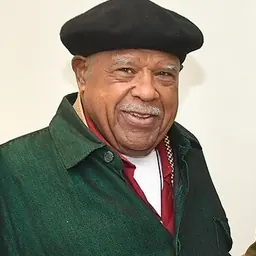
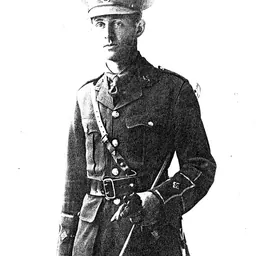
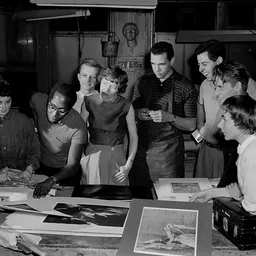
People in Benjamin Wigfall's life
Named in this biography and alive at the same time



Related people
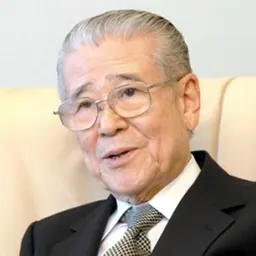
Same field, nearest in time


Contemporaries
People whose lives overlapped Benjamin Wigfall's



Frequently asked questions
Who was Benjamin Wigfall?
American artist (1930-2017)
When was Benjamin Wigfall born?
Benjamin Wigfall was born on 17 November 1930 in Richmond.
When did Benjamin Wigfall die?
Benjamin Wigfall died on 9 February 2017 in New Paltz.
What was Benjamin Wigfall's occupation?
Benjamin Wigfall was a painter, art educator and gallerist.
What nationality was Benjamin Wigfall?
Benjamin Wigfall was American.
Sources & further reading
· DBpedia: Benjamin Leroy Wigfall
Cite this page
APA: Biography.guide. (2026). Benjamin Wigfall. https://biography.guide/benjamin-wigfall/
MLA: "Benjamin Wigfall." Biography.guide, https://biography.guide/benjamin-wigfall/.
Chicago: "Benjamin Wigfall." Biography.guide. https://biography.guide/benjamin-wigfall/.
Data last updated: 2026-09-20 · Spot an error? Report a correction.
Page generated 2026-09-27 05:29 UTC