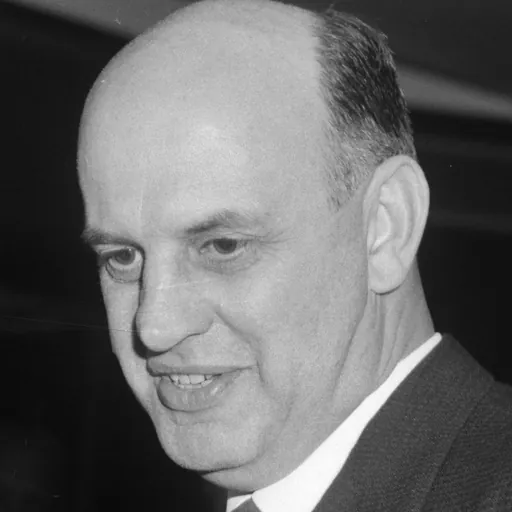
About Benjamin Moloise
Lived 1955 – 1985 (aged 29–30). Benjamin Moloise was a South African poet and writer.
Malesela Benjamin Moloise ( – 18 October 1985) was a South African poet and political activist who came to international attention following his arrest and subsequent execution by the government of South Africa. From Soweto, Moloise worked as an upholsterer before turning to poetry during his time on death row. In 1983, Moloise was arrested for the 1982 murder of Phillipus Selepe, a black security policeman who assisted in capturing three African National Congress (ANC) members. Although he initially confessed to the murder, he later retracted the statement during his trial. Moloise's death sentence sparked national and international outrage and was seen as emblematic of South Africa's brutal crackdown on anti-apartheid activists.
Throughout Moloise's trial, allegations arose about the legitimacy of the evidence against him, the veracity of his confession, and the overall fairness of the process. Following a refusal of clemency or retrial by President P. W. Botha, Moloise was executed in 1985. His execution sparked riots in Johannesburg, protests in major world cities, and a flurry of diplomatic condemnations. The legacy of Moloise's life, death, and anti-apartheid poems penned during his time on death row transcended South Africa, manifesting in global displays of solidarity and streets named in his honor.
Early life and background
Malesela Benjamin Moloise was born to Pauline and Robert Moloise in 1955. He worked as an upholsterer in Soweto, later turning to poetry and religion while on death row for two years. Moloise also fathered two children.
On 7 November 1982, Warrant Officer Phillipus Selepe, a black security policeman who had been instrumental in capturing three African National Congress (ANC) members, was fatally ambushed at his home in Mamelodi. Selepe sustained eight gunshot wounds from an AK-47 rifle, with 25 spent cartridges found near his body. Moloise was arrested three months later; following two days of interrogations, he confessed to Selepe's murder. The South African government, while readily tapping into the talents and expertise of black citizens, often hesitated to ensure their protection, especially when such measures seemed at odds with the deeply entrenched apartheid principles. Reflecting a strategic shift, the ANC had recently expanded its focus to not only strike at military and economic establishments but also civilians. Moloise would be convicted of murder by the Transvaal Supreme Court in September 1983. alt=A meeting room, in the centre is a round table with blue chairs. In the background are red chairs. The UNSC unanimously passed a resolution condemning Moloise's hanging. There was an evident tension between the African nations' urgency to highlight Moloise's looming execution, viewing it as an extension of South Africa's apartheid policies, and the Western preference to maintain a lower profile on the subject. Western representatives felt that the United Nations spent an excessive amount of time critiquing South Africa, often overshadowing numerous other pressing issues in Africa and beyond. A Western diplomat remarked that if they convened every time a policeman was killed in South Africa, "we would be meeting all the time". Western representatives also worried that excessive diplomatic attention might provoke South African authorities, potentially increasing the chances of Moloise's execution.
On the night before Moloise's scheduled execution, soldiers surrounded and tear-gassed his mother's home in Soweto during a vigil, as reported by eyewitnesses. As global organizations and governments called for clemency for Moloise, around 300 youths had convened at Pauline Moloise's home. Priscilla Jana stated she had visited the house with Pauline, only to find an instruction for her and Robert Moloise to visit the local police station. As they attempted to contact authorities, they observed soldiers in armored vehicles encircling the house and ordering the protesting youths to leave. Despite Jana's assurances of the vigil's peaceful nature, the military remained unyielding, illuminating the vicinity with bright searchlights and declaring the assembly unlawful through loudspeakers. Earlier, Pauline, after her final meeting with her son, conveyed his message: the belief that South Africa will one day be governed by its black population, and that those sacrificing their lives are doing so for freedom. Reflecting on the ordeal and the treatment by the prison staff, Pauline Moloise lamented the government's cruelty. Moloise was hanged alongside another convicted murderer, Thembinkosi Ngubuane. Despite their grief, the Moloise family were not allowed to sing traditional funeral dirges during their prayer in the prison chapel. Moloise's parents sang the ANC anthem, Nkosi Sikelel' iAfrika, in the parking lot and displayed a black power salute.
At Moloise's memorial service, Winnie Mandela defiantly addressed the crowd, despite being prohibited from speaking at public events. At the time, her husband, ANC leader Nelson Mandela, was imprisoned for life on charges of treason and sabotage. Mandela called for united action against the white-minority government, condemning its harsh segregation policies. She appealed for unity against the South African government, receiving enthusiastic responses of "Power!" and "Viva Mandela!" from the attendees. In another example, a middle-aged woman and a young boy were pursued and attacked by a group of people. They were kicked and punched until they fell. Seeking refuge in a grocery store, they escaped further harm. White merchants who tried to prevent looting were brutally beaten, and police faced attacks, with one officer stabbed in the shoulder. In Paris, an explosion occurred at the offices of two companies that had ties with South Africa. The extremist group, Direct Action, took responsibility for the attack, citing it as a reaction to Moloise's execution. The French airline UTA and the Chargeurs Reunis shipping firm suffered significant damages due to the explosion. Similarly, the Soviet Union voiced its strong denunciation of the execution. However, the Soviets insinuated U.S. complicity, suggesting that without U.S. backing of the South African government, such an execution might not have taken place. The Soviet Union's state-run news agency, TASS, declared, "South African authorities have again demonstrated to the whole world that they will resort to any crime in order to prolong the racist domination." In France, Prime Minister Laurent Fabius expressed his protest against the execution by observing a minute of silence in front of the South African Embassy in Paris. In 2015, the online newspaper TheJournal.ie featured an article with a short documentary about Moloise's execution. The documentary includes footage of a post-execution press conference where Pauline Moloise sings the banned resistance song "Oliver Tambo", which Moloise had planned to sing before his execution. The video also shows Pauline and other mourners singing the Southern African liberation anthem "Nkosi Sikelel' iAfrika", reflecting the intense grief and emotional atmosphere of the apartheid era.
In Desmond Egan's poem "For Benjamin Moloise," he contrasts the vocal grief of South African mourners to the silent mourning of the global community. The poem draws a parallel between Moloise and Patrick Pearse, an Irish nationalist and poet executed in 1916. Egan emphasizes shared sorrow and unity against oppression with lines such as "your death now our bereavement" and the recurring sentiment "so that when they hanged you we all became black". Critics claim that Egan's poem, while expressing solidarity with Moloise, risks oversimplifying and appropriating experiences he has not lived. By equating Moloise's plight as a black individual under apartheid with broader struggles, the poem might unintentionally diminish the unique challenges of apartheid and use them to bolster Irish nationalism.
Don’t just read it —
keep it.
Full-length biographies made to live with: read them, listen on the way to work, watch them tonight.
- E-book
- Audio
- Video
Instant download · yours to keep · every purchase keeps this site free
Important facts
People in Benjamin Moloise's life
Named in this biography and alive at the same time




Related people
Same field, nearest in time

Contemporaries
People whose lives overlapped Benjamin Moloise's

Frequently asked questions
Who was Benjamin Moloise?
South African poet and activist (1955–1985)
When was Benjamin Moloise born?
Benjamin Moloise was born in 1955 in Alexandra.
When did Benjamin Moloise die?
Benjamin Moloise died on 18 October 1985.
What was Benjamin Moloise's occupation?
Benjamin Moloise was a poet and writer.
What nationality was Benjamin Moloise?
Benjamin Moloise was South African.
Sources & further reading
· DBpedia: Execution of Benjamin Moloise
Cite this page
APA: Biography.guide. (2026). Benjamin Moloise. https://biography.guide/benjamin-moloise/
MLA: "Benjamin Moloise." Biography.guide, https://biography.guide/benjamin-moloise/.
Chicago: "Benjamin Moloise." Biography.guide. https://biography.guide/benjamin-moloise/.
Data last updated: 2026-09-24 · Spot an error? Report a correction.
Portrait: Wikimedia Commons · author & licence
Page generated 2026-09-27 05:08 UTC