
About Benjamin Fish Austin
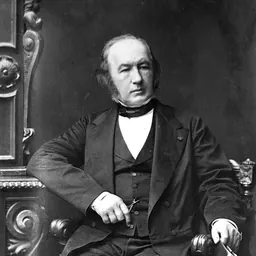
Lived 1850 – 1933 (aged 82). Benjamin Fish Austin was a Canadian educator.
Benjamin Fish Austin (September 10, 1850 – January 22, 1933) was a Canadian educator, author, Methodist minister, and spiritualist. He served as the principal of Alma College girls' school from 1881 to 1897 during which time that institution was regarded as one of the most prestigious centres of female education in Canada. Austin served the Methodist Church for many years as an educator and minister but was expelled from that organisation in 1899 for being a proponent of the Spiritualist movement. He went on to become a renowned spiritualist in Canada and the United States, publishing many books and editing the Rochester and later Los Angeles-based spiritualist magazine Reason.
Early life and education Austin was born in Brighton, Ontario, the son of another Benjamin Fish Austin and Mary Anne F. McGuire. in nearby Belleville, Ontario where he obtained B.A. in theology and received a first class honours in Oriental literature and languages in 1877. He continued on at the college and was awarded a B.D degree in 1881. During his time at Albert College, Austin was the president of the school's temperance union.
Albert College was joined with Victoria College in 1884, forming Victoria University, from which Austin received a D.D. degree in 1896. He was also as of that year a senator of Victoria University. That same year Victoria University became federated within the University of Toronto, so all of Austin's Alma Maters are now existent as federated parts of the modern-day University of Toronto.
Family Austin married Francis 'Amanda' Connell-Austin (August 12 18-- – August 15, 1928) of Prescott, Ontario, on June 16, 1881. She kept a scrap-book of family events and memories from 1881 to 1917 He had been heavily involved in the planning and organisational work which had been done during construction )
The Methodist hierarchy was not pleased, and asked Austin to withdraw his comments. He refused.
The Rev. A. H. Goring of Port Stanley argued that the sermon constituted heresy on four counts;
It denied the doctrine of eternal punishment It questioned the divinity of Jesus of Nazareth It denied that Jesus was God's last revelation to man It upheld a fraudulent system of spiritualism
Austin said that he was unable to attend a trial, and he submitted a written defence. In his defence he denied the first 3 charges categorically and defended his comments on spiritualism to be relating only to "a true spiritualism". He took particular affront to the third charge, writing that;
It was also alleged that Austin had attended a séance with a clairvoyant in Detroit. Austin made no attempt to deny this.
He was found guilty of the later three charges, but appealed the decision to the Methodist annual convention, held that year in June in Windsor, Ontario. At the conference it was widely believed that Austin's reputation alone would acquit him if he distanced himself from his earlier comments and did not make a speech or any sort of commotion. Ignoring this, Austin decided to speak in support of his earlier comments.
He gave a rousing defence of the sermon for three and a half hours. He implored the churchmen he had earlier denounced as closed to new thoughts to recognise the validity of many new beliefs. The age was, "a period of transitions. Old interpretations of the scripture are giving way to new ones. Old conceptions of the method of creation are no longer popular" Rather than surrendering to a "rush" towards atheism and agnosticism Austin wanted the church to slightly modify its interpretation of the scriptures so as to be more modern. He reminded his audience that this would not be the first time that the scriptures had been re-examined and asked that if past generations had been able to interpret the scriptures to fit their times then, "Have we not the right to our own views, and own interpretations, and own creeds, and own Truths equal to those that proceeded us? Must we forever wear the cast-off garments of past ages?"
Austin claimed that "Every man has an inherent right to know all that can be known about Humanity", and said that since the faculty of reason is a gift from God, to silence a man's thoughts is to question the wisdom of the Creator who endowed him with that reason. We are, he argued, made to question and challenge what we hear. This time of questioning, furthermore, would not weaken the Church but strengthen it. "It is time for everything that can be shaken to be removed", he said, "that the things that cannot be shaken remain". This process would leave a wiser and truer Methodist Church which held to its firm beliefs will rejecting it's the weaker parts of the faith. This fits with Austin's long-term belief that all religions had beneficial aspects that should be encouraged and negative traits that should be removed. In a later Spiritualist work he would say that in a Spiritualist world each religion should lend and borrow the choice parts of the others.
The most controversial portion of his speech was when he called on the church to accept the 'scientific proof of Spiritualism'. The recognition of a scientific basis for such 'supernatural' events, Austin argued, would make the events of the Bible seem more plausible; drawing many sceptics back into the flock. Austin related how he had himself experienced a variety of Spiritualist phenomena including: sounds produced in metals and woods, the independent movement of chairs, the production of an independent voice, and the de-materialisation of matter (so as to allow the passage of matter through matter).
Austin mentioned in his defence the renowned British inventor Sir William Crookes. Sir William was described as the inventor of the radiometer and the vacuum tube, the discoverer of thallium, a member of the Royal Society, president of the British Association for the Advancement of Science, and (according to Austin) Britain's 3rd most important scientific mind (Lord Kelvin and Wallace taking the first two spots by narrow margins). Sir William had conducted a series of experiments with noted Spiritualists and Spiritual Mediums and had also experienced many of the phenomena that Austin described, admitting them to be beyond any known natural law. These experiences had occurred during a series of highly controlled tests in Sir William's own house and in other places which could not have been tampered with.
In defending against the claims by many Christians that Spiritualism (and especially the communication with the spirits of the dead) was an act of devil worship, Austin related a short anecdote. When visiting a prison in Winnipeg, Austin explained, he had once met a prisoner who was incarcerated for shooting a man on a bicycle. The man, "an Indian of low intellect" had never seen a bicycle before and had interpreted the strange and unknown form of a bicycler as a diabolical combination of man and beast, shooting it immediately. Austin compared this unthinking action to the ignorant conclusion by many Christians unacquainted with Spiritualism that Spiritual communication was some sort of demonic ritual. He concluded the argument by saying that "Let no one then… think for a moment to satisfy the intelligence of this age by the flippant statement of ignorant bigotry 'it's all the devil'.
Near the end of his address Austin asked the conference to consider the implications if they were wrong in their decisions. If he himself were wrong in promoting Spiritualism he was after all only be one man who easily could be ignored, but if the Methodist Church was wrong in suppressing a valid philosophy the entire organisation would have committed a grave error. Since the risk of one man being wrong was less grave than the risk of an entire organisation using its power unjustly he asked the conference to show restraint.
Finally he threatened the conference by reminding them that he had many supporters and that "this conference is before the bar of public opinion and if it pronounces a judgement out of harmony with the individual liberty and liberal sentiment of the age… then the conference will not, cannot escape public condemnation". While the public's reaction to the trial is hard to measure, the issue was quite controversial. The Sermon Publishing Company or Toronto published, for the price of 25¢, a pamphlet entitled "The heresy trial of Rev. B. F. Austin MA DD ex-principal of Alma College, giving a sketch of Austin's life, story of his heresy trial, copy of the charges, the heresy sermon, the scene at the conference, Austin's full address defending his views on spiritualism at the London annual Conference at Windsor, June First 1899".
In any event Dr Austin's call for a more scientific view of spiritualism and the Bible was not received well. Only one vote kept his expulsion from being unanimous.
Spiritualism
Spiritualism, the religious system that Austin supported, and under whose banner he later worked in Rochester and Los Angeles, was a religious movement with its modern roots in the mid-1840s. The movement continues to this day and the National Spiritualist Association of Churches (which is the modern continuation of an organisation with which Austin had contact) lists the following as its guiding principles.
1. We believe in Infinite Intelligence. 2. We believe that the phenomena of Nature, both physical and spiritual, are the expression of Infinite Intelligence. 3. We affirm that a correct understanding of such expression and living in accordance therewith, constitute true religion. 4. We affirm that the existence and personal identity of the individual continue after the change called death. 5. We affirm that communication with the so-called dead is a fact, scientifically proven by the phenomena of Spiritualism. 6. We believe that the highest morality is contained in the Golden Rule: "Whatsoever ye would that others should do unto you, do ye also unto them." 7. We affirm the moral responsibility of individuals, and that we make our own happiness or unhappiness as we obey or disobey Nature's physical and spiritual laws. 8. We affirm that the doorway to reformation is never closed against any human soul here or hereafter. 9. We affirm that the precepts of Prophecy and Healing are Divine attributes proven through Mediumship.
The movement was formed primarily from the well-educated classes and contained many formerly Christian theologians. Many were driven away from Christianity by that faith's, as they saw it, overly strict application of doctrine and its denial of certain phenomena such as astral projection. It was a large movement and in 1878 the Roman Catholic Diocese of Boston estimated the total number of Spiritualists in the United States to be over 10 million. The exact number was hard to pinpoint, however, there were many levels of Spiritualist belief. Some Spiritualists still saw themselves as devoted Christians while others denounced their former faith in public. All estimates at their total numbers were only approximate.
Austin first became interested in the area of Spiritualism when researching for his paper "Glimpses of the Unseen". When conducting research into the many reported sightings of paranormal events (return of the Spirits of the dead, etc.) Austin became convinced of the veracity of the reports.
In the beginning Austin saw Spiritualism as a renewed and perfected form of Christianity. He saw the acceptance of modern 'miracles' such as those found in séances as a continuation of the miracles of Biblical times. In the sermon for which he was expelled from the Methodist Church Austin said, "Why should inspiration be limited to one past age? If Truth came to Paul 1900 years ago it can come to you today. After all, Heaven is as near to-day, God is as loving and as kind to-day, and truth as abundant to-day, as in the ages when men are said to have possessed inspiration." v If a scientific view could be taken to such experience in the modern age, then a better understanding could be had of God's past revelations to Biblical prophets. Austin also thought that this new view might draw some skeptics who had become atheists for lack of proof of the Divine's interaction with man back to religion. If one could explain a modern séance one could explain how God spoke to the prophets of the Old Testament, and this rational understanding would encourage belief among the skeptical.
In his book The A. B. C. of Spiritualism (published in 1920) he explained many of the movement's ideas and goals. The work is written in the format of a hypothetical dialogue between a Christian and a Spiritualist with the former asking questions of the later. The Spiritualist proceeds to explain his movement's positions on a variety of important issues. When asked if Spiritualism finds any church or creed to be divine the answer is that they are divine in that they rise from man's spiritual nature in wishing to reach towards God. All are attempts to answer important questions. Spiritualism denies, however, that any one system has been able to answer these questions satisfactorily. It does point out that Christianity "is certainly the one perfect and infallible and supernatural religion if there be one". The Christian Bible is, however, only a collection the views of many past men and societies. It may be useful, but it is not perfect.
When asked directly if Spiritualists believe in the divinity of Jesus of Nazareth the book gives a very interesting answer. "Most assuredly", it says, "Spiritualists believe in the divinity of all men. Every man is divine in that he is a child of God and inherits a divinely spiritual nature. We are all 'God made manifest in the flesh'" ix. This view of all people (one can assume that Austin meant 'Men' to be read as 'Humans') as being divine by their existence echoes many modern Humanist teachings.
A 1906 edition of Reason (the Spiritualist magazine published by Austin and his family) contained a section called 100 Conundrums for the Clergy. The work is made up of 100 rhetorical questions asked to "The orthodox Clergy" (by which Austin meant traditionally non-Spiritualist Churches, not Eastern Christians). The 100 conundrums were reprinted in book form later in the year. While some of the questions lead to obvious Spiritualist answers others merely attack the Christian notion that one specific book could be a definitive source of truth so perfect as to be unquestionable. An entire section, for example, centres on the compilation of the Bible in the fourth century;
"16 - Who decided on the Canon of Scripture? Where did the deciders get their authority for rejecting some books and including others? Was the selection process infallibly inspired? What proof can you offer of this?
17 - Was not the First Council of Nicaea convened by Constantine the Great? A man who murdered his father-in-law, cut the throat of his 12-year-old nephew and in the same year he convened the council beheaded his eldest son, and put Fausta his wife to death?
18 - Is the inspiration that would come to a Council presided over by such a monster likely to be 'plenary' and 'divine' and 'infallible'? …
22 - Is it true that there were 50 gospels submitted and only four accepted, and that Luke had a majority of one vote?"
The work is an effort to discredit the mainstream Christian movement. It shows stark contrast to seven years ago, when he had been the head of a Christian school.
While the work may seem to be something of a bitter diatribe against the organisation that ostracized him it should be remembered that Austin referred to Christianity with great respect in many other works. He attacked the religion's blind faith in its own infallibility without ever losing sight of the Church's many beneficial traits. In a 1928 edition of The Austin Pulpit (a sister publication to Reason) he referred to the Bible as being the "First among equals" among religious texts, provided that it is "interpreted rationally". In his 1920 book The ABC of Spiritualism, Austin answered the question of how Spiritualists should relate to the organised Christian church by reminding his readers that Churches have "done good in many ways". He advised his followers to learn from the many centuries that the Christian church has in religious work as "they cannot but have learned some wisdom". He does finish, it must be admitted, by saying that "a frank acknowledgment of the good done by churches makes the way open for a clear statement on their fallacies and falsities" ix. As in all things Austin praised an honest and frank view of the Truth.
Life in America In 1903 Austin moved to the United States to become the principal of William Smith College for Women in Geneva, New York. Rational Memory Training (1894) Glimpses of the Unseen (1898) Gospel to the Poor Versus Pew Rents What Converted me to Spiritualism: 100 testimonials (1901) Conundrums for the Clergy (1906) How to Make Money (1913) The crucifixion and the resurrection of Jesus (1919)
Newspapers and magazine published Reason The Austin Pulpit The Sermon: A Monthly Magazine Devoted to New Theology and Psychic Research
Don’t just read it —
keep it.
Full-length biographies made to live with: read them, listen on the way to work, watch them tonight.
- E-book
- Audio
- Video
Instant download · yours to keep · every purchase keeps this site free
Important facts
People in Benjamin Fish Austin's life
Named in this biography and alive at the same time


Related people
Same field, nearest in time





Contemporaries
People whose lives overlapped Benjamin Fish Austin's


Frequently asked questions
Who was Benjamin Fish Austin?
Canadian educator, Methodist minister, and spiritualist
When was Benjamin Fish Austin born?
Benjamin Fish Austin was born on 10 September 1850 in Brighton.
When did Benjamin Fish Austin die?
Benjamin Fish Austin died on 22 January 1933.
What was Benjamin Fish Austin's occupation?
Benjamin Fish Austin was an educator.
What nationality was Benjamin Fish Austin?
Benjamin Fish Austin was Canadian.
Sources & further reading
· Wikipedia: Benjamin Fish Austin
· DBpedia: Benjamin Fish Austin
Cite this page
APA: Biography.guide. (2026). Benjamin Fish Austin. https://biography.guide/benjamin-fish-austin/
MLA: "Benjamin Fish Austin." Biography.guide, https://biography.guide/benjamin-fish-austin/.
Chicago: "Benjamin Fish Austin." Biography.guide. https://biography.guide/benjamin-fish-austin/.
Data last updated: 2026-09-20 · Spot an error? Report a correction.
Page generated 2026-09-27 05:26 UTC