
Ben M. Bogard
Baptist minister and theologian
About Ben M. Bogard
Lived 1868 – 1951 (aged 83). Ben M. Bogard was an American baptist minister, theologian, american Baptist Association, clergy and independent Baptist.
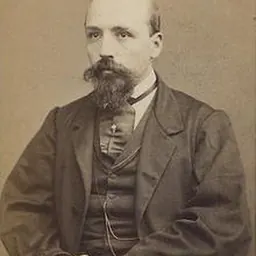
Benjamin Marcus Bogard (March 9, 1868 – May 29, 1951) was a Baptist minister and theologian from the United States. In 1924, Bogard participated in founding the American Baptist Association. In 1928, Bogard successfully pushed for an Arkansas state law which banned the teaching of the theory of evolution in public schools; the law was overturned by the United States Supreme Court in 1968, seventeen years after Bogard's death. He was a chief proponent of the Landmark Movement, which attributes an unbroken continuity and legitimacy to the Baptist churches since Apostolic times.
Early life and education Bogard was the only son of six children born to M. L. and Nancy Bogard in Elizabethtown in central Kentucky. The Bogards were tenant farmers who raised tobacco as their cash crop. In 1873, the Bogards moved to Caseyville in Union County in western Kentucky. There he attended school and the nearby Woodland Baptist Church, still in existence in Morganfield, Kentucky. Young Bogard was also a frequent participant in religious camp meetings. In the spring of 1913, Caseyville was destroyed by an Ohio River flood and not rebuilt.
During a church service in February 1885, the teenaged Bogard was baptized in an icy pond, a signal of his faith in Jesus Christ. In 1887 and 1888, he attended Georgetown College in Georgetown, Scott County, north of Lexington, Kentucky. In 1887, he was ordained as a Baptist minister. Though he was called "Dr. Bogard", the title was ceremonial.
In 1891, Bogard married Lynn Oneida Meacham Owen (1868–1952), a native of Christian County in southwestern Kentucky, and the widow of Frazier Westley Owen Jr. (1867–1889). Both were twenty-three; she had a three-year-old daughter, Lela Owen, who was born in 1888. The Bogards had a son together, Douglas Bogard. Bogard edited for two years The Baptist Flag, the first of several denominational papers in his future. In Fulton, he met John Newton Hall, a proponent of the Landmark Baptist movement, which emphasizes a literal interpretation of chapter and verse.
In his 1934 debate with Aimee Semple McPherson, founder of the International Church of the Foursquare Gospel, he proclaimed, "Miracles and divine healing, as taught and manifested in the Word of God, ceased with the closing of the apostolic age" in the year A.D. 70, after which overt miracles were no longer performed on earth. Pentecostals and other charismatic denominations maintain that miracles continue until the Second Coming of Jesus Christ. In 1900, Bogard published through a Baptist press in Louisville, Kentucky, Pillars of Orthodoxy, or Defenders of the Faith, a biographical anthology of important Baptist figures. Bogard was an unyielding critic of ecumenism within the religious community, unwilling to compromise for the sake of unity what he considered unchanging tenets of the faith. from John 10:27-30, Bogard argued that a Christian who falls into sinful behavior still retains eternal security because of the sacrificial death of Jesus Christ on the cross and subsequent Resurrection, which are greater than an individual's imperfection. Bogard's critics countered that his view of eternal security conflicts with Ezekiel 33:13: "if he trust to his righteousness, and commit iniquity, none of his righteous deeds shall be remembered; but in his iniquity that he hath committed, therein shall he die." This verse addresses placing trust in one's individual righteousness instead of sole faith in redemption from Christ. Bogard maintained that the blood of the crucified Christ exonerates the sinner whose salvation is assured at the time of repentance.
In 1938, Bogard debated the Church of Christ theologian Nicholas Brodie Hardeman of Henderson, Tennessee, on the nature of the Holy Spirit as the third part of the Trinity and in regard to baptism and falling from grace, the latter which Bogard-style Baptists consider impossible.
When Clarence Darrow came to Little Rock to defend Darwinism, Bogard criticized the secularism of the Chicago lawyer but was unable to shake Darrow's confidence in acceptance of the theoretical work of Charles Darwin. Clay Fulks, socialist critic of the conservative order, employed ridicule to deride Bogard:
[Bogard] cravenly permitted the Wicked One [Darrow] to come right into the fold among his flock -- and maybe devour some of his little ewe lambs! ... Brother Ben, you cannot hope to escape the consequences of your pusillanimous negligence by hiding behind the times. ... [God] probably sent the ogre Darrow down to Little Rock just to try your faith. Then you had your opportunity. But instead of rising to it nobly, as Calvin rose to his when God sent Servetus to Geneva, you cowered in the background and failed ignominiously. Now you whine about the times."
Though Bogard would presumably have mostly agreed on matters of faith and biblical interpretation with J. Frank Norris, the controversial Baptist fundamentalist figure from Fort Worth, he claimed that Norris was vain and prone to exaggerate his own ministerial success. Though he accused Norris of failing to preach the fundamentals of the faith, the two in time developed a grudging friendship. In 1941, Norris faced a $25,000 libel judgment rendered in San Antonio, Texas, payable to another Baptist minister, R. E. White, because of remarks about White in a Detroit, Michigan, denominational paper, The Fundamentalist. The publicity about the suit weakened Norris' hold over his fellow fundamentalists.
Bogard taught that since the time of Jesus on earth there has been a succession of churches teaching the Missionary Baptist view of Scripture even if those churches had been called by other names. Some refer to this teaching as "the faith once delivered unto the saints." Christ spoke of establishing His church and "the gates of hell shall not prevail against it." Missionary Baptists, like other denominations too, believe that their denomination is that original church.
Arkansas years In 1901, Bogard became the editor and half-owner of the Arkansas Baptist newspaper. Three years later, he secured editorial control of the publication. In 1905, he left the Southern Baptist Convention to become for nineteen years, as it developed, an Independent Baptist. Nearly two decades later, he worked to establish the ABA, or the Missionary Baptist denomination, which dispatches missionaries not through an associational body like the SBC authorizes but through individual churches.
During the 1920s, Bogard joined the Ku Klux Klan, which targeted in that phase of its existence foreigners and Roman Catholics. Bogard was convinced that his conservative ideas would prove superior to those of Smith in an honest forum. Arkansas voters defied their state senators and passed the anti-evolution act by a two-to-one margin and also supported the Democratic presidential nominee Al Smith, the governor of New York, though Bogard had been among the southern clergy who opposed this first ever Catholic nominee of a major party despite U.S. Senator Joseph T. Robinson of Arkansas being tapped as Smith's vice-presidential running mate. Even before the term civil rights was widely used, Bogard believed that Al Smith as president would work for equality of African Americans in the still racially segregated American South.
Honors In 1901, he received an honorary Doctor of Divinity from the then Southwest Bible College in Bolivar in Polk County in southwestern Missouri. He subsequently received an honorary degree from the since disbanded Missionary Baptist College in Sheridan in Grant County in southern Arkansas. operated by the Baptist Bookstore at 4605 North State Line Avenue in Texarkana, Texas. Seminary students took up a collection to buy Bogard a headstone, for he left no funds for that purpose.
In 2006, Luther D. Perdue extracted a large collection of Bogard sermons and lessons between 1915 and 1937.
In addition to Pillars of Orthodoxy, or Defenders of the Faith, Bogard wrote the following books:
Fifty-two Bible Lesson (1930) Smith-Bogard Debate: A Discussion between Eugene S. Smith and Ben M. Bogard (1942) The Baptist Way-Book (1946) The Golden Key (1968 reprint) Best of Bogard Sermons (1974 reprint) W. Curtis Porter and Ben M. Bogard Debate (2013 reprint) The Bible Proved by Science: Refutation of Modernism, Infidelic Skepticism Made Ridiculous (undated) The Story of a Sermon with Dan Gilbert (undated)
Bogard was honored by Ripley's Believe It or Not! for having preached for "sixty-one years without missing a single Sunday." His period as an ordained minister extended from 1887 to 1951, or sixty-four years; presumably his sixty-one years without missing a Sunday were from 1890 to 1951 or maybe 1889 to 1950.
Don’t just read it —
keep it.
Full-length biographies made to live with: read them, listen on the way to work, watch them tonight.
- E-book
- Audio
- Video
Instant download · yours to keep · every purchase keeps this site free
Important facts
People in Ben M. Bogard's life
Named in this biography and alive at the same time




Related people
Same field, nearest in time




Contemporaries
People whose lives overlapped Ben M. Bogard's


Frequently asked questions
Who was Ben M. Bogard?
Baptist minister and theologian (1868–1951)
When was Ben M. Bogard born?
Ben M. Bogard was born on 9 March 1868 in Elizabethtown.
When did Ben M. Bogard die?
Ben M. Bogard died on 29 May 1951 in Little Rock.
What was Ben M. Bogard's occupation?
Ben M. Bogard was a baptist minister, theologian, american Baptist Association, clergy and independent Baptist.
What nationality was Ben M. Bogard?
Ben M. Bogard was American.
Sources & further reading
Cite this page
APA: Biography.guide. (2026). Ben M. Bogard. https://biography.guide/ben-m-bogard/
MLA: "Ben M. Bogard." Biography.guide, https://biography.guide/ben-m-bogard/.
Chicago: "Ben M. Bogard." Biography.guide. https://biography.guide/ben-m-bogard/.
Data last updated: 2026-09-22 · Spot an error? Report a correction.
Page generated 2026-09-27 05:01 UTC