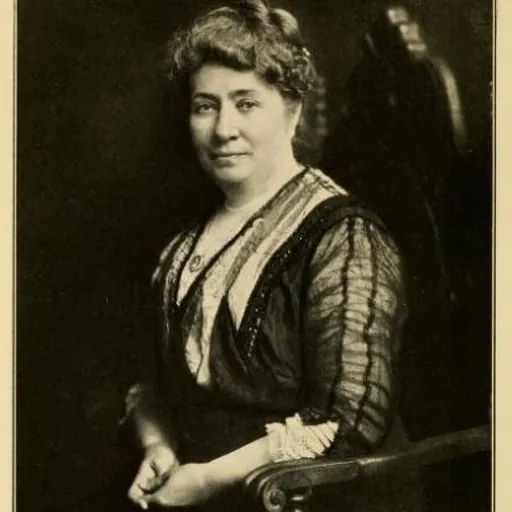
About Belle Harris Bennett
Lived 1852 – 1922 (aged 69). Belle Harris Bennett was an American suffragist and missionary.
Belle Harris Bennett (December 3, 1852 – July 20, 1922) led the struggle for and won laity rights for women in the Methodist Episcopal Church, South. She was the founding president of the Woman's Missionary Council of the Southern Methodist Church. Much of her work including fundraising and organizational efforts to provide higher education for a new professional class of social workers and community organizers in the Southern Methodist Church in the U.S. and abroad. Her carefully collaborative support for African Americans and immigrants was considered radical at that time by Southerners. She was a suffragist and supporter of temperance as well.
Early life The younger daughter of the eight living children of Samuel Bennett and Elizabeth Chenault, Isabel Harris Bennett was born on December 3, 1852, at the family estate "Homelands" located in Madison County, Kentucky. Her siblings were: William (1835–1904, planter/financier), John (1837–1903, lawyer and State Senator), James (1839–1908, farmer/financier and woman suffrage activist married to suffragist Sarah "Sallie" Clay), David (1841–1909, physician and banker), Susan Ann (1843–1891, missionary and suffragist), Waller (1849–1933, banker/broker), Samuel Jr. (1858–1913, banker/broker).
Named after her paternal grandmother Isabelle Harris Bennett, the wife of a Kentucky Methodist circuit rider, she always used Harris or the initial H. whenever writing out her full name. It was through her mother's side of the family, the Chenaults, that she traced her lineage for acceptance in the Daughters of the American Revolution and the Colonial Dames of America.
As a child she walked to the local township school at Foxtown with her favorite brother Waller every day. Later in life, after graduating from Yale, Waller handled Belle's personal wealth, her philanthropic endeavors and helped with her mission society projects' finances. The whole family attended a small Southern Methodist church built on land donated by Samuel Bennett in honor of his preacher father, "Honest" John Bennett. Providence Church was the first Methodist church in Madison County, and Belle sang in the choir and taught Sunday School there.
In 1888 Samuel Bennett died, and Belle left "Homelands" with her mother, older sister and two younger brothers to live in a new house her mother built in Richmond. There, she ran the household while her sister Susan "Sue" Ann Bennett took on new initiatives with the Southern Methodist Church. One of Sue's most ardent wish was to organize a Methodist-affiliated school in south-eastern Kentucky - she had studied the region in 1886 as part of the Southern Methodist Woman's Department of Church Extension and found no churches of any denomination in many of the counties there. Her report at the Kentucky Conference helped to create a new role for women in the Southern Methodist Extension Department: the Woman's Parsonage and Home Mission Society, led by twelve women in a Central Committee. However, Sue's untimely death in 1891 temporarily put on hold those plans for a Methodist school in eastern Kentucky. The Central Committee invited Belle to come and take the place of her older sister Sue, and Belle's life as a leader in the Southern Methodist Church began.
In the mid-1890s both her brothers Waller and Samuel Jr. married and her mother died in 1897, so Belle went then to live with Waller and his wife, her schoolgirl friend Mary Burnam. However, her leadership in the Church grew so quickly that she moved out and rented rooms at a local hotel. In 1903 she went to live with her brother John when he was dying, but afterwards she returned to her hotel in Richmond as it had become an important center for her activism. Bennett appointed Miss Estelle Haskin as editor of a "Women's Council Bulletin" which sent out messages throughout the church about women's rights and the war efforts undertaken through women's service. At the 1918 General Conference in Atlanta, Georgia, the delegates voted 265 in favor and 57 against women's laity rights; and when the College of Bishops vetoed the measure, the General Conference sent the question to each of the Annual Conferences (approximately 40 Conferences constituted the Methodist Episcopal Church, South, at that time). The measure passed with a good majority, and women's laity rights were won by 1919. Bennett then started a Laity Committee that would organize a communications campaign throughout the South to make sure that a good number of women delegates would be sent to the General Conferences. Bennett visited Japan and Korea - appointing a committee to study Wonsan in Korea, the site of a powerful Methodist revival movement (1903–1906), for an industrial and trade school. Bennett supported the cooperative effort of The Union Bible School already there where the Southern Methodists worked together with the Canadian Presbyterians to offer classes from 6 weeks to 3 months to Korean missionaries who would then go back to do work in their own communities.
She took on a leadership role in the Kentucky Equal Rights Association (ERA), becoming 3rd Vice President in 1895. When the Fulton ERA in western Kentucky needed a treasurer as it started up in 1897, Belle took on that job too. She spoke in favor of school suffrage at the 1910 Kentucky legislative hearing for women's right to vote, and she served on the Equal Rights Lecture Bureau that year. When she was interviewed for an article about “Women in the Churches” in The Woman's Journal, she made a direct connection between raising consciousness about women's rights in the Southern Methodist church hierarchy and women's political rights. In 1912 she began a two-year stint in serving on the KERA Executive Committee for the NAWSA, an important connection between the national and local suffragists during a time of great change in the movement. She sent in a news comment to The Woman's Journal in January 1912, “Much good work is being done in the South. Women and men are reading, thinking and talking in favor of woman suffrage as never before.” That year a Midwestern suffragists’ conference was held in Chicago, and she spoke on “Church Work.” The following year the Mississippi Valley Suffrage conference united with all the Southern states’ suffrage leaders to meet in St. Louis at the Buckingham Hotel from April 2–4, 1913. Belle spoke on "Southern Women and the Ballot."
For Belle H. Bennett, the passage of the Nineteenth Amendment was both a political and religious victory. Belle Harris Bennett is buried beside her sister, Sue A. Bennett, in the Richmond Cemetery.
Honors and appointments Appointed as delegate to the International Missionary Convention, Edinburgh, Scotland, 1910; there she was elected to serve on the International Missionary Committee which convened in January 1921 at Garden City, then Lake Mohonk in New York in October 1921. On May 28, 1916, the faculty at Kentucky Wesleyan College in Owensboro, Kentucky conferred upon her the degree of LL.D. (Doctor of Laws) – the first woman to be honored so at that institution. Appointed as delegate to Congress on Christian Work in Latin America in Panama, February 1916, and selected as Chair of the Commission on Woman's Work Appointed as delegate to the International Missionary Council's first meeting fall 1921 at Lake Mohonk, New York Appointed as the only woman member of joint commission that planned the celebration of the 100th anniversary of Missions of the 2 great Methodisms, North and South Appointed to the U.S. Commission on Interracial Cooperation, and she helped create the Woman's Work department
Works Bennett, Belle H. "An Appeal," Christian Advocate (Nashville), April 4, 1895. Bennett, Miss Belle H. "An Outline of the World-Wide Movement for the Liberation of Women." Nashville: Williams Printing Co..
Don’t just read it —
keep it.
Full-length biographies made to live with: read them, listen on the way to work, watch them tonight.
- E-book
- Audio
- Video
Instant download · yours to keep · every purchase keeps this site free
Important facts
People in Belle Harris Bennett's life
Named in this biography and alive at the same time


Related people
Same field, nearest in time


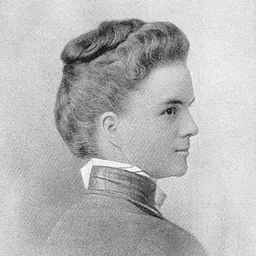
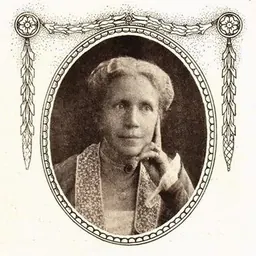
Contemporaries
People whose lives overlapped Belle Harris Bennett's
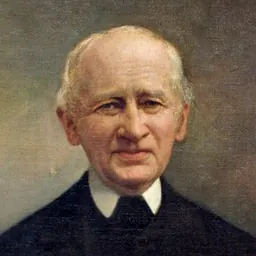
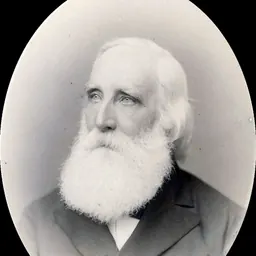


Frequently asked questions
Who was Belle Harris Bennett?
1852-1922 , church and ecumenical leader
When was Belle Harris Bennett born?
Belle Harris Bennett was born on 3 December 1852 in Madison County, Kentucky.
When did Belle Harris Bennett die?
Belle Harris Bennett died on 20 July 1922 in Richmond, Kentucky.
What was Belle Harris Bennett's occupation?
Belle Harris Bennett was a suffragist and missionary.
What nationality was Belle Harris Bennett?
Belle Harris Bennett was American.
Sources & further reading
· Wikipedia: Belle Harris Bennett
· DBpedia: Belle Harris Bennett
Cite this page
APA: Biography.guide. (2026). Belle Harris Bennett. https://biography.guide/belle-harris-bennett/
MLA: "Belle Harris Bennett." Biography.guide, https://biography.guide/belle-harris-bennett/.
Chicago: "Belle Harris Bennett." Biography.guide. https://biography.guide/belle-harris-bennett/.
Data last updated: 2026-09-22 · Spot an error? Report a correction.
Page generated 2026-09-27 05:10 UTC