
About Belgrave Ninnis
Lived 1837 – 1922 (aged 84). Belgrave Ninnis was a British explorer, surgeon and freemasonry.
Inspector-General Belgrave Ninnis (1 September 1837 – 18 June 1922) was a Royal Navy surgeon, surveyor, Arctic explorer, and leading Freemason, from London. He graduated as a Doctor of Medicine from the University of St Andrews in 1861, and the same year entered the navy as an Assistant Surgeon. From 1864 to 1866, Ninnis served as part of a surveying expedition to the Northern Territory of South Australia, helping to chart the area to the west of the Adelaide River and returning biological specimens to Adelaide for study. In 1867 Ninnis was appointed to Greenwich Hospital (later the Royal Naval College, Greenwich), and in 1875 he joined the British Arctic Expedition under Captain Sir George Nares, serving as Staff-Surgeon on HMS Discovery. When disease spread among the expedition's dogs, Ninnis was charged with investigating the cause; his findings later formed the basis of a published work. At the conclusion of the expedition in 1876 he received the Arctic Medal for his service, and was promoted to Fleet-Surgeon.
In his later career Ninnis served both on ships and in hospitals. He received Sir Gilbert Blane's gold medal in 1879, was promoted to Deputy Inspector-General in 1883, was appointed Principal Medical Officer at Melville Naval Hospital in 1892, and was selected as a Knight of Grace of the Venerable Order of Saint John in 1895. Upon his retirement in 1897 he was promoted to Inspector-General, and in 1900 and 1902 served as President of the Section of the Navy, Army, and Ambulance of the British Medical Association. He was made a Commander of the Royal Victorian Order (CVO) in 1912. Ninnis was initiated into the Freemasons 1872, was a founder of several Lodges, and in 1901 became a Past Grand Deacon of England. He was the father of Belgrave Edward Sutton Ninnis, an explorer who was lost down a crevasse during the 1911–14 Australasian Antarctic Expedition.
Career
Early career Ninnis graduated from the University of St Andrews as a Doctor of Medicine on 2 January 1861, and became a Member of the Royal College of Surgeons—MCRS; a professional qualification—in April of the same year. On 1 August, he entered the Royal Navy Medical Service, as an Assistant Surgeon, and was appointed to HMS Pantaloon. In October 1862 Ninnis was transferred to the navy's flagship HMS Victory, then moored in Portsmouth. He was posted aboard HMS Curacoa, assigned to the Australian Station, in 1863.
In 1864, he was selected to serve as naturalist on a survey expedition to the Northern Territory of South Australia, aboard HMS Beatrice. Together with W. P. Auld, Ninnis was the first to survey the area to the west of the river, around what is now Darwin. In his role as naturalist, Ninnis collected specimens of reptiles and birds, which he presented to the South Australian Institute (later the South Australian Museum), and timber, which was donated to the Adelaide Botanic Garden. Ninnis later reported to the Adelaide Philosophical Society on geological findings; "the coast at the Northern Territory," he said, "was generally composed of red and grey sandstone, with small quantities of quartz." Noting that the member of the expedition originally intended to return biological specimens to Adelaide had failed to do so, Francis wrote that "we are very much indebted to this gentleman [Ninnis] who has thus supplied us at a time when we have failed in obtaining information through the appointed channel." the following month he was appointed to the Royal Naval Hospital in Greenwich, where he remained until 1869. On 21 December 1874 he was promoted to Staff-Surgeon Second Class. In May 1875 he was appointed to HMS Discovery, one of two ships—the other HMS Alert—which comprised the British Arctic Expedition, led by Captain Sir George Nares. The expedition aimed to be the first to reach the North Pole, pushing north through Smith Sound, between Ellesmere Island and Greenland. The two ships made slow progress up the sound, repeatedly halted by dense pack ice. During August of the first year, the expedition's Greenland Dogs began to show signs of disease; the dogs experienced fits and "madness", owing, it was assumed, "to close confinement, wet decks, and want of natural exercise." Ninnis and Fleet-Surgeon Thomas Colon of the Alert were charged with investigating the disease.
On 26 August the two ships parted; Alert continued to push north while Discovery waited in reserve. Ninnis' biological work then extended to horticulture. He collected wheat seeds left in the area by the Polaris expedition four years previously, and planted them—together with mustard, cress and pea seeds—between the decks of the Discovery. In May of the second year they were transplanted to the shore, under glass. According to Robert Johnston, in his 1877 summary of the expedition, "This experiment succeeded very well; but, evidently, such an attempt at fancy gardening, under difficulties, could not be relied on to supply the wants of an entire ship's crew." Publicly, Nares defended his surgeons, Ninnis included:
For his work on the expedition, Ninnis was awarded the Arctic Medal, and promoted to Fleet-Surgeon. He later published a report, Diseases Incidental to the Eskimo Dogs of Smith's Sound: Diagnosis and Treatment, on his findings during the expedition. In 1879 he was awarded Sir Gilbert Blane's gold medal, an honour reserved for Royal Navy medical officers. In 1883 he received his final active promotion, to Deputy Inspector-General. He retired on 1 September 1897, with an honorary promotion to Inspector-General. In July 1900, serving in this capacity, he delivered an introductory address at the annual meeting of the association. In the address, while arguing that light and fresh air were important for the treatment of wounded sailors, noted that they could "only be obtained in sufficient quantity above the water-line, and to place the sick quarters above the water-line, amidst the hurly-burly of a sea fight, traversed by projectiles and wrecked by exploding shells, is of course out of the question, even supposing that sufficient space could be spared."
Ninnis presented another paper at the 1908 annual meeting of the association, entitled "The Position of St. John Ambulance Brigade as Regards Mobilization", in his capacity as Chief Commissioner St. John Ambulance Brigade. On 14 June 1912, at St James's Palace, he was made a Commander of the Royal Victorian Order (CVO) by King George V.
Ninnis died in Streatham on 18 June 1922, aged 84. In addition to the works previously mentioned, he was the author of a published work entitled Statistical and Nosological Report, with Remarks on the Sanitary Condition of the Welsh Colony of Chubut, South America. He was a Founder of the Quadratic Lodge, Hampton Court; the Æsculapius Lodge, London; the Navy Lodge, London; and the Belgrave Chapter, London. He was a Past Master (a former Worshipful Master, the senior officer of a Masonic Lodge) of the Quadratic Lodge; the Æsculapius Lodge; the Prince of Wales Lodge; the Phoenix Lodge, Jamaica; and the Pentangle Lodge, Kent. One son, Walter Melville Ninnis, died, aged 17 months, of pneumonia, on 12 September 1886.
Ninnis was the father of Belgrave Edward Sutton Ninnis, a Lieutenant in the Royal Fusiliers and Antarctic explorer. On 14 December 1912, B. E. S. Ninnis died when the sledge he was walking beside broke through the snow lid of a crevasse. When news of his death reached Australia in March 1913, several Australian newspapers—including The Advertiser, the Western Argus and The Sydney Morning Herald—ran biographies of Belgrave Ninnis, noting his surveying work in the Northern Territory and Arctic exploration.#tag:ref|Ninnis senior was described in the Advertiser as "an old Arctic explorer and an authority on Arctic exploration, the Esquimaux, and also on their dogs, both for training and care." When Mawson returned to Australia a year later, a telegram was sent on behalf of the Australian people to Ninnis senior, condoling him on his "great loss, but congratulating you on your son's imperishable fame." Ninnis replied the following day, "Grateful thanks to yourself and people of Australia for sympathetic message."
Don’t just read it —
keep it.
Full-length biographies made to live with: read them, listen on the way to work, watch them tonight.
- E-book
- Audio
- Video
Instant download · yours to keep · every purchase keeps this site free
Important facts
People in Belgrave Ninnis's life
Named in this biography and alive at the same time



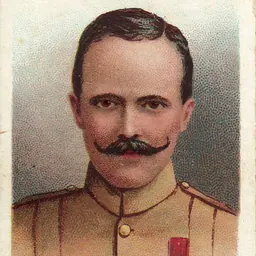
Related people
Same field, nearest in time

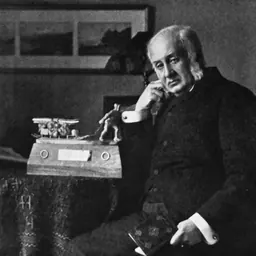

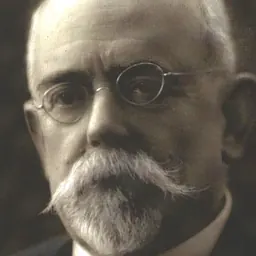

Contemporaries
People whose lives overlapped Belgrave Ninnis's


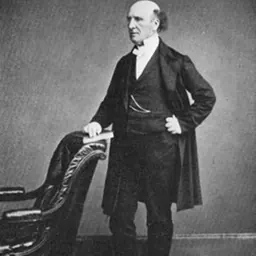
Frequently asked questions
Who was Belgrave Ninnis?
Royal Navy officer and explorer (1837-1922)
When was Belgrave Ninnis born?
Belgrave Ninnis was born on 1 September 1837 in London.
When did Belgrave Ninnis die?
Belgrave Ninnis died on 18 June 1922 in Streatham.
What was Belgrave Ninnis's occupation?
Belgrave Ninnis was an explorer, surgeon and freemasonry.
What nationality was Belgrave Ninnis?
Belgrave Ninnis was British.
Sources & further reading
Cite this page
APA: Biography.guide. (2026). Belgrave Ninnis. https://biography.guide/belgrave-ninnis/
MLA: "Belgrave Ninnis." Biography.guide, https://biography.guide/belgrave-ninnis/.
Chicago: "Belgrave Ninnis." Biography.guide. https://biography.guide/belgrave-ninnis/.
Data last updated: 2026-09-20 · Spot an error? Report a correction.
Page generated 2026-09-27 05:29 UTC