About Beatrice Dawson
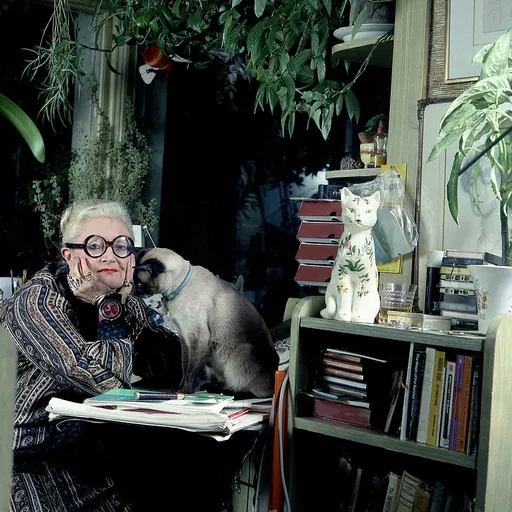
Lived 1908 – 1976 (aged 68). Beatrice Dawson was a British costume designer, scenographer and jewelry designer.
Beatrice Dawson (26 January 1908 – 16 April 1976), nicknamed "Bumble" in the entertainment world, was a British costume designer. She was nominated for an Academy Award and three BAFTA Awards. Her frequent collaborator Dirk Bogarde stated that 'Bumble was one of the very best'. From these connections, started her career designing for stage, with her first professional job being The Duchess of Malfi at the Haymarket Theatre in 1945.
Dawson moved into the British film industry in 1947. Her first film credit was the noir thriller Night Beat (1947). Her designs from this period were described as 'audacious and expressive' with her design work on Trottie True (1948) described as taking 'real risks with colour and historical verisimilitude'. Dawson worked for a range of British film companies including Two Cities, and dressed many of the industry’s leading stars of the 1950s including Dirk Bogarde, Jean Kent and Laurence Harvey.
Dawson worked extensively in the 1950s and 1960s across a wide range of genres in films that showcased her versatility and 'fluent, meticulous designs'. Her screen credits include the literary adaptations The Importance of Being Earnest (1952) and The Pickwick Papers (1952), the teen drama Expresso Bongo (1959), the British social realism drama The L-Shaped Room (1962), and ensembles for Monica Vitti in Modesty Blaise (1966, uncredited). In a promotional interview for the film, Dawson described how she avoided putting Monroe in a corset to preserve the actor's distinctive walk, and explained how she dressed a busy ball scene as a 'bunch of roses', in many shades of pink, rose and cream, to avoid the clashes often seen in colour film of the period.
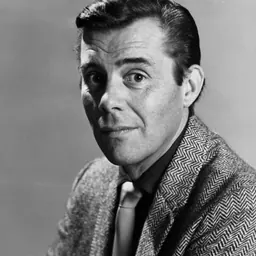
Dawson worked with the actor Dirk Bogarde on a number of films including A Tale of Two Cities (1958), The Wind Cannot Read (1958), The Servant (1963) and Accident (1967).
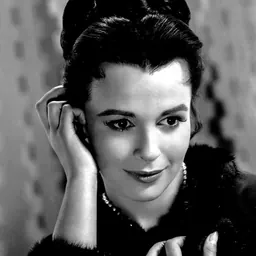
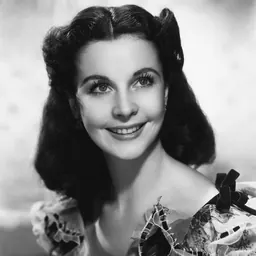
For a period in the 1950s, Dawson worked as fashion consultant for a high street clothes retailer, advising on colour and style trends. She designed the original London production of Streetcar Named Desire starring Vivien Leigh in 1949, and then reprised her role as designer for the 1974 revival starring Claire Bloom.
Dawson lived in Maida Vale, London, in a garden flat filled with her collection of cat figurines and Victorian and Edwardian antiques.
Best British Costume Design – Black and White Of Human Bondage
Best British Costume Design – Colour Woman of Straw
Best Costume Design A Doll's House
Don’t just read it —
keep it.
Full-length biographies made to live with: read them, listen on the way to work, watch them tonight.
- E-book
- Audio
- Video
Instant download · yours to keep · every purchase keeps this site free
Important facts
People in Beatrice Dawson's life
Named in this biography and alive at the same time




Related people
Same field, nearest in time




Contemporaries
People whose lives overlapped Beatrice Dawson's

Frequently asked questions
Who was Beatrice Dawson?
British costume designer (1908–1976)
When was Beatrice Dawson born?
Beatrice Dawson was born on 26 January 1908 in Lincoln.
When did Beatrice Dawson die?
Beatrice Dawson died on 16 April 1976 in North Yorkshire.
What was Beatrice Dawson's occupation?
Beatrice Dawson was a costume designer, scenographer and jewelry designer.
What nationality was Beatrice Dawson?
Beatrice Dawson was British.
Sources & further reading
Cite this page
APA: Biography.guide. (2026). Beatrice Dawson. https://biography.guide/beatrice-dawson/
MLA: "Beatrice Dawson." Biography.guide, https://biography.guide/beatrice-dawson/.
Chicago: "Beatrice Dawson." Biography.guide. https://biography.guide/beatrice-dawson/.
Data last updated: 2026-09-22 · Spot an error? Report a correction.
Portrait: Wikimedia Commons · author & licence
Page generated 2026-09-27 05:01 UTC