
Baw Beese
Indian chief
About Baw Beese
Lived 1790 – 1850 (aged 59–60).
Baw Beese (c. 1790 – c. 1850) was a Potawatomi chief who led a band that occupied the area of what is now Hillsdale, Michigan, United States. They had a base camp at the large lake that was later named for him by European-American settlers who took over the territory. In November 1840 the Potowatomi were forced to Indian Territory in Kansas under the Indian Removal Act of 1830, which was being enforced in the former Northwest Territory.
History Before the 1821 Treaty of Chicago, Baw Beese led a band in this area of Potowatomi Indians estimated at over 150 members. The people had occupied these lands near the large lake (later named for him) for their cultivation of maize, as well as hunting and fishing.
Other chiefs of the Baw Beese family lived in surrounding counties in Michigan, Ohio, and Indiana. Because the treaty assigned this land to the Potowatomi (if Baw Beese knew about the treaty, as he was not a signatory), he initially considered the white settlers as a kind of tenant, but more kept coming. The Potowatomi were said to be hospitable to the whites and helped them survive in their early years in this area.
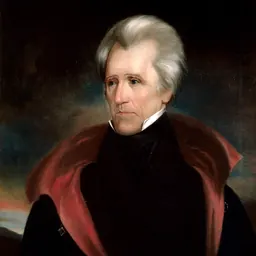
In November 1840 Baw Beese and his band were forcibly removed from Michigan to a reservation in Miami County, Kansas by the U.S. Government under authority of the Indian Removal Act signed into law by President Andrew Jackson in 1830. The voluntary Indian emigrations as outlined in the United States Treaty of Fort Meigs of 1817 and the Treaty of Chicago of 1821 with the tribes were made mandatory under the Indian Removal Act and enforced by the US military.
As a chief, Baw Beese was reported as holding to a strict code of justice. His status did not prevent, nor did he try to intervene when his daughter Winona was executed by one of her husband's family, after she had killed Neganska in anger for selling her pony.
Legends The story of Baw Beese and Winona has developed into local legend. In some versions, the chief must execute his own child because she killed her husband. In some versions, the young woman's skeleton is reported as found on the banks of Baw Beese Lake, identified by a cross bearing her name, or other identification.
Death The chief was said to have moved to Adrian, Michigan in the spring of 1864. He died there on July 12, 1889.
But the final days of Baw Beese are disputed. According to another account, he died in exile in the pine forests near Georgian Bay, Canada, after having left the reservation. But there is little reason to believe this is Baw Beese. He was often associated with the chiefs Me-te-au, Ne-au-to-beer-shaw called "Leather Nose", and Wap-ka-zeek, none of whom is listed on this document.
Namesakes Baw Beese Lake in Hillsdale, Michigan Chief Baw Beese Chapter of the North Country Trail
Don’t just read it —
keep it.
Full-length biographies made to live with: read them, listen on the way to work, watch them tonight.
- E-book
- Audio
- Video
Instant download · yours to keep · every purchase keeps this site free
Important facts
People in Baw Beese's life
Named in this biography and alive at the same time
Contemporaries
People whose lives overlapped Baw Beese's




Frequently asked questions
Who was Baw Beese?
Indian chief
When was Baw Beese born?
Baw Beese was born in 1790.
When did Baw Beese die?
Baw Beese died in 1850.
Sources & further reading
Cite this page
APA: Biography.guide. (2026). Baw Beese. https://biography.guide/baw-beese/
MLA: "Baw Beese." Biography.guide, https://biography.guide/baw-beese/.
Chicago: "Baw Beese." Biography.guide. https://biography.guide/baw-beese/.
Data last updated: 2026-09-20 · Spot an error? Report a correction.
Page generated 2026-09-27 05:05 UTC