
About Bartolomeo Guidiccioni
Lived 1470 – 1549 (aged 78–79). Bartolomeo Guidiccioni was a catholic priest.
Bartolomeo Guidiccioni (1470 – 4 November 1549) was an Italian Roman Catholic bishop and cardinal. He was one of the closest collaborators of Cardinal Alessandro Farnese, both as Bishop of Parma and afterwards when he became Pope Paul III. He served the pope as Vicar of Rome, and Prefect of the Tribunal of the Signature of Justice, as well as a member of several ad hoc commissions of cardinals. He was Bishop of Teramo (1539–1542) and Bishop of Lucca (1546–1549). He was one of the organizers and leading officers of the Council of Trent.
Biography
Bartolomeo Guidiccioni was born in Lucca in 1470, the son of a patrician family. At the age of nineteen, his father sent him to study at the University of Pisa and the University of Bologna, where he studied civil law for seven years. At the conclusion of his studies, he returned to Lucca, intending to practice law, but the town was oversupplied with lawyers and he could not establish a practice. He therefore went to Rome, where he was disappointed to discover that civil law meant little, in contrast to Canon Law and the rules of the Apostolic Chancery. His lack of funds made study difficult. Finally, through the influence of Felinus Sandaeus, a jurisconsult and Auditor of the Rota, he obtained a position in the household of Cardinal Franciotto Galeotto della Rovere, the nephew of Pope Julius II. Guidiccioni also became the governor of Farfa Abbey between 1506 and 1508, but he was dismissed in 1508 a few months before the Cardinal's death. He studied the human sciences, theology, and law in Rome.
Vicar-General of Parma At Rome, he entered the household of Cardinal Alessandro Farnese, seniore, the future Pope Paul III. Guidiccioni also supported the principle of the exemption of the clergy from the jurisdiction of the civil courts. He issued a vigorous decision in October 1513, which the city felt compelled to appeal to the Pope. Pope Leo X firmly supported Guidiccioni. In 1516 Cardinal Farnese came to Parma, and conducted a formal visitation and issued a new set of constitutions. When he returned to Rome, the Vicar General Guidiccioni continued the visitations down through October 1516. Farnese returned in 1519, and held a diocesan synod in November. Guidiccioni held the post of vicar general for a total of nineteen years. In 1528 he returned to Parma, and then retired to a villa in Carignano. In 1529, Cardinal Farnese visited Lucca during a trip to Genoa, and stayed at the house of the Guidiccioni. He also visited the retreat at Carignano several times.
On the election of Cardinal Farnese as Pope Paul III on 13 October 1534, Guidiccioni was sent by the city of Lucca to Rome as one of the members of its congratulatory embassy. He returned to Lucca, but on 3 February 1535 Paul III wrote to him, summoning him to Rome. He was in Rome from March until May, consulting about Paul's plans for a general council of the Church. He returned to Lucca, where he worked on his treatises De bonis et rebus donatis ecclesiae and De annatis, beneficiis ecclesiasticis, spoliis, taxis, compositionibus. This was an important reform work, intended to help the Pope in preparing the agenda for the council. But Pope Paul wanted him in Rome. Guidiccioni wrote to the Pope, Luca vale, revocat nos marcia curia, Paulus sic iubet, en iussus non rediturus. Guidiccioni served as a datary from spring 1536 to 1539. On 23 July 1536, he was appointed, along with Cardinals Sadoleto, Cortese, Fregoso, Giberti and Carafa, to make preparations for the council. In August, however, he asked to resign, and on 17 August the Pope consented.
Bishop and Cardinal
In November 1539 Guidiccioni was named Papal Vicar, in place of the recently deceased Paolo Capizucchi, and took up the office on 28 November. He served as Papal Vicar of Rome from 1539 to 1542. Guidiccioni was elected bishop of Teramo on 12 December 1539. He was not consecrated a bishop until 1546, and was therefore termed Administrator of the diocese of Teramo. He did not visit the diocese during his episcopacy, but governed through a vicar general, Msgr. Giubbileo Arca, Canon of Narni, assisted by economi and procurators. Arca was succeeded by Giovanni Francesco Corradi. Guidiccioni resigned on 22 March 1542.
One week after he was named Bishop of Teramo, the pope made him a cardinal priest in the consistory of 19 December 1539. He received the red hat and the titular church of San Cesareo in Palatio on 28 January 1540.
In September 1539, he was appointed a member of a congregation of three cardinals to approve the establishment of the Society of Jesus. He was a dissenting voice on the congregation, questioning whether yet another religious order was needed or appropriate, and whether it might lead to strife rather than harmony. But after the pope issued the papal bull Regimini militantis Ecclesiae approving the order, Cardinal Guidiccioni became a strong supporter. On 27 August 1540, he was named along with Cardinal Alessandro Cesarini and Cardinal Giovanni Maria Ciocchi del Monte to a commission to study reform of the Roman Rota.
Offices in the Roman Curia On 22 March 1542, he resigned the government of Teramo because his duties in Rome made him unable to visit it.
On 5 January 1543, the pope named him to a commission to study church reform. He served as administrator of the see of Chiusi from 2 April 1544 until 20 February 1545. On 2 November 1544, the pope officially made him a member of the upcoming Council of Trent. He finally received episcopal consecration from the hands of Cardinal Rodolfo Pio da Carpi in the Sistine Chapel on 28 August 1546, From 7 January 7, 1547 to 13 January 1548, he was Camerlengo of the Sacred College of Cardinals.
He also served as Major Penitentiary from 1547 to 1549.
Cardinal Guidiccioni died in Rome on 4 November 1549, six days before the death of his friend Paul III. His remains were transferred to Lucca and he was buried in Lucca Cathedral.
Don’t just read it —
keep it.
Full-length biographies made to live with: read them, listen on the way to work, watch them tonight.
- E-book
- Audio
- Video
Instant download · yours to keep · every purchase keeps this site free
Important facts
People in Bartolomeo Guidiccioni's life
Named in this biography and alive at the same time
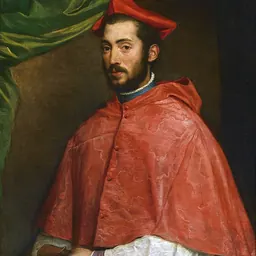

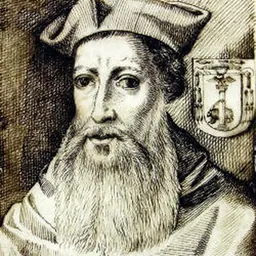

Related people
Same field, nearest in time
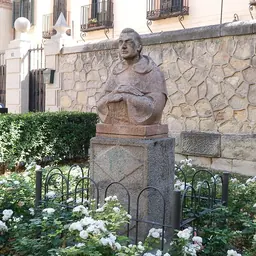


Contemporaries
People whose lives overlapped Bartolomeo Guidiccioni's


Frequently asked questions
Who was Bartolomeo Guidiccioni?
Italian cardinal
When was Bartolomeo Guidiccioni born?
Bartolomeo Guidiccioni was born in 1470 in Lucca.
When did Bartolomeo Guidiccioni die?
Bartolomeo Guidiccioni died on 4 November 1549 in Rome.
What was Bartolomeo Guidiccioni's occupation?
Bartolomeo Guidiccioni was a catholic priest.
Sources & further reading
· Wikipedia: Bartolomeo Guidiccioni
· DBpedia: Bartolomeo Guidiccioni
Cite this page
APA: Biography.guide. (2026). Bartolomeo Guidiccioni. https://biography.guide/bartolomeo-guidiccioni/
MLA: "Bartolomeo Guidiccioni." Biography.guide, https://biography.guide/bartolomeo-guidiccioni/.
Chicago: "Bartolomeo Guidiccioni." Biography.guide. https://biography.guide/bartolomeo-guidiccioni/.
Data last updated: 2026-09-20 · Spot an error? Report a correction.
Page generated 2026-09-27 05:30 UTC