
Bartolomé de Alva
Novohispanic mestizo secular priest and Nahuatl translator
About Bartolomé de Alva
Lived 1634 – 1641 (aged 6–7). Bartolomé de Alva was a catholic priest.
Don Bartolomé de Alva was a Novohispanic mestizo secular priest and Nahuatl translator.
Family Alva was one of the youngest children born to indigenous Doña Ana Cortés Ixtlixochitl and her husband, a Spaniard, Juan Pérez de Peralta. Alva may have been the youngest, or he may have had a younger sister, but records are unclear. He was born around 1597, which appears to be around the time his mother became the cacique of Teotihuacan.
Alva was a younger brother of the chronicler don Fernando de Alva Ixtlilxochitl, one of the most cited and studied Amerindian, or mestizo, chroniclers from colonial New Spain. Bartolomé's brother Fernando occupied positions of authority within New Spain's colonial government that had previously been reserved only for indigenous elites, not Spaniards or mestizos, including serving as the governing judge (juez gobernador) of Texcoco and Chalco and as the cacique of Teotihuacan alongside the oldest Alva Ixtlixochitl brother after the death of their mother, Doña Ana Cortés, in 1640.
Education and Priesthood Alva received a bachelor's degree from the University of Mexico in 1622, and subsequently a licentiate. Alva was ordained as a Catholic priest when it was rare for people of mixed-ethnic heritage to be ordained. Spanish canon law prevented people who were not pure-blooded Spaniards from being ordained, but there is evidence that these rules were "selectively ignored" by the 1630s.
After his ordination, Alva participated in the exams that the Church required to determine the placement of priests in clerical positions. The tribunal administrator who considered his placement was aware of his Texcocan heritage and of his exam results, wrote “that he was extremely competent in Nahuatl” despite “his preparation in moral theology and the administration of the sacraments…[being] only moderate.” He was placed in a secular role in Zumpahuacan in 1627 and later moved to Chiapa de Mota for clerical service in 1631.
Works
Confessionary In 1634 Alva wrote and published a Nahuatl-language confessionary, Confessionario Mayor, y Menor en Lengva Mexicana (A Guide to Confession Large and Small in the Mexican Language), for the use of priests administering confession to Nahuas. This book is a script to the Catholic Sacrament of Confession between a Nahua confessant, the person who seeks forgiveness by confessing their sins, and a Spanish-speaking confessor, the priest who hears the Confession. The Confessionario is written as a parallel conversation in both Spanish and Nahuatl within which Alva condenses teachings of the Catholic Church into the lines of the priest, and the sins of the Native person into the scripted responses of the Nahua participant.
Three Spanish Plays in Translation Between 1640 and 1641 Alva translated three Spanish plays into Nahuatl. He translated plays that span different eras of the Spanish Golden Age:
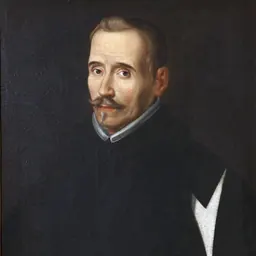
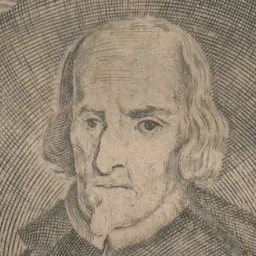
Lope de Vega's “La madre de la major” (“The Mother of the Best”), probably composed circa 1610-1612. “El animal profeta y dichoso patricida” (“The Animal Prophet and the Fortunate Patricide”), written circa 1613-1630, which Alva attributes to Lope de Vega, but that other historians have speculated was written by one of de Vega's students, Antonio Mira de Amescua. Pedro Calderón de la Barca's “El gran teatro del mundo” (“The Great Theater of the World”) with an entremés, circa 1635. Alva translated of “El gran teatro del mundo” using a Spanish manuscript of the play that is no longer in existence. The “original” Spanish version that remains is a transcription from its performance in Valencia in 1641, though the play was likely debuted in the late 1630s. "Between the play's debut and its first recorded performance in Valencia, a manuscript copy traveled across the Atlantic and reached the Jesuit mission at Tepozotlan” where Alva likely found it to translate.
Carochi heavily references Alvas works as examples of Nahuatl in his grammar. Alva's translation of "The Animal Prophet and the Fortunate Patricide," the Florentine Codex and the Bancroft Dialogues are the three most-cited known sources of examples of Nahuatl that Carochi highlights.
Legacy
Identity In the introduction to the published book of Alva's translated plays, one scholar refers to Alva as a “person of color” who is exceptional in his rarity; this term is not one that was used or claimed in Alva's time.
Don’t just read it —
keep it.
Full-length biographies made to live with: read them, listen on the way to work, watch them tonight.
- E-book
- Audio
- Video
Instant download · yours to keep · every purchase keeps this site free
Important facts
People in Bartolomé de Alva's life
Named in this biography and alive at the same time

Related people
Same field, nearest in time


Frequently asked questions
Who was Bartolomé de Alva?
Novohispanic mestizo secular priest and Nahuatl translator
When was Bartolomé de Alva born?
Bartolomé de Alva was born in 1634.
When did Bartolomé de Alva die?
Bartolomé de Alva died in 1641.
What was Bartolomé de Alva's occupation?
Bartolomé de Alva was a catholic priest.
Sources & further reading
· Wikipedia: Bartolomé de Alva
Cite this page
APA: Biography.guide. (2026). Bartolomé de Alva. https://biography.guide/bartolome-de-alva/
MLA: "Bartolomé de Alva." Biography.guide, https://biography.guide/bartolome-de-alva/.
Chicago: "Bartolomé de Alva." Biography.guide. https://biography.guide/bartolome-de-alva/.
Data last updated: 2026-09-20 · Spot an error? Report a correction.
Page generated 2026-09-27 05:06 UTC