
About Bartholomäus Sastrow
Lived 1520 – 1603 (aged 82). Bartholomäus Sastrow was a German politician, notary, autobiographer, writer, lawyer and mayor.
Bartholomäus Sastrow, sometimes anglicised Bartholomew (21 August 1520 – 7 February 1603), Sastrow was the third of eight children; his four younger sisters and also his mother all died in an epidemic in 1549/50. After Smiterlow's return to Stralsund in 1527, his niece, Sastrow's mother, also moved there with her children, rejoining her husband. Bartholomäus, however, remained in Greifswald with his grandfather until 1529. In 1533 Nicolaus Sastrow became Alderman of the Guild of Tailors. The Reformation had reached Stralsund in 1525, whereas Greifswald did not convert to Protestantism until 1531; the family must therefore have become Protestant when they moved, if not before.
In 1538 Sastrow entered the University of Rostock, where he studied for about a year; in 1541 he resumed his studies at the newly opened University of Greifswald, where he received a humanistic education including a thorough grounding in Greek and Latin. However, he was forced to leave without completing his studies because fresh disturbances in Stralsund caused by the Mayor of Lübeck, Jürgen Wullenwever, had led to his father and Smiterlow being placed under house arrest, causing financial problems for the family. His term was marked by a number of political and religious conflicts; Sastrow's unyielding style made him several enemies.
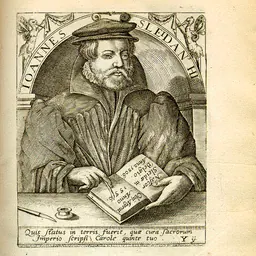
He married twice. By his sister-in-law Catharina Frubose, whom he married in 1551, he had three children, Katharina, Amnestia and Johannes (died 1593). A month after her death, in February 1598, he married her maid, Anna Haseneier. He made use of a variety of source materials: in addition to his own journaling and letters, official documents to which he had access as a notary and chronicles such as Johann Berckmann's Stralsund Chronicle and the biography of his predecessor as mayor, Franz Wessel. He modelled his use of these sources on Johannes Sleidanus' history, published in 1545–56. He may also have incorporated sections which he had composed earlier. He had the text written by a scribe; as a result, even the primary manuscript is not by his own hand, although handwriting evidence indicates that he added notes and corrections to the completed text.
He divided the work into four sections, the last of which, concerning his time in Stralsund, has not been preserved. It is unknown whether it was not completed or whether it was destroyed because of Sastrow's account of des Teuffels Battstube ("the Devil's bathhouse"), as he characterised his time there in the superscript. Speaking for the latter alternative is the fact that the account was not meant to be purely private, as can be seen from the almost complete absence of material about his family: thus, Sastrow says little more about his wife than that he married her, and does not even give the birth dates of his children, and he addresses it in the first instance to his sons-in-law Hinrich Godtschalk and Jakob Klerike, both city councillors.
Although it includes text from numerous Latin documents, the work is not written in Latin as is normal for contemporary humanistic writings, nor yet in Pomeranian Low German, which Johannes Bugenhagen had used in making his own translation of the Bible 50 years before, but in Early New High German Kanzleisprache, the language of depositions and records in the imperial and municipal courts. His is the first or only record of events such as the confrontation between Philip I, Landgrave of Hesse and the Emperor that led to Philip's imprisonment. The many incorporated legal documents are important sources for the history of the Empire, especially for the Geharnischter Reichstag of 1547/48 and the Augsburg Interim of 1548. However, there are major gaps in its coverage of contemporary history, since Sastrow, unlike Sleidanus, only recounts what he personally experienced.
The primary manuscript belongs to the City Archives of Stralsund and is on display in the Kulturhistorisches Museum Stralsund. Gottlieb Mohnike published a three-volume edition in 1823/24, which although insufficient by modern scientific standards remains the most complete edition.
Editions Bartholomäi Sastrowen Herkommen, Geburt und Lauff seines gantzen Lebens: auch was sich in dem Denckwerdiges zugetragen, so er mehrentheils selbst gesehen und gegenwärtig mit angehöret hat. Ed. Gottlieb Christian Friedrich Mohnike. 3 vols. Greifswald: Universitäts Buchhandlung. . Volume 1, 1823 Volume 2, 1824 Volume 3, 1824 Ein deutscher Bürger des sechzehnten Jahrhunderts: Selbstschilderung des Bartholomäus Sastrow. Ed. Horst Kohl. Voigtländers Quellenbücher 38. Leipzig: Voigtländer, 1912. . (Excerpt) Lauf meines Lebens: ein deutscher Bürger im 16. Jahrhundert. Ed. Christfried Coler. Spiegel deutscher Vergangenheit. Berlin: Rütten & Loening, 1956. . Denkwürdige Geschichten aus meinem Leben. Ed. Horst Langer. Schwerin: Thomas Helms, 2011. (Excerpt) Social Germany in Luther's Time. Being the Memoirs of Bartholomew Sastrow. Tr. Albert D. Vandam. Introduction Herbert A. L. Fisher. Westminster: Constable, 1902. . Repr. as Being the Memoirs of a German Burgomaster. London: Constable, 1905. . Online at Project Gutenberg.
Don’t just read it —
keep it.
Full-length biographies made to live with: read them, listen on the way to work, watch them tonight.
- E-book
- Audio
- Video
Instant download · yours to keep · every purchase keeps this site free
Important facts
People in Bartholomäus Sastrow's life
Named in this biography and alive at the same time

Related people
Same field, nearest in time

Contemporaries
People whose lives overlapped Bartholomäus Sastrow's

Frequently asked questions
Who was Bartholomäus Sastrow?
German politician (1520–1603)
When was Bartholomäus Sastrow born?
Bartholomäus Sastrow was born on 21 August 1520 in Greifswald.
When did Bartholomäus Sastrow die?
Bartholomäus Sastrow died on 7 February 1603 in Stralsund.
What was Bartholomäus Sastrow's occupation?
Bartholomäus Sastrow was a politician, notary, autobiographer, writer, lawyer and mayor.
What nationality was Bartholomäus Sastrow?
Bartholomäus Sastrow was German.
Sources & further reading
· Wikipedia: Bartholomäus Sastrow
· DBpedia: Bartholomäus Sastrow
Cite this page
APA: Biography.guide. (2026). Bartholomäus Sastrow. https://biography.guide/bartholomaus-sastrow/
MLA: "Bartholomäus Sastrow." Biography.guide, https://biography.guide/bartholomaus-sastrow/.
Chicago: "Bartholomäus Sastrow." Biography.guide. https://biography.guide/bartholomaus-sastrow/.
Data last updated: 2026-09-20 · Spot an error? Report a correction.
Page generated 2026-09-27 05:13 UTC