
Barry Sherman
Canadian businessperson
About Barry Sherman
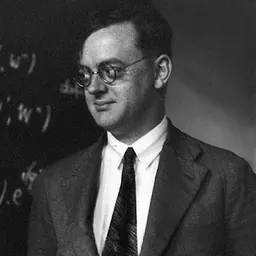
Lived 1942 – 2017 (aged 75). Barry Sherman was a Canadian businessperson, philanthropist and chief executive officer.
Bernard Charles "Barry" Sherman, (February 25, 1942 – December 13, 2017) was a Canadian businessman and philanthropist who was chairman and CEO of Apotex Inc. With an estimated net worth of US$3.2 billion at the time of his death, according to Forbes, Sherman was the 12th-wealthiest man in Canada. Another publication, Canadian Business, stated his fortune at CA$4.77 billion, ranking him the 15th richest man in Canada.
Early life Barry Sherman was born into a Jewish family in Toronto to Herbert Dick "Hyman" Sherman, a business partner for a zipper company, His grandparents from both sides had fled persecution of Jews in Russia and Poland. Sherman was ten years old when his father died from a heart attack.
Sherman won a national physics contest while attending the Forest Hill Collegiate Institute and graduated with top marks. Sherman later wrote that he chose that program specifically because it was reputedly the university's hardest. Sherman worked as a driver, primarily picking up urine samples for pregnancy tests. He then enrolled at the Massachusetts Institute of Technology, from which he received a PhD in astrophysics in 1967.
Career Sherman later recalled that his interest in business as a career was piqued when he was aged 10, when his father took him to work at his zipper factory in downtown Toronto and gave Sherman some zippers to count and box. He later wrote that his father was surprised at how well he did, filling "more than would have been done in the same time by any of his paid staff". He also recalled feeling insulted when his father counted them.
In 1967, after completing his PhD, Sherman purchased Empire Laboratories from the executor of the estate of Louis Lloyd Winter and his wife, Beverley. The couple had died seventeen days apart in November 1965, leaving four orphaned young children: Paul Timothy, Jeffrey Andrew, Kerry Joel Dexter, and Dana Charles. Empire had been the first company to secure the compulsory rights to manufacture Hoffmann-La Roche's Valium (diazepam) in Canada, and was one of the country's largest manufacturers of Pfizer's Vibramycin (doxycycline), Upjohn Company's Orinase (tolbutamide), and the dietary sweetener saccharin. Winter's estate allowed Sherman to buy a majority stake in Empire and run it only on the condition that the four Winter children be allowed to work for the company when they reached 21, with the option to buy five-percent stakes in the company two years later, with 15-year royalties on four of its patented products. The agreement would be voided if Sherman sold Empire.
That voiding happened in 1969. Sherman worked out a deal to swap shares with Empire's largest customer that put it in control of the company. He would eventually control a third of Barr's stock. Barr won the first rights to manufacture generic versions of Eli Lilly's Prozac. Today, Barr is a part of Teva Pharmaceutical Industries, the world's largest generic drugmaker, following Teva's acquisition of Barr in 2008.
In January 1972, Sherman and Ulster Limited sold Empire to the Quebec-based Canadian operations of publicly traded International Chemical and Nuclear Corporation (ICN) of California, for 57,000 shares (Valeant Pharmaceuticals). This transaction voided his arrangement with the Winter estate. A year later, Sherman started Apotex with a few former Empire personnel; it was incorporated in 1974. This privately owned and Sherman-controlled company claims to be Canada's largest domestic pharmaceutical manufacturer. Sherman also became involved in nutraceutical manufacturing and other businesses, founding the National Institute of Nutrition (NION) with Richard Kashenberg. He later sold NION to Schiff and continued on to Apotex.
By 2016, Apotex employed over 10,000 people as one of Canada's largest drug manufacturers, with over 260 products selling in over 115 countries. Revenues were about $1.5 billion annually.
Other businesses Sherman also personally invested in other, non-pharmaceutical businesses. Often these had dubious prospects and turned out to be fraudulent schemes. For example, Sherman put money into a yacht-chartering company which turned out to be a shell corporation that had never bought any yachts. Later, he bought a majority stake in a company that sold a nutritional supplement marketed by American fraudster Kevin Trudeau. a fellow U of T graduate of Austrian nationality who was the daughter of Polish Jewish Holocaust survivors. The couple had four children: a son, Jonathon, and three daughters, Lauren, Alexandra and Kaelen.
While Sherman socialized regularly with Honey, he was known to his friends and family as a workaholic. At the social events they attended, she was more outgoing while he often kept to himself and discussed mainly his businesses. The Sherman family frequented a ski club on winter weekends, but while Honey and the children availed themselves of the trails, Sherman remained in the lodge poring over documents. Similarly, Sherman did not play golf and would spend vacations reviewing business material. and other Jewish charities, despite Sherman himself being an atheist. and to other community centres in the Toronto area. The Apotex Foundation had donated over $50 million worth of medicines to disaster zones since 2007. Sherman and his wife were described by Toronto Mayor John Tory as "kind, good people", and he was widely praised for his philanthropic giving. On the other hand, Morton Shulman, a physician and former member of the Ontario Parliament who late in his life fought Sherman over drug development, called him "the only person I have ever met with no redeeming features whatsoever". By contrast, Sherman saw Apotex as a force for good, saying, "If we're thieves, we're Robin Hoods." Private investigators working for the German company Bayer AG, one of the world's largest drug companies, reportedly considered planting illegal drugs in Sherman's car during an operation to lure Apotex employees into informing on whether the company was knowingly infringing Bayer's patents. The cousins sought a twenty-percent interest in Apotex or damages of $1 billion. Sherman responded by withdrawing millions of dollars in financial assistance to his cousins. The Winter children contended that Sherman "had offered the financial assistance in the first place in order to make the cousins dependent on him, and to keep them from learning about their rights to the business", an allegation Sherman denied. At the time of the judgement, a lawyer for the cousins said they would appeal, though no appeal occurred. Sherman died a few months later. Sherman did not believe in God, free will, altruism or morality.
Lobbying Sherman was also known for the vigour of his lobbying efforts. When Prime Minister Brian Mulroney's government passed a law that extended patent protection for brand-name drug makers, Sherman complained that it would be destructive to smaller generic drugmakers and began supporting Jean Chrétien and the Liberal Party, who had promised to review the law if they took power in the 1993 general election. Sherman also donated millions of dollars to U of T for a research centre, contributions he withdrew when the letters the university wrote to the Mulroney government opposing the new regulations did not result in those regulations being withdrawn. Sherman filed a lawsuit in May 2016 attempting to quash the investigation before it was finished, a legally unprecedented move in Canadian history.
Move In 2017, the Shermans decided to sell their longtime home on Old Colony Road in North York and move to a new house they were building in Forest Hill, closer to downtown Toronto, where many of their friends and business associates lived. Honey, who according to D'Angelo had initiated the move, had purchased a corner lot in November 2016; the Shermans planned to demolish the existing house on the site. Plans for a replacement on file with the city called for a house with features such as a central swimming pool with retractable skylight and living quarters for staff. The fifteen variances required, including the house's depth, more than twice that allowed in the city's zoning, and a car stacker in the garage, were approved in June 2017.
The Star also reported that Honey's cell phone was found in a bathroom that, according to friends, she never used, suggesting she might have gone there in an attempt to summon help but was overpowered in the process. Similarly, Barry's gloves, as well as paperwork related to an inspection of the house, were left on the floor just outside the garage door, on the way to the basement pool. A window had been left open to allow a recently painted room to air out, and a basement door was unlocked, as apparently the Shermans frequently left it. Someone who may have known this, as well as the interior layout of the house, may have been able to escape through a neighbouring back yard after the crime, police said. The deaths were treated as "suspicious" and the Toronto Police Service Homicide Squad took the lead in the investigation, because it was "most experienced in dealing with sudden unexpected deaths". which is ligature strangulation caused by binding or tying. Ligature strangulation is usually distinguished from hanging by the strangling force being something other than the person's own body weight.
Toronto Police Service had previously told the news media that there was no indication of forced entry into the Sherman home and that their investigation did not include a search for any suspects. police sources told the Toronto Star on December 15 or 16, 2017, that they were "probing the possibility that they were a murder–suicide". Honey suffered face injuries and Barry did not, fuelling initial police speculation she was the intended victim and Barry was not.
In response, anonymous sources noted that the house had several entrances and claimed that both Barry and Honey would have been likely to let someone in who asked for help. They also contacted Toronto lawyer Brian Greenspan to retain a private investigator to look into the deaths. He hired Tom Klett, a retired Toronto Police detective who has worked in the homicide, drug, and intelligence bureaus. The family also hired Dr. David Chiasson, the retired chief forensic pathologist for Ontario, to conduct another autopsy.
The second autopsy established that the couple's cause of death was homicide.
In January 2018, the Toronto Star published an exclusive report based on anonymous sources from the family's investigation team who said that the deaths were murders: the couple was strangled by belts after their hands were tied. These investigators had not yet gained access to the Sherman home. "People providing information for this story are not identified as they were not authorized to discuss the case," according to the Star. When contacted by a reporter, a Toronto Police spokesman reiterated the position that they were treating the deaths as "suspicious". On January 26, Toronto Police advised the news media that their investigation concluded that the couple had been killed in a targeted attack. At the time, they would not discuss any possible suspects, but planned to interview everyone who had access to the home prior to the deaths via the lockbox that was previously installed by the real estate agent. The police investigation has encountered resistance at Apotex headquarters, with a police spokesman saying "Legal complexities in some executions have been challenging given the litigious nature of Barry Sherman's businesses, in particular the search and seizure of electronics in Barry Sherman's workspace at Apotex". By the end of the following month, police had obtained 37 warrants related to the investigation. Lawyer Brian Greenspan announced that the family had offered a $10 million reward in the couple's homicide investigation for any information that leads to the arrest and prosecution of a suspect. At the same time, he complained about the police investigation, claiming that it had failed to collect important evidence. Police Chief Mark Saunders later told the news media that a forensic pathologist has been working on the case, in addition to over 50 officers, interviewing 200 witnesses and collecting over 2,000 hours of video surveillance from neighbouring homes. When asked if police would be willing to work with the independent experts to be convened by Greenspan, Saunders said he would if the group were to be accepted in a court proceeding.
On April 25, 2019, the Toronto Police said they had a "working theory" of the case, and an "idea of what happened."
At the end of 2019, the private investigators working for the family closed their investigation. The following month, Star reporter Kevin Donovan, who had just published a book, The Billionaire Murders, about the case, disclosed that investigators had revised their timeline of the case. While previous statements had suggested police believed the couple had been killed early on December 15, they now said the murders had occurred two days earlier, within hours of the Shermans returning home on the night of the 13th.
In April 2022, Toronto Police said the case was "unfortunately old", still in the investigation phase, and no charges have been filed against anyone. The Toronto Police asked the court to seal case documents from the press to protect the integrity of the investigation.
In December 2022, their son increased the reward to $35 million.
Motives and suspects There has been speculation about who might have been responsible, particularly given Sherman's many business associates with criminal records and those who had been angered by his actions. He himself had acknowledged that an attempt could be made on his life. "For a thousand bucks paid to the right person, you can probably get someone killed", he told Jeffrey Robinson in an interview for his book in the late 1990s. "Perhaps I'm surprised that hasn't happened."
According to documents released by the court in January 2022, Barry owed $1 billion to other companies leading up to his death, which he said was not going to pay. Furthermore, the documents revealed the estate of the Shermans is somehow part of the murder investigation.
On December 14, 2021, Toronto police released security camera footage of a suspect. In the roughly 20-second video, a person dressed in dark clothing can be seen walking down a sidewalk on a snow-covered night in the neighbourhood. "The timing of this individual's appearance is in line with when we believe the murders took place," Detective Brandon Price told reporters. "Based on this evidence we are classifying this individual as a suspect."
Court documents released in January 2022 included statements by Honey Sherman's sister, Mary Shechtman, who suggested the person responsible for the murders was "making a statement" and that she believed the motive for the killings may have been religion. "The Shermans were strong supporters of Israel and Honey was very vocal about being Jewish," Shechtman said. "There were a lot of people of a certain ethnicity going through the house at a certain time and Honey would use phrases that were not politically correct." Shechtman said that six months before the murders, Honey had gone to a lecture "about stopping money from getting into Muslim fundamentalists' hands." In Shechtman's statement to police, she said Honey's belief was that "if the money were to be cut off from [Muslim fundamentalists] they could bankrupt them and therefore the money could not be used for terror." Shechtman told police she believed "Barry was providing funding for this." Trustees for the Sherman family fought to keep details of the estate secret. In Canada, court documents and related proceedings—including files that deal with an estate after death—are public. An Ontario Superior Court judge applied a "protective order" to the file, but the Toronto Star, a newspaper and media company in Canada, appealed and won. The family appealed to the Supreme Court, but in June 2021, the Supreme Court upheld the unsealing.
In 2020, Sherman's daughter Alex Krawczyk established the Honey & Barry Sherman Legacy Foundation to honour her parents' memory, and further their unfinished philanthropic aims. Alex Krawczyk is a registered nurse and philanthropist who leads two charitable foundations, the Krawczyk Family Foundation and the Honey & Barry Sherman Legacy Foundation.
In 2023, Jonathon Sherman, the only son of the Sherman couple, announced he was donating $52 million to the Toronto Jewish community so it can build the Honey and Barry Memorial Arena on the grounds of an existing Jewish community campus in Vaughan, Ontario. It will consist of two NHL-sized hockey rinks and supporting facilities.
The house where the murders took place was demolished in May 2019, and the land was purchased in 2020 by a young woman nearby, who put it on the market in 2023 at a "significant price tag". The address has also been changed.
Don’t just read it —
keep it.
Full-length biographies made to live with: read them, listen on the way to work, watch them tonight.
- E-book
- Audio
- Video
Instant download · yours to keep · every purchase keeps this site free
Important facts
People in Barry Sherman's life
Named in this biography and alive at the same time




Related people
Same field, nearest in time



Contemporaries
People whose lives overlapped Barry Sherman's



Frequently asked questions
Who was Barry Sherman?
Canadian businessperson
When was Barry Sherman born?
Barry Sherman was born on 2 February 1942 in Toronto.
When did Barry Sherman die?
Barry Sherman died on 15 December 2017 in Toronto.
What was Barry Sherman's occupation?
Barry Sherman was a businessperson, philanthropist and chief executive officer.
What nationality was Barry Sherman?
Barry Sherman was Canadian.
Sources & further reading
Cite this page
APA: Biography.guide. (2026). Barry Sherman. https://biography.guide/barry-sherman/
MLA: "Barry Sherman." Biography.guide, https://biography.guide/barry-sherman/.
Chicago: "Barry Sherman." Biography.guide. https://biography.guide/barry-sherman/.
Data last updated: 2026-09-22 · Spot an error? Report a correction.
Page generated 2026-09-27 05:32 UTC