
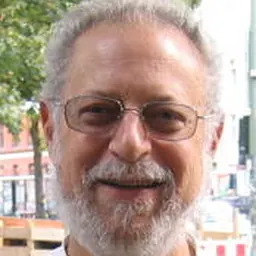
About Barry Rosenfeld
Barry Rosenfeld was a clinical psychologist, university teacher and psychologist.
Education Rosenfeld received a B.A. in psychology at Boston University in 1983. He then received a M.A. in clinical psychology at the University of Virginia in 1991. The following year, he received a Ph.D. in clinical psychology at the University of Virginia. His Ph.D. thesis, Decision-making competence of the mentally ill: A longitudinal analysis of treatment decision-making, was published in May of 1992 and examined the effect of mental conditions on psychiatric patients' abilities to make informed decisions regarding medication.
Career Rosenfeld began his career in 1991 as a pre-doctoral intern for the Kirby Forensic Psychiatry Center at New York University, where he continued to work as a post-doctoral fellow from 1992-1994. in New York City. Bowen v. Ruben, in which medical surgeries were performed on mentally disabled individuals who claimed the procedures were unnecessary, and Celikgogus v. Rumsfeld, the first of several lawsuits filed by former Guantanamo Bay detainees Rosenfeld would work on.
Research Rosenfeld has published over 100 articles for peer-reviewed journals.
HIV/AIDS and cancer patients A key area of Rosenfeld's research is psychological distress in terminally ill HIV/AIDS and cancer patients. The first study with HIV/AIDS patients he published was Correlates of depression in women with AIDS in 1996. Rosenfeld has published multiple studies regarding pain management, depression, anxiety, and spirituality among HIV/AIDS patients. . Similar to his research with HIV/AIDS patients, Rosenfeld's research with cancer patients studies depression, anxiety, and spirituality.
In 1999 Rosenfeld published his first study on physician-assisted suicide and found high rates of depression to be a key factor for cancer patients to seek assisted suicide. Rosenfeld also examined the Schedule of Attitudes toward Hastened Death (SAHD), a scale used to measure HIV/AIDS patients' desire to die, with cancer patients and found it to be a reliable measurement for both populations.
Stalking and violence risk assessment Rosenfeld's study on stalking in 2003 was the first study on recidivism rates and their predicting factors in stalking offenders. It found stalking offenders to have high rates of recidivism, with the strongest predicting factor for recidivism being the presence of a Cluster B personality disorder. Research by Rosenfeld has found measures for risk assessment are reliable across both men and women.
Trauma in immigrants, refugees, and asylum seekers Beginning in the 2000s, Rosenfeld would study rates of trauma in immigrants, refugees, and asylum seekers. His first study with trauma in asylum seekers, The Impact of Detention on the Health of Asylum Seekers, was published in 2003 and found asylum seekers in the U.S. who were detained displayed symptoms of post-traumatic stress disorder (PTSD) and asserted detention is detrimental to the mental health of asylum seekers. In another study published a month later, Rosenfeld found that time spent detained is correlated to the severity of PTSD symptoms exhibited by asylum seekers in the U.S.
A 2007 study by Rosenfeld found that rape is the largest predictive factor for PTSD among male and female refugees in the U.S. Rosenfeld has also worked with undocumented immigrants, and a study by him found that although undocumented immigrants are more likely to experience traumatic events, the likelihood they develop PTSD remains low and depends on if they perceive the event as life-threatening.
Memorial Delirium Assessment Scale (MDAS) Introduced in 1997 by Rosenfeld and his colleagues, the Memorial Delirium Assessment Scale (MDAS) is used to measure the severity of delirium symptoms in terminally ill patients.
Don’t just read it —
keep it.
Full-length biographies made to live with: read them, listen on the way to work, watch them tonight.
- E-book
- Audio
- Video
Instant download · yours to keep · every purchase keeps this site free
Important facts
Related people
Same field, nearest in time





Frequently asked questions
Who was Barry Rosenfeld?
researcher
What was Barry Rosenfeld's occupation?
Barry Rosenfeld was a clinical psychologist, university teacher and psychologist.
Sources & further reading
Cite this page
APA: Biography.guide. (2026). Barry Rosenfeld. https://biography.guide/barry-rosenfeld/
MLA: "Barry Rosenfeld." Biography.guide, https://biography.guide/barry-rosenfeld/.
Chicago: "Barry Rosenfeld." Biography.guide. https://biography.guide/barry-rosenfeld/.
Data last updated: 2026-09-20 · Spot an error? Report a correction.
Page generated 2026-09-27 05:13 UTC