
About Bardo Corsi
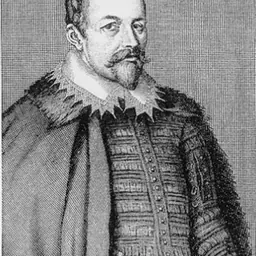
Lived 1566 – 1624 (aged 57). Bardo Corsi was a composer, dramatist, marquis, merchant, patron and philanthropist.
Bardo Corsi (27 May 1566 – 1 March 1624) was an Italian noble, merchant, marquis and one of Florence's patrons of the arts, belonging to the Corsi dynasty. His best-known work is L'Argonautica, work created to commemorate the wedding of Cosimo II de' Medici, Grand Duke of Tuscany and Maria Maddalena of Austria.
In 1617 he bought for 11,700 ducats the fief of Caiazzo of the Kingdom of Naples, being elevated and decorated by the King Philip III of Spain, who granted the title of Marquis to the Family. As he died without heirs in 1624, the title was automatically transferred to the children of Jacopo Corsi, his brother, whom he raised as his own. His success as an entrepreneur led him to immense wealth and this wealth has become a legacy, mainly for the history of Florence, reflected in the purchase of possessions, bonds and large investments. It was from this fact that the Corsi Family, which was already inscribed in the Florentine noble books, also became part of the Neapolitan noble books, which years later, eventually ended up dividing the family again.
Bardo was appointed to be an ambassador for Pope Urban VIII and also for the Kings of England in 1623, but canceled the designations for having been ill at the time, dying the later year in march of 1624.
L'Argonautica
Years after the first success with Euridice and the excellent marital organization of the wedding of Marie de' Medici and the King Henry IV of France, in 1608 Bardo Corsi was in charge of Medici family to take care of the wedding celebration of Cosimo II de' Medici, Grand Duke of Tuscany and Maria Maddalena of Austria, however, on this occasion, Bardo did not count on the help of his brother Jacopo Corsi and his influence in the artistic environment of Florence, since he had died in 1602.
Among other things, Bardo financed one of the eighteen fantastic ships for L'Argonautica's presentation on the River Arno on 3 November 1608 in Florence. Bardo ordered the ship directly from Giulio Parigi, the official architect of the celebrations, and from Pompeo Caccini, the designs of costumes and equipment for the crew of his boat. According to the description given by Francesco Cini, the Bardo's ship was that of the Anfião, the mythical husband of Niobe who managed, with the magic of the sound of his lyre, to move the stones necessary to build the walls of Thebes.
A host, at the time, was interpreted by the Bardo himself, who, in that capacity, directed the ship. The scene made by Bardo, with all the others from Argonáutica, were depicted in an engraving by Remigio Cantagallina.
Don’t just read it —
keep it.
Full-length biographies made to live with: read them, listen on the way to work, watch them tonight.
- E-book
- Audio
- Video
Instant download · yours to keep · every purchase keeps this site free
Important facts
Family & relationships
People in Bardo Corsi's life
Named in this biography and alive at the same time



Related people
Same field, nearest in time


Contemporaries
People whose lives overlapped Bardo Corsi's





Frequently asked questions
Who was Bardo Corsi?
first Marquis of Caiazzo
When was Bardo Corsi born?
Bardo Corsi was born on 27 May 1566.
When did Bardo Corsi die?
Bardo Corsi died on 1 March 1624.
What was Bardo Corsi's occupation?
Bardo Corsi was a composer, dramatist, marquis, merchant, patron and philanthropist.
Sources & further reading
Cite this page
APA: Biography.guide. (2026). Bardo Corsi. https://biography.guide/bardo-corsi/
MLA: "Bardo Corsi." Biography.guide, https://biography.guide/bardo-corsi/.
Chicago: "Bardo Corsi." Biography.guide. https://biography.guide/bardo-corsi/.
Data last updated: 2026-09-20 · Spot an error? Report a correction.
Page generated 2026-09-27 04:59 UTC