
About Barbarito Díez
Lived 1909 – 1995 (aged 85). Barbarito Díez was a Cuban conductor.
Barbarito Díez (December 4, 1910 – May 6, 1995) was a Cuban singer who specialized in danzón. He began his career as the singer for Graciano Gómez and Isaac Oviedo's son group, before joining Antonio María Romeu's orchestra. As the lead vocalist for Romeu's ensemble for 20 years, he established himself as one of the main exponents of the sung danzón. He continued singing with his own charanga, as well as other groups, for another 30 years. He also toured and recorded in Venezuela and Puerto Rico before retiring in the early 1990s, when complications from diabetes prevented him from performing and eventually resulted in his death in 1995. A naturally-gifted tenor, he was known for his sense of rhythm, correct diction and romantic style. When he was four years old, Díez moved with his parents to Manatí, Oriente Province, where his father worked in another mill for years. The family lived in a batey, where the young Díez attended elementary school and intuitively began to sing the repertoire of songs that Trio Matamoros had created.
Professional career As a result, Díez established himself as a well-respected, professional performer in his Oriente Province home at the age of fourteen. He then moved to Havana in 1930, in search of better working conditions and remuneration. Even though he formed a successful guitar trio along with Graciano Gómez and Isaac Oviedo a year later, Díez received an invitation from pianist and composer Antonio María Romeu to join his dance band in 1935, where he continued thereafter as its main soloist. After Romeu died in 1955, the orchestra continued playing under the leadership of his son Antonio María Romeu Jr. with Díez as lead singer. Some years later the band was renamed Orquesta de Barbarito Díez. well on his way to becoming a household name outside of Cuba. In addition, strengthened by a considerably large and stable fanbase in Venezuela, He then recorded a handful of Latin American songs backed by the group Rondalla Venezolana in 1985. Three years later, he made his last recording session with the Charanga Típica orchestra directed by Guillermo Rubalcaba.
Late life In one of his last interviews, Díez left a message for his audience: "I want everyone to know how grateful I am for the love, respect and consideration they have always given me. I say out loud that I have the biggest thrill to see that you still listen with pleasure, so I will sing until I run out of strength to do it."
Barbarito Díez died in 1995 from diabetes-related complications at age 85. Amor inviolado Añoranza Asómate a la ventana Bajo un palmar Bella zulianita Brumas del mar Después Dos lindas rosas La sitiera Longina Mensaje Mercedes Mi canto a Cabaiguán Mi dulce serenata Mi pueblo Mi Santa Bárbara Mis anhelos Mírame más Motivos Mujer Mujer merideña Mujer perjura Muñeca de cristal Noche de mar Novia de Año Nuevo Nunca Ojos de sirena Ojos malvados Olvidé su nombre Olvido Oriente cuna Florida Palmeras Panamá viejo Para que lo oigas Perla marina Porqué, corazón Potpourri de danzones Presagio Qué noche tan linda Que te castigue Dios Reina del sitio Reina guajira Rosa roja Santa Cecilia Se fue Sencillez Si llego a besarte Te odio Te quiero dijiste Te vieron con él Todo es para ti Tu carita de ángel Tú no comprendes Tus amargas verdades Un canto a mi Camaiguán Un juramento de amor Una Rosa de Francia Veinte años Volverá la alegría ¿Y tú qué has hecho? Ya es muy tarde Ya nunca más Yo reiré cuando tú llores Yo sé de una mujer
International tours Dominican Republic Backed by Antonio María Romeu orchestra (1958)
Mexico Backed by the Charanga Típica de Conciertos led by Guillermo Rubalcaba (1981; 1985)
Puerto Rico Backed by Septeto Gloria Mantancera (1933)
United States Backed by Antonio María Romeu orchestra (1959, New York City; 1960, Miami)
Venezuela All backed by his orchestra Poliedro de Caracas (1980) InterContinental Tamanaco, Caracas (1980) Caracas, Barquisimeto and Maracay (1981), sharing stage with Orquesta Aragón, Grupo Son 14 de Adalberto Álvarez, and El Trabuco Venezolano led by Alberto Naranjo Caracas Athenaeum (1984), sharing stage with Pablo Milanés and other Cuban artists
Don’t just read it —
keep it.
Full-length biographies made to live with: read them, listen on the way to work, watch them tonight.
- E-book
- Audio
- Video
Instant download · yours to keep · every purchase keeps this site free
Important facts
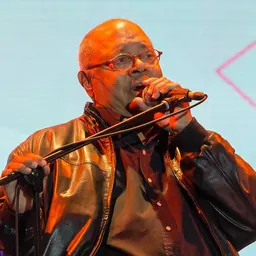
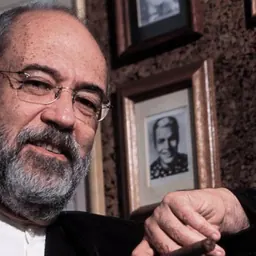
People in Barbarito Díez's life
Named in this biography and alive at the same time



Related people
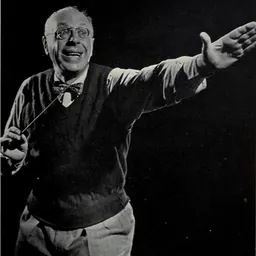
Same field, nearest in time



Contemporaries
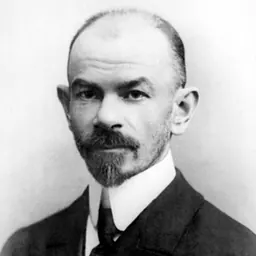
People whose lives overlapped Barbarito Díez's



Frequently asked questions
Who was Barbarito Díez?
musical artist (1909–1995)
When was Barbarito Díez born?
Barbarito Díez was born on 4 December 1909 in Cuba, Matanzas Province, Pedro Betancourt.
When did Barbarito Díez die?
Barbarito Díez died on 6 May 1995 in Havana.
What was Barbarito Díez's occupation?
Barbarito Díez was a conductor.
What nationality was Barbarito Díez?
Barbarito Díez was Cuban.
Sources & further reading
Cite this page
APA: Biography.guide. (2026). Barbarito Díez. https://biography.guide/barbarito-diez/
MLA: "Barbarito Díez." Biography.guide, https://biography.guide/barbarito-diez/.
Chicago: "Barbarito Díez." Biography.guide. https://biography.guide/barbarito-diez/.
Data last updated: 2026-09-20 · Spot an error? Report a correction.
Page generated 2026-09-27 05:10 UTC