
About Bali Pulendran
Bali Pulendran was an American researcher.
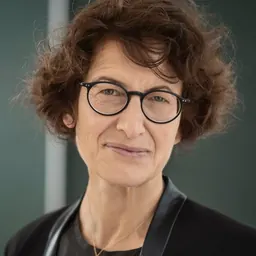
Bali Pulendran is an American and Australian immunologist. He is the Violetta L. Horton Professor at the Stanford University School of Medicine, and Director of the Institute for Immunity, Transplantation, and Infection at Stanford University. He is a professor in the Department of Pathology, Department of Microbiology and Immunology, and Fellow at ChEM-H (Chemistry, Engineering and Medicine for Human Health) at Stanford University School of Medicine, Stanford University.
Education Pulendran received his undergraduate degree from Cambridge University, and his PhD from the Walter & Eliza Hall Institute in Melbourne, Australia, under the supervision of Sir Gustav Nossal. He then did his post-doctoral work at Immunex Corporation in Seattle, Washington.
Career After serving as a postdoctoral scholar at Immunex Corporation, Pulendran held assistant an associate professorships at the Baylor Institute for Immunology Research in Dallas, Texas and joined Emory University's faculty as an associate professor in 2002, at the Emory Vaccine Center. Promoted to full professor in 2004, he became director of Emory's innate immunity program in 2008, receiving the Charles Howard Candler chaired professorship that same year. He came to Stanford University as Violetta L. Horton professor in 2017. He was appointed director of Stanford Medicine's Institute for Immunity, Transplantation and Infection in 2024. In a study published in 2008, Pulendran and team used systems biological approaches to predict the immune response to the yellow fever vaccine, one of the most successful vaccines ever developed. Using transcriptional profiling and machine learning, they identified early blood signatures that accurately predicted subsequent T-cell and antibody responses. This study provided proof of concept of the application of systems biological approaches to predicting vaccine responses and offered key mechanistic insights into vaccine immunity. Subsequently, he and several other groups have extended this systems vaccinology approach to studying immune responses to other vaccines such as those against COVID-19, influenza, shingles. During the COVID pandemic, his group was amongst the first to apply systems biological approaches to analyzing the human immune responses to SARS-CoV-2. They have further developed analytical tools such as blood transcriptional modules (BTMs) and multiscale multiresponse networks (MMRNs) and the role of cholesterol metabolism in the antibody response to vaccination. In recent studies, Pulendran and colleagues used a systems vaccinology approach to define a universal predictor of antibody responses to vaccination, and discovered a molecular signature that predicts the durability of antibody responses to multiple vaccines in humans, along with the underlying immunological mechanisms.
The science and medicine of vaccine adjuvants
Pulendran's group has also made major contributions to understanding the mechanism of action of vaccine adjuvants and designing novel adjuvants. They have revealed new mechanisms by which vaccine adjuvants induce durable and broad antibody responses. This work has revealed the capacity of a TLR7/8 ligand (3M-052) to stimulate remarkably durable antibody responses and bone marrow plasma cells, leading to its evaluation in the clinic. More recently, he has developed this idea further to introduce the concept of 'integrated organ immunity' to explain how the innate and adaptive immune systems and non-haematopoietic cells can interact in tissues to generate protective immunity against diverse pathogens in an antigen-agnostic manner. Considering immune responses through this framework could enable the design of a new class of vaccines termed 'universal vaccines' that are not pathogen specific. This was the first evidence for functional specialization of DC subsets in vivo. He also discovered the mechanisms by which microbial stimuli program DCs to modulate T-helper responses, and helped establish Flt3-Ligand as the key growth factor for DCs in vivo in mice and in humans. He further elucidated the molecular mechanisms by which DCs mediate immunological tolerance, and how metabolic sensors such as GCN2 and mTOR regulate DC function and innate immunity.
Awards and honors
2025 AAI-Ralph Steinman Award in Human Immunology 2024 ViE Award for the Best Research Team at the World Vaccine Congress 2024 Fellow of the American Association for the Advancement of Science 2023 Invited Speaker, Nobel Symposium in Physiology or Medicine 2023, organized by Nobel Foundation, the Royal Swedish Academy of Sciences, Karolinska Institute 2020 Fellow of the European Society of Clinical Microbiology and Infectious Diseases (ESCMID) 2017 – present Violetta L. Horton Professorship, Stanford University 2014 – present Thomson Reuters (Clarivate) list of Highly Cited Researchers, 2014 (ranked amongst top 1% of researchers most cited for their subject during the past decade) 2013 – 2023 Scientific Advisory Board Member, Keystone Symposia 2011 – 2021 MERIT AWARD, NIDDK, National Institutes of Health 2011 Albert E. Levy Award for Excellence in Scientific Research, Emory University 2010 Member of the "Blue Ribbon Panel on Adjuvants," convened by Dr. Fauci at NIAID, NIH 2010 Millipub Club Award, Emory University 2009 – 2019 MERIT AWARD, NIAID, National Institutes of Health 2008 – 2011 Member of the AIDS Vaccine Research Subcommittee, NIAID, National Institutes of Health 2008 – 2017 Charles Howard Candler Professorship, Emory University Over 50 keynote lectures, including: Keynote lecture at the 2025 Cold Spring Harbor Symposium on Systems Immunology; President's Symposium at the annual meeting of the American Association of Immunologists (AAI) 2023; Peter Doherty Oration: Asia Pacific Vaccine and Immunotherapy Congress; Mary Lou Clements-Mann Memorial Lecturer in Vaccine Sciences at the Annual National Foundation for Infectious Diseases meeting; Opening Keynote Lecture, 3rd Institut Pasteur International Network Symposium, Paris, France; Keynote, Speaker, Annual International Society for Vaccines (ISV) Congress, Quebec City.
Don’t just read it —
keep it.
Full-length biographies made to live with: read them, listen on the way to work, watch them tonight.
- E-book
- Audio
- Video
Instant download · yours to keep · every purchase keeps this site free
Important facts
Related people
Same field, nearest in time





Frequently asked questions
Who was Bali Pulendran?
professor of pathology, microbiology and immunology
What was Bali Pulendran's occupation?
Bali Pulendran was a researcher.
What nationality was Bali Pulendran?
Bali Pulendran was American.
Sources & further reading
Cite this page
APA: Biography.guide. (2026). Bali Pulendran. https://biography.guide/bali-pulendran/
MLA: "Bali Pulendran." Biography.guide, https://biography.guide/bali-pulendran/.
Chicago: "Bali Pulendran." Biography.guide. https://biography.guide/bali-pulendran/.
Data last updated: 2026-09-20 · Spot an error? Report a correction.
Page generated 2026-09-27 05:07 UTC