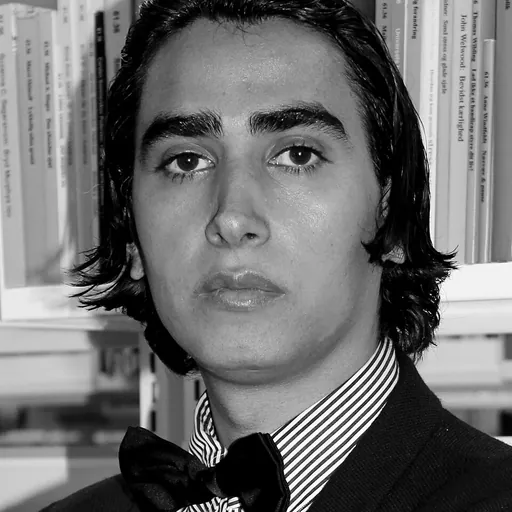
About Baland Jalal
Baland Jalal was a researcher and neuroscientist.
Baland Jalal (born October 14, 1985) is a Danish neuroscientist at Harvard University's Department of Psychology, whose work spans clinical neuroscience, neuropsychiatry, and the biology of altered state of consciousness. Originally from Denmark and of Kurdish-Iraqi descent, he is best known for his research on sleep and related disorders of emotions and perception.
Jalal's books explore neurological and psychiatric conditions such as sleep paralysis, capgras syndrome, temporal lobe epilepsy, autism, obsessive–compulsive disorder, and narcolepsy. His books include the forthcoming The Phantom Mind: Insights from the Borderlands of Sleep (Penguin, 2026), which examines sleep disorders and consciousness, Hack Your Brain (Gyldendal, 2026), a popular science book on the brain, and Transdiagnostic Multiplex CBT for Muslim Cultural Groups: Treating Emotional Disorders, which presents a culturally adapted psychotherapy framework, published by Cambridge University Press.
In 2023, Expertscape ranked him as the leading global expert on sleep paralysis. Media outlets including CNN, the BBC, and The Daily Telegraph have also described him as the leading authority on the topic.
Jalal has been active in public science communication. He has delivered TEDx talks and given public lectures at academic institutions, including the University of Oxford and Harvard University. He has also appeared on podcasts including The Jordan Peterson Podcast, Science Vs, and Lewis Howes's School of Greatness where he has discussed various topics in neuroscience including sleep, dreams, and neurological disorders.
As of 2023, he has also been teaching neuroscience courses at Peterson Academy, an online education platform.
Early life and education
Jalal was born in Bulgaria to Kurdish parents who had fled the war in Iraq and later moved to Denmark. In a 2022 interview with Vox, he recounted spending part of his childhood in a refugee camp before growing up in a disadvantaged neighborhood in Denmark marked by violence and gang activity. In interviews with Danish media, he has recalled navigating a difficult social environment during his upbringing, while also describing his home life as stable and supportive.
Jalal has stated that he struggled academically in his early schooling and did not initially perform well in formal education. He has attributed this in part to a lack of academic role models and what he has described as limited institutional encouragement within his school environment.
In an interview with the Danish newspaper Politiken, Jalal noted: “We were six different nationalities in my class and caused a lot of disruption. And the teachers were — with few exceptions — authoritarian types. They did not motivate us to invest in education as a path to a better and more secure life.” In the same interview he stated that during this period he disengaged from formal schooling and spent much of his time daydreaming or disrupting classes, but described a shift in motivation during high school after developing an interest in reading and self-directed learning.
Jalal has recounted experiencing episodes of sleep paralysis from a young age, which he later cited as an influence on his interest in the scientific study of the brain and mind.
Career
Jalal is a neuroscientist at the Harvard University Department of Psychology. He previously served as a research consultant at McLean Hospital, a Harvard Medical School teaching hospital, and was a visiting researcher at the University of Cambridge, where he earned his Ph.D. from Trinity College. At Cambridge, he conducted research under neuroscientists Barbara Sahakian and Trevor Robbins at the Behavioural and Clinical Neuroscience Institute. During his time at Harvard, Jalal completed postdoctoral research under psychologist Richard J. McNally, who also served as a co-supervisor during his doctoral training. He was later offered a Research Fellow position at Harvard Medical School and McLean Hospital, with a planned progression to a faculty appointment as Instructor or Assistant Professor, but declined the offer.
Early in his career, Jalal collaborated with V. S. Ramachandran, in California, whom he describes as a mentor and "like a second father". A 2016 profile in Business Insider described their collaboration as formative to Jalal's later research on the brain and neuropsychiatric disorders. The two went on to co-author ten scientific papers.
He has been invited to lecture at universities in the United States and Europe, including a talk at Oxford University's Sherrington Society, one of the university's long-established medical societies, Harvard's Society for Mind, Brain and Behavior and London School of Economics.
Research and theory
Jalal’s research spans neuroscience and psychiatry, including the mechanisms underlying perception, consciousness, and mental disorders. His work combines experimental and clinical research, and cross-cultural approaches to study sleep conditions and dream states, hallucinations, anxiety-related conditions, and obsessive–compulsive disorder. He has also contributed to research on human motivation and subjective experience, including studies on outcome uncertainty and intrinsic motivation.
Sleep paralysis Sleep paralysis, is a condition in which individuals experience temporary paralysis upon waking or falling asleep, often accompanied by vivid hallucinations. Jalal has conducted studies exploring sleep paralysis in diverse populations, including samples from Egypt, Italy, Poland, Denmark, Turkey, the United States, and South Africa. Jalal's findings have highlighted how cultural beliefs shape the experience, interpretation, and distress associated with sleep paralysis. In a 2023 essay in TIME Magazine, he wrote: “Once sleep paralysis is feared as a mythical monster, anxiety runs amok, triggering unwanted awakenings at night and effectively more sleep paralysis. This vicious cycle perpetually feeds into itself until sleep paralysis becomes chronic, prolonged and potentially pathological.” Their theories explore the roles of the right superior parietal lobule, body image projection, mirror neurons, and the neuropharmacology of hallucinations.
Jalal developed one of the first treatment approaches for sleep paralysis, known as Meditation-Relaxation Therapy (MR Therapy). The method combines cognitive reappraisal, emotional distancing, focused attention, and relaxation techniques to help manage recurrent episodes. In collaboration with researchers at the University of Bologna, he co-authored the first published clinical trial evaluating a treatment for sleep paralysis, which tested the MR Therapy approach.
Obsessive–compulsive disorder (OCD)
In 2015 Jalal, working with V. S. Ramachandran, conducted some of the first studies using the rubber hand illusion to examine body image in obsessive–compulsive disorder (OCD). They found that when a rubber hand was "contaminated" with fake feces during the illusion, healthy participants reported experiencing OCD-like disgust. In 2019, collaborating with Richard J. McNally and V. S. Ramachandran, Jalal showed that OCD patients were more susceptible to the illusion—even when visual and tactile cues were misaligned—suggesting a more flexible body image. This research also proposed the illusion as a form of indirect exposure therapy for OCD.
In a 2017 study, Jalal and Ramachandran found that individuals with OCD symptoms experienced disgust simply by watching an experimenter contaminate themselves, and relief when watching them wash. In 2020, the findings were extended to a clinical OCD group with similar results. In later work with Barbara Sahakian and Ramachandran, Jalal tested a digital self-observation technique in which participants with subclinical OCD watched daily smartphone videos of themselves touching fake feces or washing their hands. After one week, participants showed measurable improvements in symptoms.
Reception
Jalal's research has been covered widely in international media. In 2025, CNN described him as "a leading expert on sleep paralysis." The BBC, VOX and The Daily Telegraph have likewise described him as "one of the world's leading experts" on the condition." BBC News previously covered his use of the rubber hand illusion as a potential therapy, calling it as "a party trick involving a fake hand" used in new treatment studies for OCD, while Reuters noted it could help patients better tolerate exposure therapy.
BBC Future has profiled his work on nightmares and sleep paralysis. The Guardian, Today, Der Spiegel, have also reported on his studies of hallucinations and cultural interpretations of the condition.
Expertscape has ranked Jalal as the leading global expert on sleep paralysis. His meditation-relaxation treatment for sleep paralysis was described in New York Magazine as "the most effective talisman against sleep paralysis."
Jalal has been active in public communication of science. He has appeared on podcasts including The Jordan B. Peterson Podcast, Science Vs, and The School of Greatness, where he has discussed topics such as sleep, dreams, nightmares, and psychiatric disorders. He has delivered TEDx talks and has lectured at public and academic institutions, including the University of Oxford and Harvard University.
He has written about topics in neuroscience including sleep, dreams, consciousness, and mental health, with work appearing in outlets such as Time, Scientific American, Big Think, and The Boston Globe.
Jalal's work has been covered by media such as CNN, The Washington Post, Today, NBC News, The Times, and others. He has also appeared on broadcast media, including NPR's The Pulse, and BBC's Victoria Derbyshire show and the BBC documentary Uncanny.
Since 2023, Jalal has taught nine eight-hour neuroscience courses at Peterson Academy, an online learning platform founded by Mikhaila Fuller and Jordan B Peterson. His courses include Introduction to Neuroscience, The Neuroscience of Human Nature, The Neuroscience of Dreams, the Neuroscience of Love, Intro to Neuropsychiatry, the Neuroscience of Well-Being and Optimal Performance, Intro to Neurology, Intro to the Neuroscience of Business and Marketing and Intro to Vision and Neuroasthetics.
Personal life In interviews, Jalal has described an international and travel-intensive working life, during which he has spent extended periods in different countries in connection with research, teaching, and public engagement. He has stated that throughout much of his career he has moved between Europe and the United States, often combining academic work with public lectures and media appearances. At the same time, he has expressed a desire in the longer term to settle more permanently and prioritize time with his family. He has stated that he is not married and does not have children.
Jalal has described himself as Muslim in public interviews.
Books
Jalal has authored and co-authored books spanning neuroscience, sleep science, and clinical psychology/psychiatry.
The Phantom Mind: Insights from the Borderlands of Sleep (Penguin, 2026) uses sleep conditions to examine hallucinations, predictive processing, cultural influences on perception, consciousness, and the sense of self. It uses these phenomena to consider broader questions about how expectations shape perception and how the brain constructs our experience of reality. Hinton, Devon E.; Jalal, Baland (2020). Transdiagnostic Multiplex CBT for Muslim Cultural Groups: Treating Emotional Disorders. Cambridge University Press. ISBN 9781108671217. doi:10.1017/9781108671217
Don’t just read it —
keep it.
Full-length biographies made to live with: read them, listen on the way to work, watch them tonight.
- E-book
- Audio
- Video
Instant download · yours to keep · every purchase keeps this site free
Important facts
Related people
Same field, nearest in time





Frequently asked questions
Who was Baland Jalal?
researcher
What was Baland Jalal's occupation?
Baland Jalal was a researcher and neuroscientist.
Sources & further reading
Cite this page
APA: Biography.guide. (2026). Baland Jalal. https://biography.guide/baland-jalal/
MLA: "Baland Jalal." Biography.guide, https://biography.guide/baland-jalal/.
Chicago: "Baland Jalal." Biography.guide. https://biography.guide/baland-jalal/.
Data last updated: 2026-09-21 · Spot an error? Report a correction.
Portrait: Wikimedia Commons · author & licence
Page generated 2026-09-27 05:00 UTC