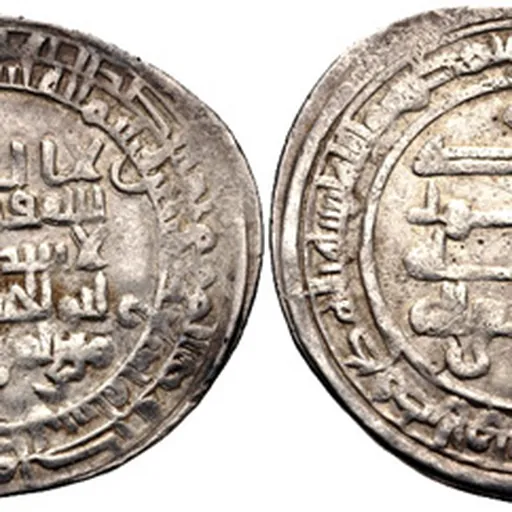
About Bajkam
Bajkam was an Arab military leader.
Abū al-Husayn Bajkam al-Mākānī , referred to as Bajkam, Badjkam or Bachkam (from Bäčkäm, a Persian and Turkish word meaning a horse- or yak-tail ), was a Turkish military commander and official of the Abbasid Caliphate. A former ghulam of the Ziyarid dynasty, Bajkam entered Abbasid service following the assassination of the Ziyarid ruler Mardavij in 935. During his five-year tenure at the Caliphate's court at Baghdad, he was granted the title of amir al-umara, consolidating his dominance over the caliphs al-Radi and al-Muttaqi and giving him absolute power over their domains. Bajkam was challenged throughout his rule by various opponents, including his predecessor as amir al-umara, Muhammad ibn Ra'iq, the Basra-based Baridis, and the Buyid dynasty of Iran, but he succeeded in retaining control until his death. He was murdered by a party of Kurds during a hunting excursion in 941, shortly after the accession of al-Muttaqi as Caliph. Bajkam was known both for his firm rule and for his patronage of Baghdad intellectuals, who respected and in some cases befriended him. His death led to a void in central power, resulting in a brief period of instability and fighting in Baghdad.
Early military career and service under Ibn Ra'iq Details of Bajkam's early life are unknown. He was a Turk, and began his career as one of the ghilman (military slaves, usually of Turkish origin) of a vizier to the Daylamite warlord Makan ibn Kaki in northern Iran. His master then made a gift of his ghilman, including Bajkam, to Makan. The latter took care of the young Bajkam's training and education, something for which the latter showed his gratitude by adopting his patron's name as his nisba (surname). After Mardavij's death, most of the ghilman in Ziyarid service dispersed. Bajkam and his fellow officer Tuzun assumed the leadership of a large group and, after first offering their services to the new governor of Jibal, Hasan ibn Harun, proceeded to the Abbasid court at Baghdad. At first, their offers were rejected by the court, where the Caliph's Hujariyya bodyguards jealously guarded their prerogatives, but the ghilman were eventually taken into the service of Muhammad ibn Ra'iq, governor of Basra and Wasit in southern Iraq. Now known as Bajkam Ra'iqi, Bajkam created a large military force under his command consisting of his own followers as well as additional Turks and Daylamites summoned from Jibal.
Far more difficult and protracted was the war against the ambitious governor of Ahwaz, Abu Abdallah al-Baridi, who aimed to supplant Ibn Ra'iq. In September 938, Bajkam led his troops from Wasit to Baghdad. Ibn Ra'iq tried without success to impede his advance by destroying the great dams of the Nahrawan Canal and flooding the plain, but Bajkam's army entered the Abbasid capital without opposition, and al-Radi immediately transferred Ibn Ra'iq's title of amir al-umara to Bajkam.
Bajkam, having consolidated his control over Baghdad, now turned to face the threat posed by the Buyids. To this end, he strengthened his ties with the Baridis of Basra, by handing over Wasit, as previously agreed, appointing Abu Abdallah al-Baridi as vizier of the Abbasid court (although the latter remained at Wasit and did not visit Baghdad), and, finally, by marrying himself to one of al-Baridi's daughters.
In December 940, al-Radi died. Bajkam remained at Wasit, but sent his secretary to Baghdad to convene a council of Abbasid aristocrats, who selected al-Muttaqi , al-Radi's brother, as Caliph. Bajkam also sent a slave named Takinak to the deceased Caliph's palace, the Dar al-Sultan, to procure various items, including the valuable al-Yatimah pearl. He also obtained three female slaves from al-Radi's palace, whose singing he remembered from his earlier visits to the Caliph.
Character Despite his slave origin, Bajkam was educated in Arabic (although he reportedly did not speak it for fear of making mistakes), respected by intellectuals and was known to seek the company of such men as al-Suli and the physician Sinan ibn Thabit. It is in their writings that glimpses of his character survive. According to the researcher Marius Canard, Bajkam was "covetous of power and money, he did not hesitate to resort to dissimulation and ruse, corruption and torture to attain his ends; he was at times cruel, though his bravery was legendary, and was more upright in character than Ibn Ra'iq". Bajkam was also solicitous for the welfare of his subjects, and especially the inhabitants of Wasit cherished his memory.
Don’t just read it —
keep it.
Full-length biographies made to live with: read them, listen on the way to work, watch them tonight.
- E-book
- Audio
- Video
Instant download · yours to keep · every purchase keeps this site free
Important facts
Related people
Same field, nearest in time





Frequently asked questions
Who was Bajkam?
military commander
When did Bajkam die?
Bajkam died on 21 April 941.
What was Bajkam's occupation?
Bajkam was a military leader.
What nationality was Bajkam?
Bajkam was Arab.
Sources & further reading
Cite this page
APA: Biography.guide. (2026). Bajkam. https://biography.guide/bajkam/
MLA: "Bajkam." Biography.guide, https://biography.guide/bajkam/.
Chicago: "Bajkam." Biography.guide. https://biography.guide/bajkam/.
Data last updated: 2026-09-20 · Spot an error? Report a correction.
Portrait: Wikimedia Commons · author & licence
Page generated 2026-09-27 04:58 UTC