
About Baitullah Mehsud
Lived 1974 – 2009 (aged 34–35). Baitullah Mehsud was a Pakistani politician.
Baitullah Mehsud ( – 5 August 2009) was a Pakistani militant. He was one of the founders and a leader of the Pakistani Taliban (TTP) in Waziristan. He formed the TTP from an alliance of about five militant groups in December 2007. He is thought by U.S. military analysts to have commanded up to 5,000 fighters as did his deputy Faqir Mohammed. Later Tehrik-i-Taliban Pakistan commander Hakimullah Mehsud denied previous TTP announcements and said Mehsud was in good health. Major General Athar Abbas, ISPR spokesman, and Robert Gibbs of the White House said his death could not be confirmed, U.S. National Security Adviser James L. Jones also claimed that there was "pretty conclusive" evidence that proved Baitullah Mehsud had been killed and that he was 90% sure of it. On 23 August 2009, Hakimullah Mehsud and Wali-ur-Rehman telephoned the BBC to say that Baitullah Mehsud had died on 23 August 2009 due to injuries sustained during the 5 August attack.
Syed Saleem Shahzad, writing in the Asia Times, described Baitullah Mehsud as a physically small man, with diabetes.
Background
Early life Baitullah Mehsud was born in 1970 in the Landi Dhok village in the Bannu District of Khyber Pakhtunkhwa province of Pakistan, which lies some distance from the Mehsud tribe's base in the South Waziristan Agency, his native village there being Dwatoi in the Ladha Subdivision, his father having moved to Bannu for work. An ethnic Pashtun, he hailed from the Broomi Khel side of the Shabi Khel sub-clan of the Mehsud tribe, and was one of five brothers.
He avoided media attention and refused to be photographed in adherence with his religious beliefs. Even if it's generally said that he did not attend schooling or religious madrassa,
He emerged as a major tribal leader soon after the 2004 death of Nek Mohammad.
Leadership dispute After Naik Muhammad's death, Abdullah Mehsud and Baitullah Mehsud both vied for dominance of the Pakistani Taliban. When Abdullah died in a raid by Pakistani security forces and later his successor perished in a bomb explosion. Qari Zain and other members of Abdullah's faction suspected that Baitullah played a role in the attacks. The rivalry continued after Zainuddin obtained leadership of Abdullah's group.
Relationship with Abdullah Mehsud Abdullah Mehsud, a Taliban leader who was among the first captives set free from Guantanamo, has been described as Baitullah's brother. Other sources have asserted that they were clansmen or merely associates. Islam Online reports that Baitullah suspected that Abdullah was a double agent.
2005 ceasefire agreement Mehsud entered into a ceasefire with Pakistani authorities on 8 February 2005. During the meeting at Sara rogha, the Pakistani military agreed to withdraw its troops from areas under Baitullah's control. The removal did not include the paramilitary Frontier Corps, consisting mostly of fellow Pashtuns. In exchange, Baitullah's followers would not attack government officials, impede development projects or allow foreign militants to operate within their territory. The ceasefire agreement ended in July 2005 when after accusing the government of reneging on the deal, Baitullah resumed attacks on security forces.
An official in Frontier Constabulary described his army: Baitullah's lashkar (army) is very organised. He has divided it into various units and assigned particular tasks to each unit. One of the units been tasked to kill people who are pro-government and pro-US or who support the US occupation of Afghanistan. The last person to be killed was Malik Arsallah Khan, chief of the Khuniakhel Wazir tribe, who was killed on 22 February in Wana (in South Waziristan).
In a January 2007 interview with the BBC Urdu Service, Baitullah extolled the virtues of jihad against foreigners and advocated taking the fight to the U.S. and to Britain.
After the siege of Lal Masjid in July Baitullah turned his forces against the Pakistani state. In April Baitullah circulated a pamphlet that ordered his followers not to undertake any attacks inside Pakistan due to ongoing peace talks.
In July 2008, Baitullah issued a statement that threatened to take action against the Khyber Pakhtunkhwa government if it did not step down within five days. The NWFP parliamentary leaders promptly refused.
Rumors of death in September 2008 Various news media sources reported the death of Baitullah Mehsud on 30 September 2008 at the age of 34 due to kidney failure. Many of his close associates, including his aide, his doctor and a Taliban spokesman, vehemently denied the rumors. According to the spokesman, Mehsud was "fit and well." Mehsud's doctor also said he had spoken with him after the rumors of his death. The rumors proved to be false.
Second marriage
Mehsud entered a second marriage in November 2008. Mehsud's first wife bore his four daughters and he may have hoped his second wife, "the daughter of an influential cleric," Ikramuddin Mehsud, would bear him a son.
Leadership dispute continues In February 2009, senior Taliban leaders Baitullah Mehsud, Hafiz Gul Bahadur and Maulvi Nazir put aside their differences in an effort to refocus against a common enemy. Nazir had previously feuded with Baitullah for his sheltering of Uzbek militants whom Nazir had fought to evict from South Waziristan. Both groups had distributed pamphlets leveling accusations against the other groups' leader. Qari Zainuddin stated that Baitullah's group was not practicing jihad because Islam forbids suicide attacks. Baitullah's pamphlet claimed that the slain Abdullah had been a government puppet and Qari Zainuddin was a traitor to Islam and to the Mehsud tribe.
Bounties On 28 June 2009 the Pakistani government announced a reward of Rs.50,000,000 for information that leads to the capture, dead or alive, of Baitullah. The bounty coincided with a previous offer from the United States, which offered $5,000,000.
Death in August 2009 On the night of 5 August 2009, while he was staying with his second wife at his father-in-law's house in Zangara, a U.S. drone attacked the premises. According to former CIA director Leon Panetta, he was observed on the roof of the house and identified by the distinctive hat he wore. According to The Times, it may have been his desire to father a son that ultimately led to his demise. and to claim he had been ill, perhaps gravely, for several months or had been "busy on the battlefield." Hakimullah indicated that soon a videotape would be released as a proof of his statements.
After his capture on 18 August, Maulvi Omar retracted his previous statements and confirmed that Baitullah had indeed perished in the missile strike. On 20 August, U.S. President Barack Obama stated "We took out [Baitullah] Mehsud" in a radio address. On 25 August, both Hakimullah Mehsud and Wali-ur-Rehman confirmed to BBC and AP correspondents that Baitullah had perished on 23 August from injuries sustained in the missile strike.
The attack was part of the U.S. Central Intelligence Agency's (CIA) campaign using unmanned aerial vehicles in the region by the agency's Special Activities Division. U.S. missile strikes targeting Mehsud territory in South Waziristan became more common after June 2009 when Pakistan, while having been publicly critical of the missile strikes, declared a military offensive against Mehsud.
After Baitullah Mehsud was reported to have been killed by missiles fired from an American Predator drone the Asia Times reported that Tohir Yo'ldosh had been Baitullah's ideological mentor, that Tohir had put 2,500 experienced fighters at his disposal, and that Baitullah lived with the Uzbek, who became his biggest ideological inspiration.
Notable incidents attributed to Baitullah Mehsud A September 2007 report from the United Nations attributed almost 80% of suicide bombings in Afghanistan to Baitullah. Pakistani officials traced an estimated 90% of suicide and militant attacks within Pakistan throughout the 2007–2009 period to his South Waziristan stronghold.
September 2007 Rawalpindi bombings Preliminary investigations concerning the September 2007 bombings in Rawalpindi note that Mehsud is the primary suspect behind the attacks. An 18 December 2005 report stated that Baitullah Mehsud, Abdullah Mehsud and Yaldeshev were the subject of a man-hunt. Authorities said they believed that the militants were short of ammunition and would be captured soon.
Benazir Bhutto assassination
On 28 December 2007 the Pakistan government claimed that it had strong evidence regarding Baitullah Mehsud as the man behind the assassination of former Prime Minister Benazir Bhutto on 27 December 2007. The Pakistani government released a transcript it asserted was from a conversation between Baitullah Mehsud and Maulvi Sahib (literally "Mr. Cleric"). According to the transcript Maulvi Sahib claimed credit for the attack, Baitullah Mehsud asked who carried it out, and was told, "There were Saeed, the second was Badarwala Bilal and Ikramullah Mehsud was also there."
The translation released from Agence France Presse differed slightly from the translation from the Associated Press. Mehsud's spokesman was quoted as saying: "I strongly deny it. Tribal people have their own customs. We don't strike women."
In an address to the nation on 2 January 2008, Pakistani President Pervez Musharraf said that he believed Maulana Fazlullah and Baitullah Mehsud were prime suspects in the assassination of Bhutto.
On 18 January 2008, The Washington Post reported that the CIA has concluded that Mehsud was behind the Bhutto assassination. "Offering the most definitive public assessment by a U.S. intelligence official, Michael V. Hayden said Bhutto was killed by fighters allied with Mehsud, a tribal leader in northwestern Pakistan, with support from al-Qaeda's terrorist network." U.S. President George W. Bush then placed Mr. Mehsud on "a classified list of militant leaders whom the C.I.A. and American commandos were authorized to capture or kill."
March 2009 Lahore police academy attack In telephone interviews with news media Mehsud claimed responsibility for 30 March 2009 attack on the police training academy in Lahore. He told the BBC that the attack was in retaliation for continued missile strikes from American drones for which the Pakistani government shared responsibility. In the same interview Mehsud claimed two other attacks: a 25 March attack on an Islamabad police station and a 30 March suicide attack on a military convoy near Bannu.
Don’t just read it —
keep it.
Full-length biographies made to live with: read them, listen on the way to work, watch them tonight.
- E-book
- Audio
- Video
Instant download · yours to keep · every purchase keeps this site free
Important facts
People in Baitullah Mehsud's life
Named in this biography and alive at the same time
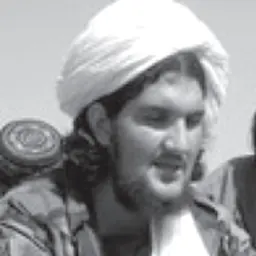


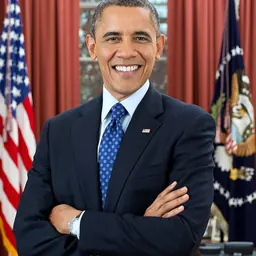




Related people
Same field, nearest in time
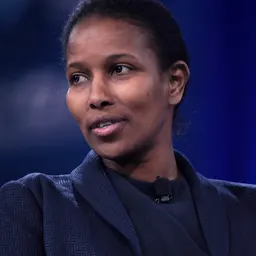

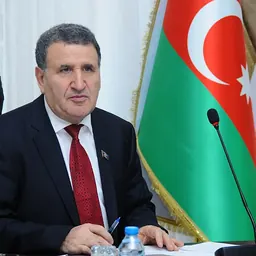

Contemporaries
People whose lives overlapped Baitullah Mehsud's




Frequently asked questions
Who was Baitullah Mehsud?
Pakistani Taliban militant leader (1974-2009)
When was Baitullah Mehsud born?
Baitullah Mehsud was born in 1974 in Bannu District.
When did Baitullah Mehsud die?
Baitullah Mehsud died on 5 August 2009 in Waziristan.
What was Baitullah Mehsud's occupation?
Baitullah Mehsud was a politician.
What nationality was Baitullah Mehsud?
Baitullah Mehsud was Pakistani.
Sources & further reading
Cite this page
APA: Biography.guide. (2026). Baitullah Mehsud. https://biography.guide/baitullah-mehsud/
MLA: "Baitullah Mehsud." Biography.guide, https://biography.guide/baitullah-mehsud/.
Chicago: "Baitullah Mehsud." Biography.guide. https://biography.guide/baitullah-mehsud/.
Data last updated: 2026-09-20 · Spot an error? Report a correction.
Page generated 2026-09-27 05:31 UTC