
About Bahram Beyzai
Lived 1938 – 2025 (aged 87). Bahram Beyzai was an Iranian film director, theatre director, screenwriter, playwright, film editor and university teacher.
Bahrām Beyzai (also spelt Beyzāêi, Beizāi, Beyzāêi, Beyzāee, ; 26 December 1938 – 26 December 2025) was an Iranian filmmaker, playwright, theatre director, researcher, and ostād ("master") of Persian literature, mythology, and Iranian studies.
Beyzaie was the son of the poet Ne'matallah Beyzai (best known by his literary pseudonym "Zokā'i"), and there were several other poets in his family.
Before he started making films in 1970, he was a leading playwright. Despite his belated start in cinema, Beyzai is often considered a pioneer of a generation of filmmakers whose works are sometimes described as the Iranian New Wave. His Bashu, the Little Stranger (1986) was voted "Best Iranian Film of all time" in November 1999 by the Persian movie magazine Picture World poll of 150 Iranian critics and professionals.
From 2010, Beyzai lived and taught at Stanford University in California, United States. While in United States he was very critical of Iranian Islamic regime. Early life and education Bahram Beyzai was born on 26 December 1938
Bahram Beyzai started skipping school from around the age of 17 in order to go to the movies, which were becoming increasingly popular in Iran at a rapid pace. This only deepend his hunger to learn more about cinema and the visual arts.
Beyzai attended the Dar'ol-Fonoun high school as an adolescent, where he did not get along with his peers and teachers, and regularly skipped classes to go to the movies. In his late teens he composed his earliest dramatic pieces. The young Bahram did not seem very interested in his family legacy or poetry, the latter of which was pursued by his father, uncles and cousins. In high school, Dar'ol-Fonoun, he wrote two historical plays which went on to become his preferred method of writing.
At the age of 21, he did substantial research on the traditional Persian plays, particularly ta'ziyeh, and by 1961 he had already spent a great deal of time studying and researching other ancient Persian and pre-Islamic cultures and literatures. This, in turn, led him to study Eastern theatre and traditional Iranian theatre and arts, which would help him formulate a new non-Western identity for Iranian theatre. He also became acquainted with Persian painting.
Career Playwriting in the 1960s In 1968, Beyzai was one of the nine founders of the Iranian Writers' Guild, which was a highly controversial organization in the face of censorship. In 1969, he was invited to teach at the Theater Department of the College of Fine Arts at the University of Tehran. He chaired this department from 1972 to 1979. With his readership, many prominent authors and artists started teaching at the department and created the most fruitful period in the history of that department.
Beyzaie's groundbreaking A Study on Iranian Theatre (Namayesh dar Iran), published in mid-1960s is still considered the most important text on the history of Iranian theater. Beyzaie is also the first scholar in Iran to publish books on theatre of Japan and theatre of China.
Some of his plays, such as his masterpiece Death of Yazdgerd, have been translated into numerous languages and performed worldwide. Death of Yazdgerd has been performed in Iran, France, England, India and the USA, among other countries, and was made into a film of the same name by Beyzai in 1981. Death of Yazdgerd and Kalat Claimed have been translated into English by Manuchehr Anvar.
He was a leading playwright as well as theatre historian, and is often considered the greatest playwright of the Persian language, and holds a reputation as "The Shakespeare of Persia".
The 1970s and the outset of a cinematic career In 1969, he began his film career by directing the short film Amu Sibilou (Uncle Moustache) followed by "Safar" in 1970. With these films, Beyzai is often considered to be a pioneer of the Iranian New Wave, a Persian cinema movement that was started in the late 1960s.
Immediately after, in 1971, he made his first feature film Ragbar (Downpour) which critics regard to this day as one of the most successful Iranian films ever made. The successful film addresses the late Parviz Fannizadeh as its central character and protagonist.
He produced and directed eight films, including Qaribe va Meh (Stranger and the Fog) (1974), Cherike-ye Tara (Ballad of Tara) (1979), Bashu, the Little Stranger (1986, released in 1989), Shāyad Vaghti digar (Maybe Another Time) (1988) and Mosaferan (Travellers) (1992).
Filmmaking in the 1980s In 1981, the revolutionary leaders started the Iranian Cultural Revolution, as a result of which Beyzaie, among many others, was expelled from the university. He continued writing and making films, though. His screenplay Ruz-e Vaqe'e (The Fateful Day) was adapted into a film in 1995 and another screenplay was adapted into a film named Fasl-e Panjom (The fifth season) in 1996, while he also made four of his finest films. He also edited Ebrahim Hatamikia's Borj-e Minu (Minoo Tower).
1990–2025 After Mosaferan, he failed to get a permit to produce several screenplays. In 1995, he left Iran for Strasbourg at the invitation of the International Parliament of Writers. Soon however, he returned and staged The Lady Aoi in Tehran.
In 2001, he made his film Killing Mad Dogs, after which he staged three plays.
He left Iran in 2010 at the invitation of Stanford University, and was the Daryabari Visiting Professor of Iranian Studies, teaching courses in Persian theatre, cinema and mythology. He gave workshops on the Shahnameh, the history of Iranian performing arts, Iranian and Semitic myths. Beyzai also staged several plays, including his nine-hour Tarabnameh.
Cinematic style
He is known as the most intellectual and conspicuous "author" in Iranian cinema and theater. The main theme of his works is the history and "crisis of identity," which is related to Iranian cultural and mythical symbols and paradigms. He is considered Iran's most prominent screenwriter in terms of the dramatic integrity of his works, many of which have been made into films.
Reception and criticism Beyzai's film Bashu, the Little Stranger (1986) was voted "Best Iranian Film of all time" in November 1999 by a Persian movie magazine Picture World poll of 150 Iranian critics and professionals.
Ebrahim Golestan, who had previously objected to Beyzai's style, praised him in a letter in 2017.
In 2025, Bashu, the Little Stranger won the best film in the Classics section at the Venice International Film Festival.
Personal life Beyzai married Monir-A'zam Raminfar in 1965; they divorced in 1994. He married Mojdeh Shamsaie in 1992.
He had four children, including Niloofar Beyzaie, Arjang (died), Negar, Niassan. Later life, death, and legacy Beyzai moved to the United States in 2010. He was a visiting professor in Iranian studies at Stanford University for 15 years. his 87th birthday.
Prince Reza Pahlavi, the exiled son of the last Shah of Iran, paid tribute by describing Beyzai's demise as "a great loss for the art and culture of Iran".
Works Filmography (as director)
Amū Sibilū (1969 – short) Safar (1970 – short – a.k.a. The Journey) Ragbār (1972 – a.k.a. Downpour) Qaribé va Meh (1974 – a.k.a. The Stranger and the Fog) Kalāq (1976 – a.k.a. The Crow or The Raven ) Charike-ye Tārā (1979 – a.k.a. Ballad of Tara) Marg-e Yazdgerd (1982 – a.k.a. Death of Yazdgerd) Bashu, the Little Stranger (1986 – a.k.a. Bashu – released 1989) Shāyad Vaghti Digar (1988 – a.k.a. Maybe Some Other Time) Mosāferan (1992 – a.k.a. Travellers) Goft-o-gū bā Bād (1998 – short – a.k.a. Talking with the Wind) Sagkoshi (2001 – a.k.a. Killing Mad Dogs) Qāli-ye Sokhangū (2006 – short – The Talking Carpet) Vaqti Hame Khāb-im (2009 – When We are All Asleep)
Plays
Beyzaie has over 50 published plays, some of which are as follows. These works have occasionally appeared in French, English, German and other translations. "Gorob dar Diari Garib" (Evening in a Strange Land, translation into English by Gisele Kapuscinski) "Chahar Sandoogh" (Four Boxes, translation into English by M.R. Ghanoonparvar and John Green) "Hashtomin Safar e Sandbad" (Sindbad's Eighth Voyage; Le Huitième voyage de Sindbad, translation into French by Ahmad Kamyabi Mask ) Ziāfat va Mirās (1967 – a.k.a. Heritage and The Feast) (1969 – a.k.a. The King Snake) Marg-e Yazdgerd (1979 – a.k.a. Death of Yazdgerd) Memoirs of the Actor in a Supporting Role (1981) Kalat Claimed (1982) Kārnāme-ye Bandār Bidakhsh (1997 and 1998) Bānū Aoi (The Lady Aoi (Bahram Beyzai production) (1997 and 1998) based on The Lady Aoi by Yukio Mishima) Shab-e Hezār-o-yekom (The One Thousand and First Night) (2003) Afrā yā Ruz migozarad (2007 – a.k.a. Afra, or the Day Passes) Crossroads (2009) Jana and Baladoor (2012 – A Play in Shadows) Arash (2013 – A Play Reading) Ardaviraf's Report (2015) Tarabnameh (2016 – Part one and Part two)
Speeches and lectures
Awards and honors
The prizes, awards and honors he has won are numerous.
2017, D.Litt. honoris causa, University of St Andrews 2014, Bita Prize for Persian Arts 2012, Farhang Foundation Heritage Award
Don’t just read it —
keep it.
Full-length biographies made to live with: read them, listen on the way to work, watch them tonight.
- E-book
- Audio
- Video
Instant download · yours to keep · every purchase keeps this site free
Important facts
Family & relationships
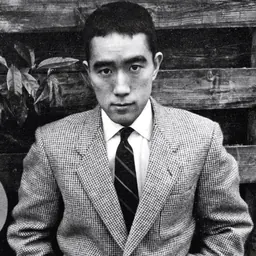
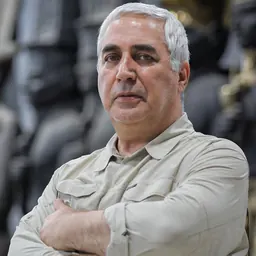
People in Bahram Beyzai's life
Named in this biography and alive at the same time





Related people
Same field, nearest in time




Contemporaries
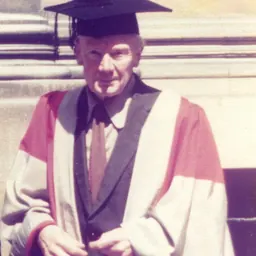
People whose lives overlapped Bahram Beyzai's



Frequently asked questions
Who was Bahram Beyzai?
Iranian film director (1938-2025)
When was Bahram Beyzai born?
Bahram Beyzai was born on 26 December 1938 in Tehran.
When did Bahram Beyzai die?
Bahram Beyzai died on 26 December 2025 in California.
What was Bahram Beyzai's occupation?
Bahram Beyzai was a film director, theatre director, screenwriter, playwright, film editor and university teacher.
What nationality was Bahram Beyzai?
Bahram Beyzai was Iranian.
Sources & further reading
Cite this page
APA: Biography.guide. (2026). Bahram Beyzai. https://biography.guide/bahram-beyzai/
MLA: "Bahram Beyzai." Biography.guide, https://biography.guide/bahram-beyzai/.
Chicago: "Bahram Beyzai." Biography.guide. https://biography.guide/bahram-beyzai/.
Data last updated: 2026-09-20 · Spot an error? Report a correction.
Page generated 2026-09-27 05:34 UTC