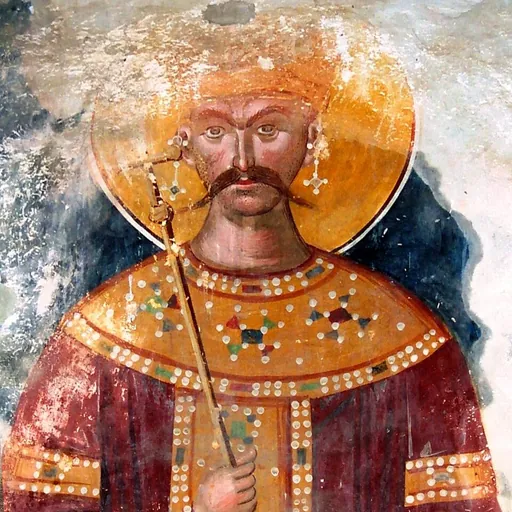
About Bagrat III of Imereti
Lived 1495 – 1565 (aged 69–70). Bagrat III of Imereti was a monarch and royalty.
Bagrat III (; 23 September 1495 – 1565), of the Bagrationi dynasty, was the King (mepe) of the Kingdom of Imereti from 1510 to 1565, one of the three Georgian kingdoms that shared control over Georgia following its division in 1490.
Bagrat ascended the throne at the age of fifteen after the death of his father. Throughout his reign, he faced numerous invasions by the Ottoman Empire, notably in 1512, 1543, 1545, and 1549. These invasions led to widespread devastation across his realm and marked the beginning of the decline of a once-powerful western Georgian kingdom. Although Bagrat initially controlled extensive territories, he gradually lost authority over Abkhazia, Samtskhe, and, toward the end of his reign, over the strong principalities of Guria and Mingrelia. His struggles against rebellious vassals proved fruitless, and by the time of his death, after fifty-five years of rule, his dominion had been reduced to the capital city of Kutaisi and a few surrounding agricultural provinces.
Bagrat III is particularly remembered for refusing to convert to Islam, unlike several contemporary Georgian rulers. He actively promoted the construction of new churches and strengthened the influence of the Catholicate of Abkhazia. He is also notable for abolishing slavery, a measure that, while moral in intent, had a detrimental effect on the agrarian economy of his kingdom.
Biography
Accession to the Throne
Bagrat was born on 23 September 1495, the eldest son of King Alexander II of Imereti and Queen Tamar. Little is known about his early life, which took place during ongoing conflicts with the neighboring Georgian Kingdom of Kartli and the Ottoman Empire.
In April 1510, Alexander II died of illness in Kutaisi following a campaign against the Ottomans. Bagrat succeeded to the throne of Imereti at the age of fourteen. The early years of his reign were marked by internal conflict, including a rebellion led by his younger brother, Vakhtang.
In 1512, Vakhtang fled to Kartli, where he was besieged and defeated by Bagrat at Mokhisi. resulted in a disastrous defeat. Prince Mamia III of Mingrelia was killed in battle, while Mamia I of Guria was captured by the Zygians.
King Bagrat III sent Malachia I, Catholicos of Abkhazia, to negotiate the return of the captured prince and the body of Mamia III of Mingrelia. The Georgian defeat marked the end of Orthodox dominance in the northwestern regions of Abkhazia, where Islam began to spread with Ottoman support.
Domestic Policy
Following the Ottoman invasion of 1512, Bagrat III devoted the early part of his reign to restoring the damage inflicted on Kutaisi. With the assistance of a noble named Joseph Phanelidze, he repurchased and rebuilt the Gelati Monastery, entrusting its care to Phanelidze and his descendants. In return, Phanelidze was granted ownership of the surrounding lands and villages, under the condition that he maintain the monastery, while the king retained unrestricted hunting rights in the area.
That same year, Bagrat recognized Mamia III Dadiani as Prince of Mingrelia following the death of Liparit II. By tradition, Mamia Dadiani also assumed the post of Mandaturtukhutsesi (Minister of the Interior), while Mamia Gurieli, who became vassal ruler of Guria in 1512, was appointed Amirspasalar (commander-in-chief) of the royal forces.
After the reconstruction of Gelati, Bagrat transferred the religious center of Imereti from Bichvinta—the seat of the Catholicate of Abkhazia—to Gelati. This move both strengthened royal influence over the church and responded to the growing spread of Islam in Abkhazia. Unlike Bichvinta, located on the Black Sea coast in northern Abkhazia, Gelati lay close to the royal capital of Kutaisi. In 1519, Bagrat appointed Malachia Abashidze as Catholicos, succeeding Stephen, who had led the Church since 1490. Malachia held the office until 1540, after which the line of patriarchs is unknown until Bagrat’s appointment of Eudemios Tchkheidze in 1557.
The king also worked to restore lands devastated by Ottoman incursions, redistributing them among loyal subjects. In recognition of his fidelity, Shoshita Tchkheidze was granted governance over Racha, when Bagrat arranged the marriage of his daughter, Tamar, to Prince Luarsab of Kartli, the king’s nephew and heir. The alliance between Imereti and Kartli quickly turned opportunistic: in 1527, Bagrat invaded Kartli, deposed King George IX, and installed his son-in-law on the throne. In return, Imereti annexed all territories west of the Prone River, including the strategic towns of Surami and Borjomi. Relations between the two realms remained unstable in the following decades. Under Ottoman pressure in the 1530s, Bagrat returned the conquered lands to King Luarsab in exchange for military support. Later, in 1546, Bagrat III was among several Georgian monarchs—including Kaikhosro II Jaqeli and Levan of Kakheti—who pledged allegiance to the Safavid shah Tahmasp I at Akhalkalaki, offering assistance in an offensive against Kartli in return for Persian protection against Ottoman aggression.
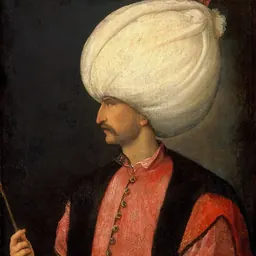
War in Samtskhe Mural painting of Bagrat III at the Zarzma Monastery in Samtskhe. In the summer of 1534, the Ottoman Empire launched a campaign against Safavid Persia in an effort to seize control of Shirvan. During his march toward Tabriz, Suleiman the Magnificent crossed through Samtskhe, taking advantage of local unrest to suppress a noble uprising and form an alliance with Prince Qvarqvare III. This development compelled Bagrat III to mobilize his forces to prevent Ottoman expansion along his borders.
In 1535, Bagrat assembled his army and allied with his vassals from Mingrelia and Guria to invade Samtskhe. On 12 August, his troops approached Akhalkalaki and engaged Qvarqvare III in the Battle of Murjakheti. The prince of Samtskhe was killed, and his principality was subsequently annexed by Bagrat III. Qvarqvare’s young son, Kaikhosro, fled to Constantinople. From his newly acquired territories, Bagrat granted Javakheti to Luarsab I in an effort to strengthen relations between the two Georgian kingdoms. Mamia III of Guria received Adjara and Chaneti as rewards for his assistance, while the contribution of Mingrelia went unrewarded.
Despite his victory, Bagrat soon faced Ottoman retaliation. On 4 July 1536, Mehmed Khan, beylerbey of Erzurum, led a counteroffensive into Samtskhe, capturing several Georgian towns in Tao-Klarjeti, including Artvin and Narman. For the first time, the Ottomans annexed Georgian territories, imposing Turkish and Islamic administration on the local Orthodox population—a sign of a new, aggressive Ottoman policy toward Imereti.
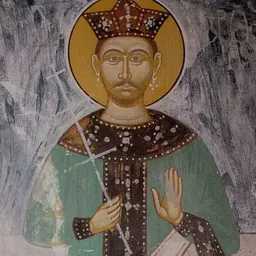
Following their invasion, Ottoman troops plundered Georgian churches and villages for several years. In an effort to halt the attacks, Bagrat III sought assistance from Shah Tahmasp I of Persia, offering his submission in exchange for military aid in Samtskhe. Although the Shah declined, he sent generous gifts to the King of Imereti. George II of Imereti (died 1585), King of Imereti ; Prince Teimuraz , father of Bagrat IV of Imereti; Prince Vakhtang ; Prince Constantine (died 1587), a claimant to the Imeretian throne and father of Rostom of Imereti and George III of Imereti; Princess Tamar (died 1556), who married Luarsab I; An unnamed daughter, who married Ramaz Bagration-Davitishvili.
Legacy
Bagrat III ruled during one of the most turbulent periods in Georgian history. While medieval Georgia had once flourished as a unified and powerful kingdom during its golden age, the first half of the 16th century marked the beginning of its national fragmentation. The country was divided into rival kingdoms, local vassals rebelled against their suzerains, and the Muslim empires—primarily the Ottomans and the Safavids—repeatedly invaded Imereti. Despite these difficulties, Bagrat III managed to strengthen and promote the Georgian Orthodox faith throughout his realm.
In 1512, he undertook the reconstruction of the Gelati Monastery, one of Georgia’s most significant religious and cultural centers. In 1529, he reorganized the structure of the Catholicate of Abkhazia, establishing the bishoprics of Gelati and Khoni. Later, in 1534, he rebuilt the Cathedral of Nikortsminda, designating it as the seat of another episcopate. These efforts reflected his commitment to restoring ecclesiastical authority and preserving Georgia’s spiritual heritage amid political instability.
Economically, however, Imereti remained impoverished. According to historian Nodar Asatiani, Bagrat’s reign coincided with the introduction of several new taxes on wine, wheat, and livestock—imposed both by the Crown and the Church. The royal court became increasingly unpopular as Bagrat refused to curb the oppression of minor nobles, while the agricultural economy collapsed under the combined effects of Ottoman raids and the slave trade, which devastated the rural population.
Following Bagrat III’s reign, Imereti experienced a severe population decline, as many inhabitants migrated to Abkhazia and the mountainous regions of the Caucasus, where royal and Ottoman influence gradually faded. Despite the hardships of his era, Bagrat III remains remembered as a defender of Orthodoxy and a monarch who sought to preserve Georgian identity during a period of profound disunity and external threat.
In Popular Culture In 2015, the American television series Reign: The Destiny of a Queen portrayed a young King of Imereti, aged fifteen, whose father dies at the beginning of the 16th century, compelling him to return to his homeland to be crowned. The character is widely believed to be inspired by Bagrat III, who likewise ascended the throne of Imereti at the age of fifteen. The role of the young king is played by Charles Vandervaart.
Don’t just read it —
keep it.
Full-length biographies made to live with: read them, listen on the way to work, watch them tonight.
- E-book
- Audio
- Video
Instant download · yours to keep · every purchase keeps this site free
Important facts
Family & relationships
People in Bagrat III of Imereti's life
Named in this biography and alive at the same time

Related people
Same field, nearest in time


Contemporaries
People whose lives overlapped Bagrat III of Imereti's






Frequently asked questions
Who was Bagrat III of Imereti?
King of Imereti
When was Bagrat III of Imereti born?
Bagrat III of Imereti was born on 23 September 1495.
When did Bagrat III of Imereti die?
Bagrat III of Imereti died in 1565.
What was Bagrat III of Imereti's occupation?
Bagrat III of Imereti was a monarch and royalty.
Sources & further reading
· Wikipedia: Bagrat III of Imereti
· DBpedia: Bagrat III of Imereti
Cite this page
APA: Biography.guide. (2026). Bagrat III of Imereti. https://biography.guide/bagrat-iii-of-imereti/
MLA: "Bagrat III of Imereti." Biography.guide, https://biography.guide/bagrat-iii-of-imereti/.
Chicago: "Bagrat III of Imereti." Biography.guide. https://biography.guide/bagrat-iii-of-imereti/.
Data last updated: 2026-09-20 · Spot an error? Report a correction.
Portrait: Wikimedia Commons · author & licence
Page generated 2026-09-27 04:58 UTC