
About Badawi al-Jabal
Lived 1905 – 1981 (aged 75–76). Badawi al-Jabal was a Syrian poet, politician and writer.
Early life Badawi was born in 1903 His father, Sheikh Sulayman al-Ahmad, was a prominent Alawite imam from the Kalbiyya tribal confederation, and also served in the Damascus-based Arab Academy of Language in 1919. Badawi developed an early understanding of the Qur'an and classic Arabic poems from his father.
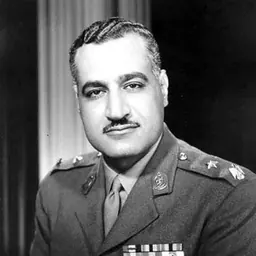
Following the French occupation of Syria in the aftermath of World War I, Badawi joined the Al-Ali Revolt, which centered in the Syrian coastal mountain areas. He fought alongside Saleh al-Ali's men, committing acts of sabotage against French forces. He also served as an intermediary between al-Ali and the King of Syria, Faisal I. Badawi was incarcerated by the French Mandatory authorities for many months in 1920–21 for his involvement in Syrian resistance activities, but was ultimately released because of his young age. Badawi was a fierce critic of socialism, particularly the way that the ideology was adopted by Egypt and Syria. He wrote that socialism was an "evil" system that merely served to concentrate power and wealth into the hands of the elite by seizing resources, denying individual freedom and justice to citizens and encouraging immorality in society. Moreover, he claimed socialism was an assault on religion and religious individuals. During his time in al-Ghazzi's cabinet, he publicly stated his opposition to Quwatli's closeness with the pan-Arabist and socialist president of Egypt, Gamal Abdel Nasser, and the Soviet Union.
His poetic style was classical Arabic prose, Although Badawi refused to introduce modern Arabic wording to his poetry,
Sufi literary influences, particularly that of Ibn al-Farid, greatly influenced Badawi's later works. He believed that through exploring one's own heart, one could find "the beauty of his God, and sip [sic] the wine of His knowledge and love." He belonged to the neoclassical school of Arabic poets, which included Ahmed Shawqi. According to Jayyusi, Badawi "surpassed all his neo-classical contemporaries ... by his ability to achieve a universality, to arrive at the poetic moment in which the factual and metaphysical merge." His poetry often expressed constant loneliness, unquenchable thirst and foreboding which reflected the real-time events of his life and the greater Arab population yet in nature, were abstract.
Badawi's poetry also reflected an extent of automatism as testified by a moment during one of his parliamentary campaigns in the 1950s when a crowd of supporters gathered around to hear him speak about his political goals. Instead of immediately speaking to the crowd, he locked himself in a study and penned a profanely mystical love poem called The Holy Flame, which he then read to the crowd.
Don’t just read it —
keep it.
Full-length biographies made to live with: read them, listen on the way to work, watch them tonight.
- E-book
- Audio
- Video
Instant download · yours to keep · every purchase keeps this site free
Important facts
People in Badawi al-Jabal's life
Named in this biography and alive at the same time

Related people
Same field, nearest in time

Contemporaries
People whose lives overlapped Badawi al-Jabal's





Frequently asked questions
Who was Badawi al-Jabal?
Syrian poet
When was Badawi al-Jabal born?
Badawi al-Jabal was born in 1905 in Al-Haffah.
When did Badawi al-Jabal die?
Badawi al-Jabal died on 19 August 1981 in Syria.
What was Badawi al-Jabal's occupation?
Badawi al-Jabal was a poet, politician and writer.
What nationality was Badawi al-Jabal?
Badawi al-Jabal was Syrian.
Sources & further reading
Cite this page
APA: Biography.guide. (2026). Badawi al-Jabal. https://biography.guide/badawi-al-jabal/
MLA: "Badawi al-Jabal." Biography.guide, https://biography.guide/badawi-al-jabal/.
Chicago: "Badawi al-Jabal." Biography.guide. https://biography.guide/badawi-al-jabal/.
Data last updated: 2026-09-20 · Spot an error? Report a correction.
Page generated 2026-09-27 05:29 UTC