
About Babs Fafunwa
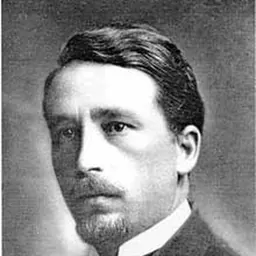
Lived 1923 – 2010 (aged 87). Babs Fafunwa was a Nigerian academic, writer, politician, minister and university teacher, known for Education.
Aliu Babatunde Fafunwa (23 September, 1923 – 11 October, 2010). He was the first Nigerian Professor of Education in Nigeria. He was a Nigerian Educationist, Scholar and Former Minister for Education. He is known for his early writings on the need to re-appraise the inherited colonial epistemological system in Nigeria and to introduce relevant cultural goals, subjects and local languages into the system, in order to accommodate the developmental and cultural pattern of the country. He is also a notable authority on the History of Educational Planning in Nigeria.
Early life and education Born on September 23, 1923, in Isale Eko, Lagos, Fafunwa had his secondary education at the CMS Grammar School, Lagos between 1937 and 1943. He obtained a B.Sc. (Magna Cum Laude) in Social Science and English from Bethune Cookman College (now Bethune-Cookman University, Florida, United States in 1950 and had his M.A (Cum Laude) in Administration and Higher Education in 1955. He earned a Ph.D. in education from New York University in 1958, becoming the first Nigerian recipient of a doctoral degree in education. He was a co-founder of the Muslim Students Society of Nigeria.
Career He started his career in 1961 at the University of Nigeria (UNN), Nsukka. During the Nigerian Civil War, he left the east and moved to Ife, and taught at the Obafemi Awolowo University.
He became a professor of education in 1966 and held the position of Dean, Faculty and Head, Department of Education at the University of Nigeria, Nsukka, UNN. Due to his brilliance and hard work, he rose to the position of Acting Vice Chancellor at both UNN and University of Ife (now Obafemi Awolowo University). He was also Pro-Chancellor and Chairman of Governing Council, University of Calabar. He was at several times, President, Association of Teachers Education in Africa, Director, International Council on Education for Teaching, Washington D C. He retired from active teaching service in 1978 to start the first tutorial college in Nigeria in 1982. During his time as Minister of Education between 1990 and 1992, he oversaw the establishment of the Nigeria French Language Village as an inter-university centre for French studies in Nigeria. and further broadened the acceptance of Colleges of Education in the university system; today a lot of the colleges are affiliated with universities. He also continued an innovative tradition, already in existence at Nsukka, when he began to implement a curriculum for granting a bachelor's degree in education, the first faculty in the country to do so. A process which will further expand the career potential of many teachers.
In 1977, a long time proposal of his to incorporate native languages into pedagogy was finally accepted. Today, most Nigerians learn at least one Nigerian language. Fafunwa and a few other African educationists, had argued that embracing whole heartedly without evaluation foreign systems of education and epistemology, can create the potential for epistemological dis-orientation. Introducing, cultural objectives and environmental familiarity will provide a continuity and balance into the educational advancement of a child and his place in his community.
Babs Fafunwa died in the early hours of 11 October 2010, at a hospital in Abuja, the Nigerian Federal Capital Territory and was buried in Lagos.
Selected works A History of Nigerian Higher Education, Macmillan. History of Education in Nigeria, 1970. New Perspectives in African Education, 1967 Education in Mother Tongue: The Ife Primary Education Research Project, 1970-1978 (Editor) Up and On: A Nigerian Teacher's Odyssey, 1991. Memoirs of a Nigerian Minister of Education, Macmillan (Nigeria), 1998. Sense and non-sense in Nigerian Education, 1998
Don’t just read it —
keep it.
Full-length biographies made to live with: read them, listen on the way to work, watch them tonight.
- E-book
- Audio
- Video
Instant download · yours to keep · every purchase keeps this site free
Important facts
People in Babs Fafunwa's life
Named in this biography and alive at the same time
Related people
Same field, nearest in time



Contemporaries
People whose lives overlapped Babs Fafunwa's




Frequently asked questions
Who was Babs Fafunwa?
academic
When was Babs Fafunwa born?
Babs Fafunwa was born on 23 September 1923 in Lagos.
When did Babs Fafunwa die?
Babs Fafunwa died on 11 October 2010 in Abuja.
What was Babs Fafunwa's occupation?
Babs Fafunwa was an academic, writer, politician, minister and university teacher.
What was Babs Fafunwa known for?
Babs Fafunwa was known for Education.
What nationality was Babs Fafunwa?
Babs Fafunwa was Nigerian.
Sources & further reading
Cite this page
APA: Biography.guide. (2026). Babs Fafunwa. https://biography.guide/babs-fafunwa/
MLA: "Babs Fafunwa." Biography.guide, https://biography.guide/babs-fafunwa/.
Chicago: "Babs Fafunwa." Biography.guide. https://biography.guide/babs-fafunwa/.
Data last updated: 2026-09-20 · Spot an error? Report a correction.
Page generated 2026-09-27 05:11 UTC