
About Avempace
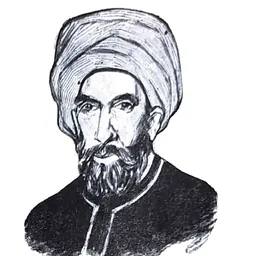
Lived 1095 – 1139 (aged 43–44). Avempace was a philosopher, mathematician, astronomer, writer, physician and botanist.
Biography Avempace was of Arab descent. He was born in Zaragoza, in what is today Aragon, Spain, around 1085 and died in Fes then under the Almoravid dynasty, in 1138. Rulers of Zaragoza shifted constantly throughout Avempace's young life, but in 1114, a new Almoravid governor of Zaragoza was appointed: Abu Bakr 'Ali ibn Ibrahim as-Sahrawi, also known as Ibn Tifilwit. The close relationship between Avempace and Ibn Tifilwit is verified in writings by Ibn al-Khatib. Avempace enjoyed music and wine with the governor and also composed panegyrics and muwashshahat to publicly praise Ibn Tifilwit, who rewarded him by nominating him as his vizier. In a diplomatic mission to meet the overthrown Imad ad-Dawla Ibn Hud King in his castle, Avempace was placed in jail for some months for reasons unknown. Ibn Tifilwit was also killed during a quest against the Christians in 1116, ending his short reign and inspiring Avempace to compose mournful elegies in his honor. He worked, for some twenty years, as the vizier of Yusuf Ibn Tashfin. A poetry anthology, Qala’id al-iqya (Necklace of Rubies), was also created by a courtier of Ibn Tashufin's, Abu Nasr al-Fath Ibn Muhammad Ibn Khaqan, which condescendingly placed Avempace in last place. Under Ibn Tashfin, the Sultan of the Almoravid empire, Avempace was imprisoned twice. The details of the imprisonment are not well understood, but can be assumed. Despite being unwelcomed, Avempace remained with the Almoravid empire for the rest of his life until his death in 1138. There has been evidence presented that brings up the argument that the cause of Avempace's death was by poison from his peers. Al-Maqqari details in his writing that a physician, Abu l-'Ala' Ibn Zuhr, was an enemy of Avempace's whose servant, Ibn Ma‛yub, was suspected of poisoning him at the time but was never convicted.
Around his time, Islamic philosophy, and the post-hellenic world, was mainly divided into two opposing branches of thoughts. The Eastern branch, which was led by Ibn Sina, known as Avicenna in Latin, and the Western branch, which was led by Ibn Bajjah. Avempace's work in philosophy is seen as uneven and mostly incomplete, but what parts of his work that survive to this day demonstrates originality in his thought process. His main philosophical work is the unfinished politico-ethical treatise Governance of the Solitary.
Upon his unplanned trip to Egypt, Avempace wrote Risālat al-wadāʿ (Letter of Bidding Farewell) and Risālat al-ittiṣāl al-ʿaql bi al-insān (Letter on the Union of the Intellect with Human Beings) that were dedicated to Ibn al-Imām. His famous works included Tadbīr al-mutawaḥḥid (Management of the Solitary), the Kitāb al-nafs (Book on the Soul), and the Risāla fī l-Ghāya al-insāniyya (Treatise on the Objective of Human Beings). The reflections of his famous accomplishments show how these were written near the end of his life. He was inspired based on Aristotelian line. In Avempace's philosophy, it contains two key pillars, solitude and conjunction. Solitude represents the isolation philosopher commonly seeks in order to protect himself from the corruption of society and conjunction refers to the philosopher's quest for the lowest celestial intelligence. It is required for the human soul's development.
These works are tough to understand. Nevertheless, Risālat al-ittiṣāl has interpreted the introduction. The treatise stated the overall point of Avempace's thinking:"The ultimate end of man, namely the contemplation of truth, with the active intellect joining the human intellect in a contemplative and almost mystic way."However, the most important idea from Avempace's system was not mentioned in the treatise, "how the union of the active intellect with man occurs, which is the ultimate goal being pursued by the solitary."
Avempace also wrote on the health of a perfect man. He alluded to the idea that the perfect man does not just require physical health, but spiritual health too. Avempace goes into more detail about the soul, which he describes of having both an acquired intellect, as well as an active intellect. The active intellect has no basis coming from the physical world. Acquired intellect, however, is a result of experiences from the material world. Avempace considers experience as the second essential part of medicine. Avempace's theoretic system sketched out all reality. Reality comes in many forms that includes motion and action. Avempace categorizes them between natural and artificial. Natural reality forms move bodies with power while bodies within artificial reality forms are unintentionally moved. It also show how the body is viewed.“Art (sina‛a) is the elaborated form abstracted from matter; it is abstracted from its matter. The artificial form which exists in its matter does not have any power to move that which is in it nor to move something else. This is the difference between artificial and natural forms." Avempace is said to have been influenced by Platonic and Aristotelian views on the subject. He credits Plato with the theory of the soul as a substance:"Since it was clear to Plato that the soul is assigned to substance, and that substance is predicated on the form and matter which is body, and that the soul cannot be said to be a body, he fervently defined the soul in its particular aspect. Since he had established that the forms of spheres are souls, he looked for the commonality of all [souls], and found that sense perception is particular to animals, [but] that movement is particular to all, and therefore he defined the soul as “something which moves itself."
Avempace also describes four types of Intelligible forms. They are described as bodies that have an eternal circular motion, an acquired intellect, those with external senses, and those with internal senses.
The renowned polymath and Jewish philosopher, Maimonides, was possibly born in the same year of Avempace's death, yet he preserved and studied the works of the deceased Andalusian. Maimonides admired Avempace for his achievements, stating that "[Ibn Bajja] was a great and wise philosopher, and all of his works are right and correct". Maimonides also valued Ibn Bajja's commentary on Aristotle's works on astronomy. In one of his three major works, The Guide for the Perplexed, Maimonides assesses Hebrew Bible theology with Aristotelian philosophy, directly drawing influence from Ibn Bajja philosophical and scientific ideas. Specifically incorporating Avempace's philosophies regarding the existence of a single intellect after death, the union of man with the Active Intellect, the division of man into three classes of increasing consciousness, and the proposal of the prophet as an ideal solitary man.
Avempace rejects that feeling ultimate pleasure comes from witnessing the divine world internally.
In his commentary on Aristotle's Meteorology, Avempace presented his own theory on the Milky Way galaxy. Aristotle believed the Milky Way to be caused by "the ignition of the fiery exhalation of some stars which were large, numerous and close together" and that the "ignition takes place in the upper part of the atmosphere, in the region of the world which is continuous with the heavenly motions." On the other hand, Aristotle's Arabic commentator Ibn al-Bitriq considered "the Milky Way to be a phenomenon exclusively of the heavenly spheres, not of the upper part of the atmosphere" and that the "light of those stars makes a visible patch because they are so close." Avempace's view differed from both, as he considered "the Milky Way to be a phenomenon both of the spheres above the moon and of the sublunar region." The Stanford Encyclopedia of Philosophy describes his theory and observation on the Milky Way as follows:
Avempace also reported observing "two planets as black spots on the face of the Sun." In the 13th century, the Maragha astronomer Qotb al-Din Shirazi identified this observation as the transit of Venus and Mercury. However, Avempace cannot have observed a Venus transit, as there were no Venus transits in his lifetime.
Avempace worked under the mathematician Ibn al-Sayyid. He was given the privilege to add a commentary to Ibn al-Sayyid's work on geometry and Euclid's Elements. Furthermore, he viewed astronomy as part of mathematics. Avempace's model of the cosmos consists of concentric circles, but no epicycles. Avempace starts with a good kinematic definition of motion and construes it as a force. According to Avempace regarding freely falling objects, what is moved as the heavy body falls, is the heavy body and what moves it downward is its 'gravity' or its 'form' or 'nature'.
What follows is also found in Text 71: “This resistance offered to the moving body by the medium does not occur in the way Aristotle has established in the fourth book when he discussed the void. The velocity of a body is not inversely proportional to the density of the medium, but it is the retardation the motion is subject to by virtue of the medium, which is proportional to the density. If what Aristotle said was true, natural motion in a supposed void would not meet any resistance and it would not take time but be instantaneous. Also, the motion of the heavenly spheres, which do not traverse a medium, would occur instantaneously. We see these motions occurring with different finite velocities: the motion of the fixed stars is very slow; the daily motion is very fast. These differences in velocity are due to the fact that the movers of the spheres differ in nobility and the more noble a mover, the faster is the motion of the sphere moved by it.” In this commentary, Avempace discusses the morphology of various plants and attempts to classify them based on their similarities. He also writes about the reproductive nature of plants and their supposed genders based on his observations of palm and fig trees. Kitab al-nabat was written in Arabic and has most recently been translated into Spanish.
Tributes In 2009, a crater 199k km (62 mi) from the South Pole of the Moon was designated The Ibn Bajja crater by the International Astronomical Union (IAU) in his honor.
Don’t just read it —
keep it.
Full-length biographies made to live with: read them, listen on the way to work, watch them tonight.
- E-book
- Audio
- Video
Instant download · yours to keep · every purchase keeps this site free
Important facts
People in Avempace's life
Named in this biography and alive at the same time

Related people
Same field, nearest in time




Contemporaries
People whose lives overlapped Avempace's



Frequently asked questions
Who was Avempace?
Arab Andalusian polymath (c. 1085 – 1138)
When was Avempace born?
Avempace was born in 1095 in Sarakusta, Zaragoza.
When did Avempace die?
Avempace died in 1139 in Fez.
What was Avempace's occupation?
Avempace was a philosopher, mathematician, astronomer, writer, physician and botanist.
What nationality was Avempace?
Avempace's recorded nationality: Taifa of Zaragoza, Al-Andalus.
Sources & further reading
Cite this page
APA: Biography.guide. (2026). Avempace. https://biography.guide/avempace/
MLA: "Avempace." Biography.guide, https://biography.guide/avempace/.
Chicago: "Avempace." Biography.guide. https://biography.guide/avempace/.
Data last updated: 2026-09-26 · Spot an error? Report a correction.
Page generated 2026-09-27 05:15 UTC