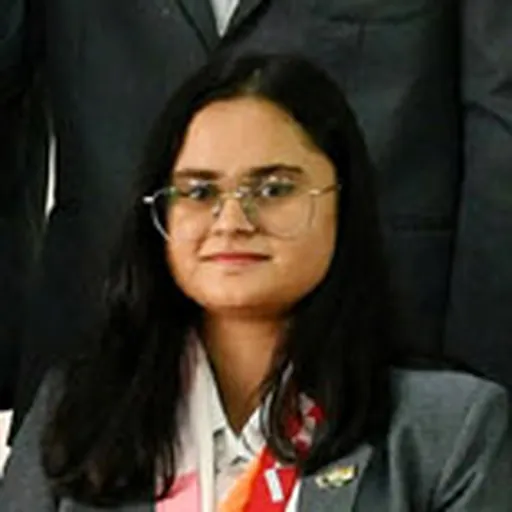
About Avani Lekhara
Born 2001. Avani Lekhara is an Indian sport shooter and paralympic athlete.
Avani Lekhara (born 8 November 2001) is an Indian Paralympic rifle shooter and disability rights advocate. She is the first Indian woman to win a gold medal at the Paralympic Games and win multiple medals in a single edition of the Paralympics. Competing in the SH1 classification, Lekhara made history at the 2020 Tokyo Paralympics by securing gold in the women's 10m air rifle standing event and bronze in the 50m rifle 3 positions. She went on to break her own world record at the 2024 Paralympics, further solidifying her position as one of India’s most accomplished para-athletes.
After sustaining a spinal cord injury in a car accident in 2012, Lekhara took up shooting as part of her rehabilitation. Her success has not only earned her accolades such as the Major Dhyan Chand Khel Ratna and Padma Shri but has also positioned her as a prominent figure in disability advocacy. Through her achievements and public engagements, she has helped shift perceptions around disability and gender in Indian sports, promoting greater inclusivity in both policy and public attitudes.
Early life and education Lekhara is from Jaipur, Rajasthan. A car accident in 2012, at the age of 11, left her with complete paraplegia. Her father encouraged her to join sports, training in archery but moving to shooting in which she found her true passion. She currently studies law in Rajasthan University, India. She was a student of Kendriya Vidyalaya 3 (Jaipur), where she received her first gold medal in regional match of shooting.
Career Lekhara began shooting in 2015, inspired by former Olympic champion Abhinav Bindra and has since won several national and international titles.
She is coached by Chandra Shekhar.
She won a gold medal in the 10m air rifle standing and a bronze medal in the 50m rifle 3 positions at the 2020 Summer Paralympics. Lekhara is ranked the World No. 1 in Women's 10m Air Rifle SH1 as per World Shooting Para Sport Rankings. She has been given out of turn appointment as Assistant Conservator of Forest by the Government of Rajasthan. She is the first Indian woman to win a Paralympic gold medal. Lekhara won India's first gold medal at the 2020 Summer Paralympics. With a score of 249.6 points in the final event, she set a Paralympic record.
On 3 September 2021, she became the first Indian female Paralympian to win two medals in Paralympics history after claiming bronze in women's 50m air rifle standing event.
In March 2024, she won a bronze medal at the World Cup in New Delhi, scoring 227.0 points.
At Paralympics 2024 in Paris, she won a gold in women's 10m air rifle standing SH1. She became the first Indian women athlete to win three paralympic medals.
Disability Rights Activism in India and Lekhara's Advocacy India has implemented legislation to protect and promote the rights of persons with disabilities, most notably the Persons with Disabilities (Equal Opportunities, Protection of Rights and Full Participation) Act. This legislation has served as a legal foundation for advocacy efforts across sectors. It has been used by activists to petition courts in pursuit of equal access and protections for persons with disabilities. The rise of internet connectivity has further enabled English-speaking advocates to coordinate national implementation efforts.
Prior to this legislative progress, disability advocacy in India was predominantly led by visually impaired activists, who often employed traditional political mobilisation strategies. With the encouragement of her parents, she pursued archery and later shooting as a therapeutic and competitive outlet. In 2020, she became the first Indian woman to win a gold medal at the Paralympic Games, achieving the title in the 10m air rifle standing event at the Tokyo Paralympics. She has also drawn attention to persistent accessibility disparities between elite sports facilities and everyday public infrastructure. While certain stadiums and shooting ranges have begun to offer wheelchair-accessible amenities, many public spaces, including schools and transport systems, remain inaccessible to individuals with mobility impairments.
In an interview, Lekhara observed that numerous public spaces in India, including vehicles and stair-access buildings, remain largely inaccessible to individuals with mobility impairments.
In addition to her athletic achievements, Lekhara participates in public forums and collaborates with disability-focused non-governmental organisations (NGOs) to promote awareness of accessibility challenges and advocate for inclusive infrastructure. For instance, she frequently engages with audiences through social media platforms such as Twitter and Instagram, highlighting practical challenges faced by disabled individuals in everyday environments and calling for infrastructural reforms. Her public engagement often emphasises the importance of early intervention, psychological support, and customised training—factors she credits for her own development as a world-class athlete.
Lekhara’s efforts have notably influenced the public and policy discourse on accessibility, prompting increased governmental attention towards enhancing physical accessibility in public infrastructure and sports facilities across India. Her visibility and active participation have encouraged greater community involvement and fostered a more inclusive public attitude towards persons with disabilities. Scholars note that figures like Lekhara play a pivotal role in challenging stereotypes and promoting equitable policy reforms. Athletes are classified into sport categories based on their impairments: SH1 Pistol (for upper or lower limb impairments), SH1 Rifle (for lower limb impairments), and SH2 Rifle (for upper limb impairments requiring assistive shooting devices).
Shirur noted that adapting the technical foundations of shooting to suit Lekhara’s needs required improvisation, particularly in adjusting her posture and rifle placement to meet the sport’s performance standards.
Lekhara’s training regimen notably integrates advanced technological methods, such as motion-tracking systems and biofeedback technology, to optimise her performance. These systems precisely analyse and measure an athlete’s posture, breathing patterns, and muscular responses, providing immediate feedback that aids in correcting form and enhancing accuracy.
Such technologies have become increasingly prevalent in elite para-athletic training, allowing athletes to refine their techniques and achieve higher levels of precision. Scholars highlight that the inclusion of sophisticated training technologies in para-sports exemplifies multidimensional athletic excellence, encompassing physical preparedness, cognitive strategy, and emotional resilience.
Lekhara’s training approach underscores this comprehensive model by balancing adaptive physical conditioning, advanced technological monitoring, and psychological resilience coaching, thus setting benchmarks within para-sport disciplines. Researchers have noted that women with disabilities frequently face dual stigma related to both gender and impairment, which can adversely affect their quality of life, as well as their psychological and social well-being.
Lekhara has stated that sport has transformed not only how others comprehend her, but also how she perceives herself. The increased visibility of para-sports through events such as the Paralympic Games has also shifted public perceptions about the physical and mental demands of disciplines like shooting. As Lekhara explained, public awareness has grown regarding the intense physical preparation involved in para-sport, with greater appreciation of the similarities between core strength and leg function in training. These initiatives not only encourage greater sports participation among persons with disabilities but also systematically address barriers related to physical infrastructure and societal attitudes towards disability. Researchers emphasise that such curricular integration plays a crucial role in engaging students in meaningful discussions about equity, representation, and intersectionality, particularly regarding the experiences of disabled women. Academic analysis further notes that institutional adoption of inclusive curricula, inspired by prominent disability rights advocates such as Lekhara, facilitates critical reflection among youth on prevailing societal norms, stereotypes, and discriminatory practices. Her contributions support broader efforts toward social justice, equality, and intersectional representation in Indian public life.
Media Representation and Marketing Strategies The emergence of social media has significantly reshaped global sporting culture, providing athletes, teams, and organisations with platforms for direct engagement and communication. Within Paralympic sport, marketing strategies that prioritise athletic performance over stereotypical narratives of inspiration have been shown to resonate more effectively with both athletes and audiences.
Avani Lekhara actively utilises platforms such as Twitter and Instagram to shape her public persona, emphasising her achievements and training rather than focusing on her disability. This form of self-representation allows her to bypass traditional media narratives and assert control over how her story is framed.
Media coverage of Lekhara has increasingly emphasised her accomplishments rather than her disability status. For instance, following her performance at the Tokyo 2020 Paralympics, major national outlets celebrated her as a “trailblazer” and India’s first female Paralympic gold medalist, often placing her achievements on par with those of Olympic athletes. Academic analyses suggest that this form of recognition contributes to the normalisation of disability in sporting cultures and reinforces the concept of athletic legitimacy across both para- and able-bodied competitions.
In 2021, Lekhara was appointed as the brand ambassador for the Beti Bachao Beti Padhao campaign by the government of Rajasthan. This national initiative, launched in 2015 by Prime Minister Narendra Modi, aims to address gender discrimination, improve the child sex ratio, and promote the education and empowerment of girls across India. State Minister Mamta Bhupesh cited Lekhara’s gold medal at the Tokyo Paralympics as a moment of pride and a source of inspiration for young girls, emphasising her role as a symbol of strength and determination. Scholars studying gender and sports note that representation in state-led campaigns is crucial for disrupting traditional perceptions of femininity and physical ability, especially in South Asian contexts where disability and gender marginalisation often intersect. The series profiles young individuals across India whose lives reflect the challenges and transitions of the 21st century. Lekhara’s episode focuses on her journey following a spinal cord injury, her introduction to shooting, and her eventual success at the Tokyo 2020 Paralympic Games.
The program presents Lekhara’s experiences within the broader context of disability representation and gender in Indian sports. It highlights the structural and social barriers she encountered, as well as the mental resilience and institutional support that contributed to her achievements. 2021 – Young Indian of the Year – GQ India 2021 – Vogue Women of the Year – Vogue Magazine 2021 – Best Female Debut – Paralympic Awards – International Paralympic Committee 2022 – Padma Shri 2022 – FICCI FLO Award for Excellence in Sports 2022 – She – Age Award by Hindustan Times 2022 – Para Athlete of the Year (Female) – Sportstar 2022 – BBC India Change Maker Of The Year 2021 2022 – BRICS CCI WE – Trailblazer 2022 2024 – BBC Sportswoman of the year Nominee
Don’t just read it —
keep it.
Full-length biographies made to live with: read them, listen on the way to work, watch them tonight.
- E-book
- Audio
- Video
Instant download · yours to keep · every purchase keeps this site free
Important facts
People in Avani Lekhara's life
Named in this biography and alive at the same time
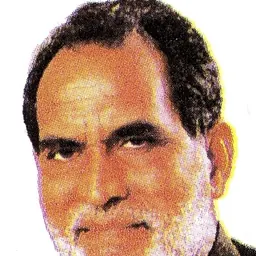
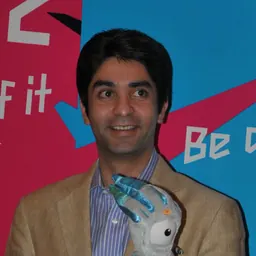

Related people
Same field, nearest in time
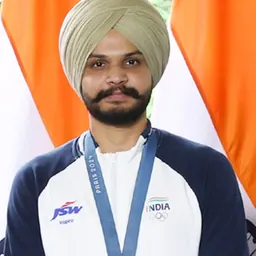

Contemporaries
People whose lives overlapped Avani Lekhara's




Frequently asked questions
Who is Avani Lekhara?
Indian sports shooter (2001–)
When was Avani Lekhara born?
Avani Lekhara was born on 8 November 2001 in Jaipur.
What is Avani Lekhara's occupation?
Avani Lekhara is a sport shooter and paralympic athlete.
What nationality is Avani Lekhara?
Avani Lekhara is Indian.
Sources & further reading
Cite this page
APA: Biography.guide. (2026). Avani Lekhara. https://biography.guide/avani-lekhara/
MLA: "Avani Lekhara." Biography.guide, https://biography.guide/avani-lekhara/.
Chicago: "Avani Lekhara." Biography.guide. https://biography.guide/avani-lekhara/.
Data last updated: 2026-09-23 · Spot an error? Report a correction.
Portrait: Wikimedia Commons · author & licence
Page generated 2026-09-27 05:06 UTC