Aulay MacAulay of Ardincaple
Scottish politician and noble
About Aulay MacAulay of Ardincaple
Lived 1500 – 1617.
Sir Aulay MacAulay of Ardincaple (died 1617) was a Scottish laird, knight, clan chief, and a shire commissioner. He was the son and heir of Walter MacAulay Ardincaple, who was the laird of Ardincaple and chief of Clan MacAulay. The MacAulay estate of Ardincaple was situated in the location of the modern village of Rhu and Helensburgh, which both lie on the eastern shore of the Gare Loch, in Argyll and Bute. As chief of his clan, he entered into a contract with the chief of the MacGregors, pledging service and assistance to their chief. His clan feuded with the Buchanans, and his marriage to the widow of a deceased Galbraith chief brought forth feuding with that clan. He also feuded with the Campbells, particularly the Captain of Carrick. The Campbells made several attempts on his life and he was wounded one such encounter. Towards the end of his life he was knighted for his services. On his death he was succeeded by his first cousin.
Personal Aulay MacAulay was born in the 16th century; the son and heir of Walter MacAulay, laird of Ardincaple, and chief of Clan MacAulay. Aulay MacAulay of Ardincaple was married twice. His first wife was Joanna Cunningham, daughter of Cuthbert Cunningham of Corsehill.
Chief of Clan MacAulay
After the death of his father, Ardincaple became chief of Clan MacAulay. The clan was centred at Ardincaple Castle—which according to Irving, was erected by Aulay's father. Approximation of the lands possessed by some of the clan chiefs within the Lennox, in the 16th century (clans Buchanan, Campbell, Colquhoun, MacAulay, MacFarlane, and Gregor).
Bond of manrent with the chief of Clan Gregor In the 15th and 16th centuries, the 'native' clans of the Lennox—the MacAulays, MacFarlanes, and Colquhouns—raided and plundered each other's lands and combined to sweep the lowlands of its flocks and herds. However, around this time period other clans entered the district—among them were the MacGregors, Campbells, Camerons and Buchanans.
On 27 May 1591, Ardincaple and Alexander MacGregor of Glenstrae, chief of Clan Gregor, signed a bond of manrent. In the bond, Ardincaple acknowledged Glenstrae as his chief and of being a cadet of the House of MacGregor, and therefore promised to pay the MacGregor chief his calp. The giving of calp—a tribute of cattle or the best eighth of a part of goods to a superior lord or chief—was a significant custom in Gaelic society. According to historian Ronald Williams, the contract between Ardincaple and Glenstrae gave the MacGregors some temporary relief from the Buchanans and Galbraiths. Also, at around this period in time, the MacAulays were feuding with the Buchanans. According to Irving, prior to this contract, Ardincaple did not appear to have been involved with Clan Gregor in any way. Irving went on to state that even though the Ardincaple was at feud with the Buchanans, it is unclear how such an alliance would benefit his own clan. Irving wrote that Ardincaple must have known that any connection with Clan Gregor "would end (as it actually did) in a manner most disastrous to all connected with the turbulent Macgregors".
The influence of Ludovic Stewart, 2nd Duke of Lennox saved Ardincaple from his enemies, numerous times.
Feuding with Galbraith of Culcreuch In 1593, Robert Galbraith of Culcreuch was given a Commission of Justiciary to pursue the outlawed Clan Gregor. The MacAulays and Colquhouns were, however, suspicious of Culcreuch's real intentions. On 3 May 1593, the chiefs of the two clans complained to the Privy Council that Culcreuch had only purchased the commission under counsel from George Buchanan, and that Culcreuch had no intention of harassing the MacGregors. The MacAulays and Colquhouns feared that it was much more likely that the Galbraiths, allied with the Buchanans, would direct their vengeance against themselves under the guise of hunting and clearing Clan Gregor from the Lennox. Due to the influence of the Ardincaple's superior, Ludovic Stewart, 2nd Duke of Lennox, the letters of Fire and Sword were taken from the Galbraiths and Buchanans. According to Williams, Ardincaple had been sparing of the entire truth, for no mention was made of the bond of manrent between himself and the now outlawed Clan Gregor chief. Williams was of the opinion that it was unlikely that the Privy Council was aware of such an agreement between the two chiefs. Even so, the Privy Council demanded securities of Ardincaple to insure that he not assist Clan Gregor. The Campbells of Carrick were seated at Carrick Castle on the shores of Loch Goil (about northwest of Ardincaple). In 1598, Carrick registered a bond of 300 merks for each of his men in Rosneath to keep from harming Ardincaple. At the same time, Robert Sempill of Foulwood registered a bond of 2,000 merks for Carrick not to harm Ardincaple and his followers. The following year, the Duke of Lennox legally evicted Donald Campbell of Drongie and several of his followers from the lands of Mamoir, Mambeg, and Forlancarry along the banks of the Gare Loch. The Campbells of Drongie were close supporters of the Campbells of Carrick, and in retaliation a combined force of Campbells of Carrick and Drongie assembled at Rosneath (on opposite shore of the Gare Loch from Ardincaple Castle) and laid waste to the duke's new acquisitions. When the case was presented to the Privy Council on 17 May 1600, both Campbell of Carrick and Campbell of Drongie were denounced as rebels.
On 25 November 1600, evidence was brought forth to the Privy Council of an attempt on Ardincaple's life on 24 September 1600. The evidence pointed to Carrick's men coming at night to Ardincaple and attacking followers of the laird and killing one—Malcolm Galbraith. A second attempt on Ardincaple's life was carried out at night as he was staying at Nether Greenock. On this occasion, Ardincaple, Patrick Dennestoun (one of Ardincaple's servants), and Archibald Connel were all shot in the encounter. Again the Privy Council denounced Carrick and his men as rebels. At the end of November 1600, Carrick and 100 followers invaded the lands of Ardincaple armed with "hagbuts, pistolets, bows, darlochs and habershons".
On 17 March 1603, John Stewart of Ardmaleish, Sheriff of Bute, became surety for Ardincaple; that he would appear in Edinburgh, on 17 May 1603, and answer to the charges of aiding, supplying, and inter-communing with Alasdair MacGregor of Glenstrae and other MacGregors. Ardincaple was also to answer for not "rising ye fray" and pursuing the outlawed clan in the Lennox. Ardincaple was accused of bringing the MacGregor "thevis and rebells" to the Colquhoun lands of Luss and for their part in stealing from the Colquhouns of Luss. Again the influence of the Duke of Lennox saved Ardincaple and his clan from the same fate as Glenstrae and his. On 7 April 1603, James VI wrote from Berwick to the Justice General and his deputies, declaring Ardincaple to be innocent of the alleged crimes and that he was to accompany the king to England with the Duke of Lennox. By the time the king's letter was received, Ardincaple had already left the Lennox district as part of the Duke of Lennox's train, which accompanied James VI on his way to England to be declared King James I of England. Within his 'confession', Glenstrae accused Argyll of trying to persuade him to kill Ardincaple: "I Confess, before God, that he did all his craftie diligence to intyse me to slay and destroy the Laird Ardinkaippill, Mckallay, for ony ganes kyndness or freindschip that he mycht do or gif me. The quhilk I did refuis, in respect of my faithfull promeis maid to Mckallay of befor". Glenstrae and several of his leading men were then executed.
Despite Ardincaple's pledge of allegiance to Glenstrae in 1591, Irving noted that once Clan Gregor was outlawed Ardincaple turned against the clan, making "himself conspicuous by the energy with which he turned against them".
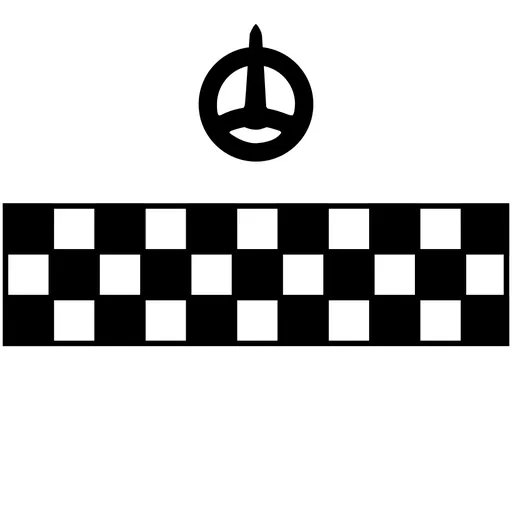
Later life The crest badge worn by members of Clan MacAulay bears a boot couped at the ankle and theron a spur proper. In 1597, Ardincaple was suretor to Lachlan Maclean of Coll who had to give up Breachacha Castle when required by the king. |group=note He was knighted before 1610. In 1608 he served as Commissioner for Dumbartonshire (as a minor baron). He was one of two commissioners who were tasked with regulating the price of boots and shoes. When in 1614, Angus Og MacDonald of Dunyvaig had seized Dunyvaig Castle—which had been held by the Bishop of the Isles—Sir Aulay MacAulay of Ardincaple, with twenty of his men, accompanied the bishop to Islay to demand the surrender of the castle. Sir Aulay MacAulay of Ardincaple died in December 1617. He left no issue by either of his two wives. He was succeeded by his first cousin, Alexander MacAulay of Durling (son of Aulay MacAulay of Durling, Sir Aulay's uncle). the head of the heraldic authority in Scotland. Aulay Macaulay of Ardincaple's seal, in 1593, is blazoned: a fess chequy and in chief a buckle. These elements are also used in the heraldry of 'MacAulays' to this day. According to the 19th century heraldist Robert Riddle Stodart, these elements are ultimately derived from the heraldry of the Stewarts.
Ancestors +Ancestors of Sir Aulay MacAulay of Ardincaple Sir Aulay MacAulay of Ardincaple FatherWalter MacAulay of Ardincaple Paternal Grandfather:Aulay de Ardincaple Paternal Grandmother:Elizabeth Knox Mother:Margaret Drummond Maternal Grandfather:Alexander Drummond of Carnock Maternal Grandmother:Marjorie Bruce (daughter of Bruce of Auchinbowie)
Don’t just read it —
keep it.
Full-length biographies made to live with: read them, listen on the way to work, watch them tonight.
- E-book
- Audio
- Video
Instant download · yours to keep · every purchase keeps this site free
Important facts
People in Aulay MacAulay of Ardincaple's life
Named in this biography and alive at the same time



Contemporaries
People whose lives overlapped Aulay MacAulay of Ardincaple's


Frequently asked questions
Who was Aulay MacAulay of Ardincaple?
Scottish politician and noble
When was Aulay MacAulay of Ardincaple born?
Aulay MacAulay of Ardincaple was born in 1500.
When did Aulay MacAulay of Ardincaple die?
Aulay MacAulay of Ardincaple died on 1 December 1617.
What was Aulay MacAulay of Ardincaple known for?
Aulay MacAulay of Ardincaple was known for Scottish clan chief.
Sources & further reading
· Wikipedia: Aulay MacAulay of Ardincaple
· DBpedia: Aulay MacAulay of Ardincaple
Cite this page
APA: Biography.guide. (2026). Aulay MacAulay of Ardincaple. https://biography.guide/aulay-macaulay-of-ardincaple/
MLA: "Aulay MacAulay of Ardincaple." Biography.guide, https://biography.guide/aulay-macaulay-of-ardincaple/.
Chicago: "Aulay MacAulay of Ardincaple." Biography.guide. https://biography.guide/aulay-macaulay-of-ardincaple/.
Data last updated: 2026-09-23 · Spot an error? Report a correction.
Portrait: Wikimedia Commons · author & licence
Page generated 2026-09-27 05:04 UTC