
Augustus Le Plongeon
British photographer and archaeologist
About Augustus Le Plongeon
Lived 1825 – 1908 (aged 83). Augustus Le Plongeon was a photographer, archaeologist, historian and antiquarian.
Augustus Henry Julian Le Plongeon (4 May 1825 – 13 December 1908) was a British-American antiquarian and photographer who studied the pre-Columbian ruins of America, particularly those of the Maya civilization on the northern Yucatán Peninsula. While his writings contain many notions that were not well received by his contemporaries and were later disproven, Le Plongeon left a lasting legacy in his photographs documenting the ancient ruins. He was one of the earliest proponents of Mayanism.
Early life and careers Le Plongeon was born on the island of Jersey on 4 May 1825. At 19, he sailed to South America and shipwrecked off the coast of Chile. While there he settled in Valparaiso and taught mathematics, drawing, and languages at a local college. In 1849 he sailed to San Francisco during the California gold rush to work as a surveyor, and also apprenticed to become a doctor of medicine. One of his accomplishments as a surveyor included drawing a plan for the layout of the town of Marysville, California in the Central Valley in 1851. Augustus was paid for his services as a surveyor with land deeds. He profited from the sale of these plots and this income would fund the majority of his archaeological expeditions.
Le Plongeon traveled to England and saw a demonstration for new photographic processes at The Great Exhibition. He then stayed in England to study photography under William Fox Talbot.
Travels in Peru Le Plongeon pioneered the use of photography as a tool for his studies. He began using the wet collodion glass-plate negative process he used for studio portraits to record his explorations. He traveled extensively all over Peru for eight years visiting and photographing ancient ruins, including Tiahuanaco. Augustus also joined a number of E. G. Squier's expeditions and took photographs out in the field. Le Plongeon was influenced by the work of Charles Étienne Brasseur de Bourbourg, John Lloyd Stephens, and Frederick Catherwood. These works, in combination with his own explorations in Peru, led Le Plongeon to believe that civilization had its origins in the New World.
Travels in Yucatán In 1873, the Le Plongeons traveled to Yucatán to study ancient Maya sites. Their goal was to explore the possibility of links between the Maya and the civilizations of ancient Egypt and Atlantis. Their first stop was in Mérida and they stayed there while Alice recovered from yellow fever. During her recuperation, the couple made connections with local scholars and both Augustus and Alice learned to speak Yucatec Maya.
The Le Plongeons were some of the first people to photograph and study Chichen Itza. Their photographic work was methodical and systematic, and they took hundreds of 3-D photos. They documented entire Maya buildings, such as the "Governor's Palace" at Uxmal, in overlapping photos by placing the camera on a tall tripod or scaffold to correct for perspective and then processed the plates in the unlit rooms of Maya buildings. In addition to entire facades of buildings, they also photographed small artifacts, and architectural details such as bas-reliefs, Maya hieroglyphic inscriptions, and sculptures. They excavated buildings, drew maps and copied murals, and made molds of bas-reliefs. Alice followed in 1910 at the age of fifty-nine.
A collection of the works of the Le Plongeons currently resides at the Getty Research Institute in Los Angeles. The archive contains original records covering their travels from the 1860s through the early 1900s, including diaries, unpublished scholarly manuscripts and notes, correspondence, and extensive photographic documentation of ancient architecture and sculpture, city views, and ethnographic studies.
Le Plongeon was elected a member of the American Antiquarian Society in 1878.
Don’t just read it —
keep it.
Full-length biographies made to live with: read them, listen on the way to work, watch them tonight.
- E-book
- Audio
- Video
Instant download · yours to keep · every purchase keeps this site free
Important facts
Family & relationships
People in Augustus Le Plongeon's life
Named in this biography and alive at the same time

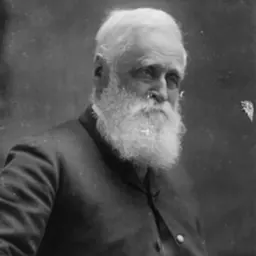
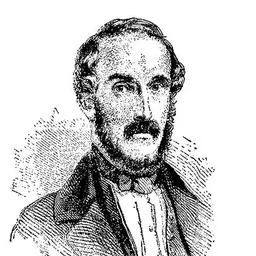
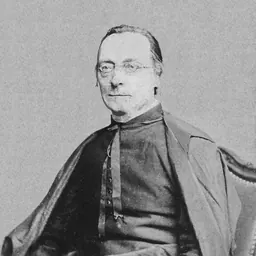


Related people
Same field, nearest in time

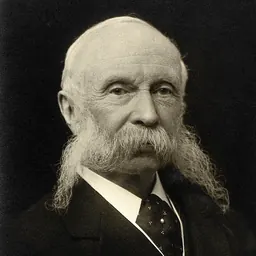

Contemporaries
People whose lives overlapped Augustus Le Plongeon's




Frequently asked questions
Who was Augustus Le Plongeon?
British photographer and archaeologist (1825–1908)
When was Augustus Le Plongeon born?
Augustus Le Plongeon was born on 4 May 1825 in Jersey.
When did Augustus Le Plongeon die?
Augustus Le Plongeon died on 13 December 1908 in Brooklyn.
What was Augustus Le Plongeon's occupation?
Augustus Le Plongeon was a photographer, archaeologist, historian and antiquarian.
Sources & further reading
· Wikipedia: Augustus Le Plongeon
· DBpedia: Augustus Le Plongeon
Cite this page
APA: Biography.guide. (2026). Augustus Le Plongeon. https://biography.guide/augustus-le-plongeon/
MLA: "Augustus Le Plongeon." Biography.guide, https://biography.guide/augustus-le-plongeon/.
Chicago: "Augustus Le Plongeon." Biography.guide. https://biography.guide/augustus-le-plongeon/.
Data last updated: 2026-09-20 · Spot an error? Report a correction.
Page generated 2026-09-27 05:25 UTC