
About Auguste Marie
Lived 1865 – 1934 (aged 68–69). Auguste Marie was a French physician, psychiatrist and mayor of a place in France.
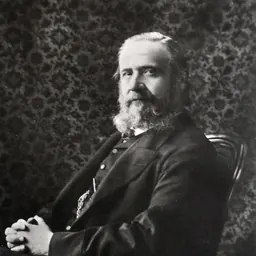
Auguste Marie, born Auguste Armand Victor Marie on February 16, 1865, was a French psychiatrist. He is known for founding the "family colony" at Dun-sur-Auron, a village where former asylum inmates were housed by foster families who were paid to take care of them. He is also known for his collection, studies and exhibits of the art created by his patients. He was mayor of the town of Orly from 1920 until his death on July 29, 1934.
Early life
Auguste Marie was born on , in the town of Voiron in southeastern France. He was the son of Auguste-André Marie, a violin teacher, and his wife Joséphine Girod, a piano teacher.
Auguste Marie studied both medicine and law, completing his law degree in 1886 and becoming a member of the bar. He was first in his class of medical residents of the hospitals in Grenoble. He moved to Paris in order to work under Gustave Bouchereau at the Sainte-Anne hospital, a psychiatric hospital in Paris.
Marie was disgusted by the dismal and overcrowded conditions in the asylums and was convinced that they worsened the mental health of his patients.
In the late 1880s, Gustave Bouchereau asked him to go to Scotland to study the open care systems that had existed in that country since the 1830s, thanks to the work of Robert Gardiner Hill and John Conolly. The family colony was conceived as a foster care institution, wherein psychiatric patients who were considered ‘quiet’ and ‘safe’ were placed in the homes of foster families, who were to be paid a modest sum for taking care of them. With their care overseen by professionals, the patients lived in better conditions than in an asylum and had more freedom of movement. In addition to enhancing patient well-being, the goal was to relieve the asylums of the Seine département which were overcrowded and becoming a heavy financial burden. an idea he argued for in his 1905 article Le musée de la folie (The madness museum). Accordingly, he set up exhibition spaces in the attics of the hospital where his collections could be displayed, but this 'museum' was not open to the public.
As far as Marie was concerned, the goal of such a collection and exhibition was on one hand to bring back his patients to 'rational activity' and on the other hand to emphasize the sometimes arbitrary barrier between the 'insane' and the rest of humanity. He was fond of saying that the difference between insanity and sanity was partial and a matter of degree, not of essence. In this, he was opposed to Cesare Lombroso's vision on the subject of artistic creativity and genius.
Auguste Marie was almost killed by one of his patients in 1908. A patient entered his staff house on the asylum grounds in Villejuif and fired several bullets into his chest. However, his wounds were not fatal because a thick manuscript slowed down the bullets. He recalled this experience in 1911 in an article in which he explained the risks that psychiatric doctors took after his colleague Aimé Guinard was killed in similar circumstances. In this article he also presented a variety of objects built by patients "to either escape from or kill the people who were keeping them."
World War I In 1914, although he was far past the age of mandatory mobilisation, he volunteered in the army and became médecin-major for the 95th infantry regiment but his service was short : on September 26, he was wounded in the forest of Apremont and was evacuated from the frontline. For the remainder of the war he was a military physician, first at the Allies Hospital on the Arago boulevard in Paris and then at the army's laboratory from 1916 to 1918. For his military service, he received the Croix de Guerre. Auguste Marie created a center of malaria therapy, the Centre d'impaludation at Sainte-Anne Hospital en 1923.
Retirement and service as an elected official Marie retired from medical practice in 1929.
He was also elected as representative to the department's conseil général and extended his activities to the entire arrondissement that he represented.
Death and legacy Auguste Marie died on 29 July 1934. After he died, his art collection was divided. Thanks to Jean Dubuffet, a large part was donated in 1966 to the Collection de l'art brut in Lausanne.
Another part was added to the collections of the Art and History museum of the Sainte-Anne hospital.
Don’t just read it —
keep it.
Full-length biographies made to live with: read them, listen on the way to work, watch them tonight.
- E-book
- Audio
- Video
Instant download · yours to keep · every purchase keeps this site free
Important facts
People in Auguste Marie's life
Named in this biography and alive at the same time



Related people
Same field, nearest in time


Contemporaries
People whose lives overlapped Auguste Marie's


Frequently asked questions
Who was Auguste Marie?
French psychiatrist
When was Auguste Marie born?
Auguste Marie was born in 1865 in Voiron.
When did Auguste Marie die?
Auguste Marie died in 1934.
What was Auguste Marie's occupation?
Auguste Marie was a physician, psychiatrist and mayor of a place in France.
What nationality was Auguste Marie?
Auguste Marie was French.
Sources & further reading
Cite this page
APA: Biography.guide. (2026). Auguste Marie. https://biography.guide/auguste-marie/
MLA: "Auguste Marie." Biography.guide, https://biography.guide/auguste-marie/.
Chicago: "Auguste Marie." Biography.guide. https://biography.guide/auguste-marie/.
Data last updated: 2026-09-20 · Spot an error? Report a correction.
Page generated 2026-09-27 05:29 UTC