
About Attilio Biseo
Lived 1901 – 1966 (aged 64). Attilio Biseo was an Italian aircraft pilot.
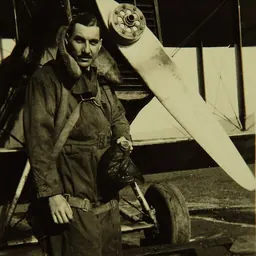
Attilio Biseo (Rome, 14 October 1901 – 7 July 1966) was an Italian aviator, powerboat racer, Air Force general during World War II, and the personal pilot of Benito Mussolini during the 1930s.
Biography
Early career and interwar years
He was born in Rome on October 14, 1901, the son of Vittorio Biseo and Adelia Tommasini, and he enlisted in the Royal Italian Navy, serving on submarines after graduating as Ensign. On 5 September 1923 he was transferred at his request to the newly established Regia Aeronautica, and attended the Varese Flight School. In 1924 he became a seaplane pilot, initially serving at the 141st Seaplane Reconnaissance Squadron based in La Spezia. After a short period at the 25th Seaplane Wing, in January 1925 he was transferred to the School of Aerial Observation. In 1927 he married Miss Elena Fraschetti, with whom he had four children, Stefania, Maurizio, Marcella and Luciana. He participated in Italo Balbo's Western Mediterranean Air Cruise of 1928 and then in the Eastern Mediterranean Air Cruise of 1929. On 25 September 1929 he was appointed aide-de-camp of the Deputy Chief of Staff of the Regia Aeronautica, General Giuseppe Valle, and in the same period he became the personal pilot of the head of the government, Benito Mussolini.
After promotion to captain in 1930, he participated in the Italy-Brazil Transatlantic Air Cruise (17 December 1930 – 15 January 1931) as second pilot of the Savoia-Marchetti S.55 seaplane "I-VALL", piloted by General Valle. He later took part, as the first pilot of the S.55 "I-BISE", in the Decennial Air Cruise, obtaining promotion to the rank of major for extraordinary merits. A fan of powerboating, in 1932 and 1934 he won the classic Pavia-Venice motorboat race on board a SIAI airboat equipped with a Fiat and later a Farina engine. Also in 1932 he won the Montelera Cup held between Pontelagoscuro and Volta Grimana over a distance of 58.747 km.
In 1935 he assumed command of the 12th Fast Bombardment Wing stationed in Montecelio, and subsequently of the "Nastro Azzurro" (Blue Ribbon) training unit. In the summer of the same year he piloted the prototype of the Savoia Marchetti S.79 (I-MAGO) during the visit made by the Chief of Staff of the Air Force, General Valle, in East Africa. On 5 August he flew the S.79 from Massawa to Rome, with a short stop in Cairo, in 11 hours and 45 minutes, at an average speed of 350 km / h. On 23 September of the same year, still flying a Savoia Marchetti S.79 which took off from Rome-Urbe, he beat six world records on the Monte Cavo-Monte Nerone-Orbetello circuit: speed over 1,000 km with 500 kg load, average 390 km /h, speed over 1,000 km with 1,000 and 2,000 kg load, average 390 km/h; speed on 2,000 km with 500 and 1,000 kg of average load, 380 km/h (former USA record, 307,234 km/h). The record of 2,000 km without load held by Germany with 344,310 km / h was also beaten. For this feat he was decorated with the Gold Medal of Aeronautic Valor. In February 1937 he flew to Spain the first three S.79 bombers, coming from the 12th Wing, destined to equip the Aviazione Legionaria during the Spanish Civil War. Later in the same year he flew bombing missions in Spain, for which he was awarded the Silver Medal of Military Valor.
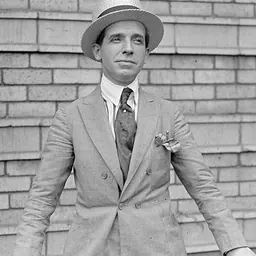
In 1939 he became director in the new airline LATI, where he collaborated in the establishment of the Rome-Seville-Ilha do Sal-Recife-Rio de Janeiro air link, with airport installations on the Ilha do Sal being built under the supervision of his brother Giovanni. The service was inaugurated in November of the same year, and he temporarily moved to Brazil. Between 1939 and 1941 Charles Ponzi, inventor of the scheme of the same name, worked for LATI as commercial director; he obtained the job thanks to the intercession of Biseo, who was his cousin.
Don’t just read it —
keep it.
Full-length biographies made to live with: read them, listen on the way to work, watch them tonight.
- E-book
- Audio
- Video
Instant download · yours to keep · every purchase keeps this site free
Important facts
People in Attilio Biseo's life
Named in this biography and alive at the same time

Related people
Same field, nearest in time


Contemporaries
People whose lives overlapped Attilio Biseo's


Frequently asked questions
Who was Attilio Biseo?
Italian aviator (1901-1966)
When was Attilio Biseo born?
Attilio Biseo was born on 14 October 1901 in Rome.
When did Attilio Biseo die?
Attilio Biseo died on 7 July 1966 in Rome.
What was Attilio Biseo's occupation?
Attilio Biseo was an aircraft pilot.
What nationality was Attilio Biseo?
Attilio Biseo was Italian.
Sources & further reading
Cite this page
APA: Biography.guide. (2026). Attilio Biseo. https://biography.guide/attilio-biseo/
MLA: "Attilio Biseo." Biography.guide, https://biography.guide/attilio-biseo/.
Chicago: "Attilio Biseo." Biography.guide. https://biography.guide/attilio-biseo/.
Data last updated: 2026-09-20 · Spot an error? Report a correction.
Page generated 2026-09-27 05:26 UTC