
About Attila Losonczy
Born 1974. Attila Losonczy is a Hungarian neuroscientist.
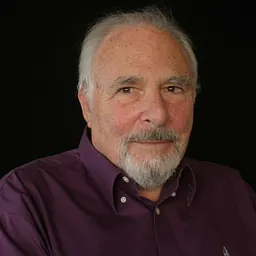
Attila Losonczy (born 1974) is a Hungarian neuroscientist, Professor of Neuroscience at University of Texas Southwestern Medical Center, Dallas and Director of the Program in Memory Longevity in the O'Donnell Brain Institute at UTSW. Losonczy's main area of research is on the relationship between neural networks and behavior, specifically with regard to learning in the hippocampus.
His group conducts research on spatial navigation and episodic learning in animal models as well as the pathology of cognitive memory deficits in neurodegenerative disorders and psychiatric disorders such as PTSD and anxiety. Losonczy is currently working on developing in vivo imaging methods using two-photon microscopy and calcium imaging to simultaneously image hundreds of hippocampal place cells in conscious mice performing spatial tasks.
Career From 2007 to 2009, Losonczy worked as a research specialist at Howard Hughes Medical Institute, again working with Magee. Losonczy is a journal reviewer for Science, Cell, Nature Neuroscience, and Neuron, among others. By deactivating these interneurons, Losonczy showed that fear memories could be suppressed and contextual fear conditioning could thus be prevented. This discovery is significant to research into the mechanism psychiatric disorders such as post-traumatic stress disorder.
In 2015, Losonczy and his PhD student Nathan Danielson discovered the role of neurogenesis in the dentate gyrus in memory formation and pattern separation. To perform this study, Losonczy used two-photon microscopy and calcium imaging to image newborn granule cells in the mouse hippocampus and compare them with mature neurons as the mice traveled through subtly different contexts. No previous work had been able to study the roles of newborn and mature cells in the dentate gyrus as it was not previously possible to image the dentate gyrus at all, much less observe individual dentate gyrus cells in detail, as it lies too deep in the midbrain. To overcome these obstacles, Losonczy and his collaborators pioneered and implemented several novel techniques to be used simultaneously including the implantation of a miniature microscope into the brains of mice, genetically modifying mouse neurons to fluoresce, and optogenetically silencing a subset of neurons. This discovery repudiated the pre-existing theory that newborn neurons carried new memories. Rather, Losonczy found that the firing of older cells was more localised and newborn neurons fire indiscriminately, not taking on a stereotyped firing pattern until they got older. This suggests that the more excitable newborn neurons are better at encoding new stimuli than more mature neurons. This discovery is significant, as anxiety, depression, and posttraumatic stress disorder are thought to be associated with failures in pattern separation.
Don’t just read it —
keep it.
Full-length biographies made to live with: read them, listen on the way to work, watch them tonight.
- E-book
- Audio
- Video
Instant download · yours to keep · every purchase keeps this site free
Important facts
People in Attila Losonczy's life
Named in this biography and alive at the same time
Related people
Same field, nearest in time





Contemporaries
People whose lives overlapped Attila Losonczy's



Frequently asked questions
Who is Attila Losonczy?
Hungarian neuroscientist
When was Attila Losonczy born?
Attila Losonczy was born on 17 November 1974 in Nagykanizsa.
What is Attila Losonczy's occupation?
Attila Losonczy is a neuroscientist.
What nationality is Attila Losonczy?
Attila Losonczy is Hungarian.
Sources & further reading
Cite this page
APA: Biography.guide. (2026). Attila Losonczy. https://biography.guide/attila-losonczy/
MLA: "Attila Losonczy." Biography.guide, https://biography.guide/attila-losonczy/.
Chicago: "Attila Losonczy." Biography.guide. https://biography.guide/attila-losonczy/.
Data last updated: 2026-09-20 · Spot an error? Report a correction.
Page generated 2026-09-27 05:19 UTC