
About Ascanio Filomarino
Lived 1583 – 1666 (aged 82–83). Ascanio Filomarino was a catholic priest.
Infobox Christian leader type = Cardinal name = Ascanio Filomarino title = Cardinal-Priest of Santa Maria in Ara Coeli image = Portret van kardinaal Ascanio Filomarino Effigies Cardinalium nunc viventium (serietitel), RP-P-1909-4376.jpg church = Catholic Church see = Santa Maria in Ara Coeli term = 10 February 1642 – 3 November 1666 predecessor = Agostino Galamini successor = Carlo Roberti de' Vittori other_post = Archbishop of Naples (1641-1666) consecration = 19 January 1642 consecrated_by = Antonio Marcello Barberini cardinal = 16 December 1641 created_cardinal_by = Pope Urban VIII Eldest of the five sons of Claudio Filomarino and Porzia di Leonessa. Though the family was well-respected, it was nonetheless not a wealthy family. Filomarino was, though, able to obtain a doctorate of law in Benevento and thereafter travelled to Rome (with friend Ladislao d'Aquino who would also later become a cardinal) in an effort to support himself financially.
There, he presented himself to a number of cardinals with a view to being employed by one of them. Eventually, he came to the attention of Cardinal Maffeo Barberini who was in need of a new chamberlain. In 1623, Barberini was elected to the papacy and took the name Pope Urban VIII and thereafter Filomarino became master of the chamber to the pope's young cardinal-nephew, Francesco Barberini, while he was legate to France and Spain.
Francesco did not like his older tutor or did not like having a tutor at all. But Filomarino was protected by the young cardinal's uncle, the pope, who had promised to promote Filomarino to the rank of cardinal.
Some sources claim that Filomarino was primarily interested in reducing the power of the large landed Spanish noble class in favor of the growing, but overtaxed, merchant middle class in Naples. Further — so they claim — when Filomarino had used Masaniello to that end, he arranged to have the rebel delivered into the hands of captors, where he was murdered. Such a claim is impossible to substantiate.
Other accounts
There are a number of anecdotes about Filomarino. One is that during the plague of 1656, he ordered the churches to care for the stricken, yet apparently was among the first to seek refuge in the monastery of San Martino. Another was that he had to be reminded by Rome that the sacred relics of San Gennaro (Saint Januarius), patron saint of the city, were not his own personal property and that he was not authorized to claim, as he had, that "...the relics are mine...", nor authorized to remove them from the premises of the Cathedral of Naples for the purpose of soliciting miraculous cures in private homes.
Cardinal Filomarino died on 3 November 1666 and is buried in the cathedral of Naples.
Don’t just read it —
keep it.
Full-length biographies made to live with: read them, listen on the way to work, watch them tonight.
- E-book
- Audio
- Video
Instant download · yours to keep · every purchase keeps this site free
Important facts
People in Ascanio Filomarino's life
Named in this biography and alive at the same time
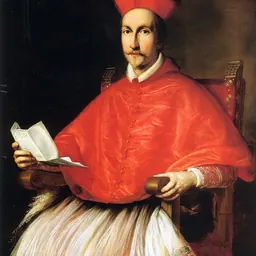
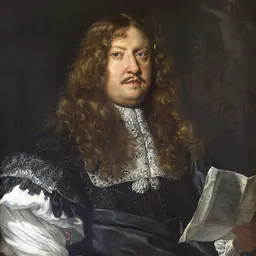
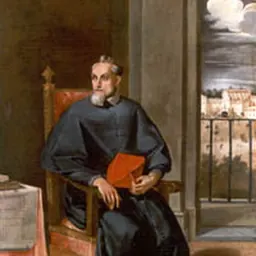
Related people
Same field, nearest in time
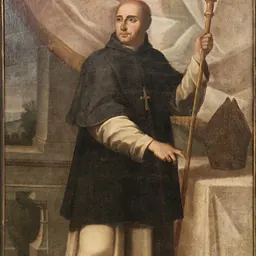



Contemporaries
People whose lives overlapped Ascanio Filomarino's



Frequently asked questions
Who was Ascanio Filomarino?
Catholic cardinal and archbishop of Naples
When was Ascanio Filomarino born?
Ascanio Filomarino was born in 1583 in Naples.
When did Ascanio Filomarino die?
Ascanio Filomarino died on 3 November 1666 in Naples.
What was Ascanio Filomarino's occupation?
Ascanio Filomarino was a catholic priest.
Sources & further reading
· Wikipedia: Ascanio Filomarino
Cite this page
APA: Biography.guide. (2026). Ascanio Filomarino. https://biography.guide/ascanio-filomarino/
MLA: "Ascanio Filomarino." Biography.guide, https://biography.guide/ascanio-filomarino/.
Chicago: "Ascanio Filomarino." Biography.guide. https://biography.guide/ascanio-filomarino/.
Data last updated: 2026-09-20 · Spot an error? Report a correction.
Page generated 2026-09-27 05:28 UTC