
About Arur Singh Naushera
Lived 1865 – 1926 (aged 60–61). Arur Singh Naushera was a writer.
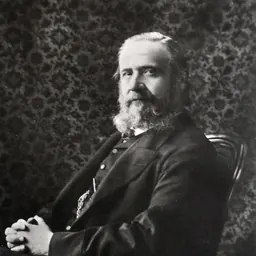
Arur Singh Shergill (1865 – 1926) was a Sikh magistrate and civil judge who served as the manager of Darbar Sahib and the Akal Takht, as a sarbarah appointed by the British Raj from 1902 to 1920.
Early life and career Arur Singh Shergill was born in Naushehra Nangli, Amritsar, British India to a Sikh family of Shergill clan in 1865. His father Deputy Inspector Harnam Singh died when he was four years of age. Being a minor, his property was brought under the Court of Wards to be administered by Gulab Singh Bhagowalia and Ajit Singh Attari till 1885. He was educated at the Government High School in Amritsar.
In 1888, Shergill became an honorary magistrate of second class with powers over 133 villages of Kathu Nangal police station. Later he became a magistrate of first class in 1907 for the same district. He was also the honorary civil judge in Amritsar.
Sarbarah Shergill was appointed a sarbarah to manage Darbar Sahib and the Akal Takht on 1 July 1902. He was appointed by Esquire Maclagan, Deputy Commissioner of Amritsar, to replace Colonel Jawala Singh. Arur Singh was a aristocrat and supported the Amritsar Singh Sabha which grew out of fashion by his time.
On 2 May 1905, Shergill removed idols/images from the Darbar Sahib and prohibited the entry of Brahmins within the premises, after protests. This action was supported by the Tat Khalsa faction of the Singh Sabha movement (which Arur Singh was opposed to), however the Arya Samaj, Brahmo Samaj, and other prominent organizations contested the move. According to Mohinder Singh's The Akali Movement, Arur Singh discussed with Dyer about the possibility of him becoming a Sikh at the siropa ceremony but Dyer declined on the basis of being unable to keep long-hair as a British official and giving-up smoking cigarettes.
Honours A Companion (CIE) in 1913 and a Knight Grand Commander (GCIE) in 1921, two classes of the Order of the Indian Empire were awarded to Shergill.
Family and legacy
During the Punjab insurgency, the Khalistani militant outfit Dasmesh Khalsa set on-fire the samadh of Arur Singh in Naushehra Nangli in May 1984, fired upon the complex, and issued a letter to his familial relatives warning them that traitors to the Sikhs "would not be spared".
Simranjit Singh Mann is Arur Singh's grandson. Shergill's maternal grandson, pro-Khalistan leader Simranjit Singh Mann, the president of Shiromani Akali Dal (Amritsar) apologised in 2001 for the honour given to Dyer by his maternal grandfather. Mann also justified Shergill's decision in 2022 by saying, "he did it to save the Golden Temple from bombing on the advice of then principal of Khalsa College G. A. Wathen."
Don’t just read it —
keep it.
Full-length biographies made to live with: read them, listen on the way to work, watch them tonight.
- E-book
- Audio
- Video
Instant download · yours to keep · every purchase keeps this site free
Important facts
Related people
Same field, nearest in time



Contemporaries
People whose lives overlapped Arur Singh Naushera's




Frequently asked questions
Who was Arur Singh Naushera?
Indian magistrate (1865 – 1926)
When was Arur Singh Naushera born?
Arur Singh Naushera was born in 1865.
When did Arur Singh Naushera die?
Arur Singh Naushera died in 1926.
What was Arur Singh Naushera's occupation?
Arur Singh Naushera was a writer.
Sources & further reading
· Wikipedia: Arur Singh Naushera
· DBpedia: Arur Singh Shergill
Cite this page
APA: Biography.guide. (2026). Arur Singh Naushera. https://biography.guide/arur-singh-naushera/
MLA: "Arur Singh Naushera." Biography.guide, https://biography.guide/arur-singh-naushera/.
Chicago: "Arur Singh Naushera." Biography.guide. https://biography.guide/arur-singh-naushera/.
Data last updated: 2026-09-20 · Spot an error? Report a correction.
Page generated 2026-09-27 05:24 UTC