
About Arthur Swanstrom
Lived 1888 – 1940 (aged 51–52). Arthur Swanstrom was an American writer, songwriter, dancer, composer and lyricist.
Arthur M. Swanstrom (August 4, 1888 – October 4, 1940) was an American lyricist, playwright, producer, and dancer. The son of politician J. Edward Swanstrom, he began his career as a ballroom dancer, primarily performing in that capacity in nightclubs and in vaudeville. He expanded into working as a lyricist, initially working in partnership with John Murray Anderson as the lyricist for the revue The Greenwich Village Follies from 1919 to 1921. He became active as a Tin Pan Alley songwriter, writing lyrics for popular songs. Some of his hit songs included "Blues My Naughty Sweetie Gives to Me", "The Argentines, The Portuguese, and the Greeks" (1920), "Broadway Blues" (1920), "Rain" (1927), and "Twenty-Four Hours A Day" (1935). Many of his songs were written in collaboration with Carey Morgan, although he worked with several other composers during his career. He was both producer and lyricist for the Broadway productions of Sons O' Guns (1929) and Princess Charming (1930), and authored both the lyrics and book to the Broadway musical Sea Legs (1937). Ill health and financial problems plagued Swanstrom in the last years of his life, and he died of a stroke in 1940 at the age of 52.
Early life and career
The son of J. Edward Swanstrom and Francis N. Swanstrom (née Harris), Arthur Swanstrom was born in Brooklyn, New York, on August 4, 1888. His father was a well known lawyer and local politician who served a term as Borough president of Brooklynn. His grandparents on his father's side had immigrated to the United States from Sweden, and his grandfather, John P. Swanstrom, was a well known clergyman in New York. Arthur was attending Public School 3 in Bedford–Stuyvesant, Brooklyn at the time that his father was serving on the school board of the New York City Public Schools as Brooklyn's elected representative in 1898.
Swanstrom composed the music and wrote the libretto to a three act opera entitled The Island Empire which was given its premiere in an amateur production at a summer resort in Westminster Park on Wellesley Island in 1907. He also starred in this production in the lead male role. This was followed by a musical comedy written by Swanstrom which was presented at the Westminster Hotel on Wellesley Island in 1908. From Wellesley Island, the Swanstrom family sponsored a regatta held on the St. Lawrence River, the winner of which was awarded the Swanstrom Cup. Arthur was the family member who represented the family in the 1912 regatta, awarding the cup to the boat race's winner. His father had died from pneumonia the year previously with Arthur and his mother and sister at his father's bedside at the time of his death.
Arthur began his professional career as a ballroom dancer,
Lyricist, playwright, and producer
Swanstrom's first significant work as a lyricist was done in partnership with John Murray Anderson. Together they co-wrote the lyrics to the musical revue The Greenwich Village Follies of 1919. Called by theatre scholar Thomas S. Hischak "the first Off-Broadway musical to gain wide recognition in New York", the work premiered at the Greenwich Village Theatre on July 15, 1919. It successfully transferred to Broadway where it ran at the Nora Bayes Theatre in 1919–1920. Swanstrom went on to write more lyrics for The Greenwich Village Follies, penning words for the 1920 and 1921 iterations of that revue.
With composer Carey Morgan and songwriter Charles McCarron, Swanstrom co-wrote the hit song "Blues (My Naughty Sweetie Gives to Me)", a work which was first recorded in 1919 by Irving Kaufman but didn't become a hit until 1920 when Ted Lewis's later recording popularized the work. More than 50 years later the song was interpolated into the 1975 Broadway musical Doctor Jazz. Jimmie Noone's recording of the song was used on the soundtrack to Woody Allen's 2013 film Blue Jasmine, and a new recording by Cherise Adams-Burnett was used in the 2022 film Downton Abbey: A New Era. When Albert Szirmai's operetta Princess Charming was adapted for the Broadway stage, Swanstrom provided new lyrics for production which opened at the Imperial Theatre in October 1930. He also produced this production. Swanstrom also penned straight plays and wrote dramatic sketches and lyrics for vaudeville. Other artists to record this song include jazz pianist Teddy Wilson, singer Chick Bullock, Jan Garber and his jazz band, and violinist Al Donahue and his band.
Alone, Swanstrom wrote both the lyrics and book to the Broadway musical Sea Legs (1937, composer Michael H. Cleary) which was staged at the Mansfield Theatre. His 1940 obituary in Variety stated that Swanstrom had recently written a non-musical stage play which had been accepted by a producer for a forthcoming New York production at the time of his death.
Don’t just read it —
keep it.
Full-length biographies made to live with: read them, listen on the way to work, watch them tonight.
- E-book
- Audio
- Video
Instant download · yours to keep · every purchase keeps this site free
Important facts
People in Arthur Swanstrom's life
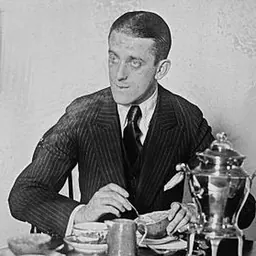
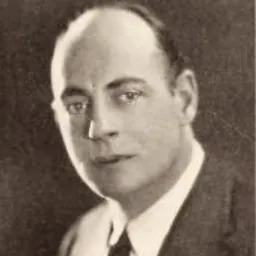
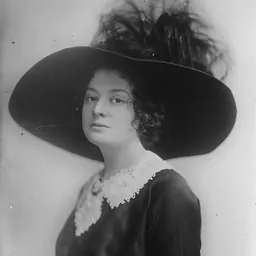
Named in this biography and alive at the same time





Related people
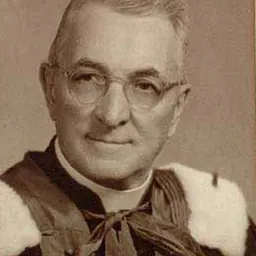
Same field, nearest in time




Contemporaries
People whose lives overlapped Arthur Swanstrom's



Frequently asked questions
Who was Arthur Swanstrom?
American lyricist, playwright (1888–1940)
When was Arthur Swanstrom born?
Arthur Swanstrom was born in 1888 in Brooklyn.
When did Arthur Swanstrom die?
Arthur Swanstrom died in 1940 in Scarsdale.
What was Arthur Swanstrom's occupation?
Arthur Swanstrom was a writer, songwriter, dancer, composer and lyricist.
What nationality was Arthur Swanstrom?
Arthur Swanstrom was American.
Sources & further reading
Cite this page
APA: Biography.guide. (2026). Arthur Swanstrom. https://biography.guide/arthur-swanstrom/
MLA: "Arthur Swanstrom." Biography.guide, https://biography.guide/arthur-swanstrom/.
Chicago: "Arthur Swanstrom." Biography.guide. https://biography.guide/arthur-swanstrom/.
Data last updated: 2026-09-20 · Spot an error? Report a correction.
Page generated 2026-09-27 05:01 UTC