
About Arthur Stanley Wohlmann
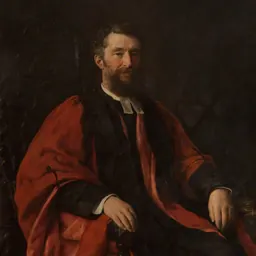
Lived 1867 – 1944 (aged 76). Arthur Stanley Wohlmann was a British physician and balneologist.
Arthur Stanley Wohlmann (1867–1943), also known as Arthur Stanley Herbert, was an English physician and balneologist, known for his significant contributions to the therapeutic use of the spa in New Zealand. Born in London, he qualified as a dentist in 1894 and moved to New Zealand in 1902. Wohlmann was appointed as the first government balneologist in Rotorua, where he played a pivotal role in developing the town into a renowned spa destination.
His work included the design and supervision of various therapeutic facilities, promoting the health benefits of the spa. Wohlmann's efforts were instrumental in attracting both local and international visitors to Rotorua, boosting its reputation and economy. He also published extensively on the therapeutic properties of hot springs, contributing valuable knowledge to the field of balneology.
Wohlmann's influence extended beyond Rotorua as he consulted on similar projects in other regions. He retired in 1935 but continued to be involved in balneology until his death in 1943. His legacy is marked by his dedication to advancing the scientific and therapeutic use of geothermal resources.
Biography Trained in London and having practiced balneotherapy for several years in the renowned spa town of Bath, he was chosen in 1902 by the government of New Zealand, shortly after that country had been the first to set up a government tourism agency, to be the colony's official balneologist. This title, which at first aroused astonishment, reflected the economic importance attributed to the development of New Zealand spa tourism and the hope of attracting an influx of international curists, drawn by the beauty and virtues of the North Island's thermal zone.
Wohlmann enthusiastically took on the task of surveying the springs and promoting them, notably by producing brochures and exhibitions. His priority, however, was the development of the Rotorua site, where he aimed to build an international spa. The latter, inaugurated in 1908, boasts a level of luxury and equipment unrivaled in the southern hemisphere. Although the site is still world-famous today, this major investment did not bear the fruit hoped for at the time. This was mainly due to the remoteness of the country and despite the innovations introduced by Wohlmann, including a dangerous radioactive cure. It eventually fell into disrepair, eaten away by sulfurous fumes.
In 1874, William Fox recommended that the New Zealand Government follow the American example of Yellowstone National Park, created in 1872, and intervene to protect the spa areas of the North Island. He suggested the creation in this region of "a sanatorium not only for the Australian colonies but also for India and other parts of the globe". The project began to be implemented in 1881 with the passing of the Thermal-Springs Districts Act, which gave the Crown the right to purchase land offered for sale in the area. In 1886, a small private sanatorium was opened in Rotorua. In 1888, it was destroyed by fire and rebuilt by the government in 1889 as a "national institution", under the management of Dr. Alfred Ginders.
In 1894, the opening of a railroad line between Auckland and Rotorua boosted the number of visitors to the spa area and the Rotorua sanatorium. In 1895, the New Zealand press reported that the government was dissatisfied with Dr. Ginders' management, that he would soon be sent to Rotorua to analyze the mineral waters, and that an "experienced balneologist" should be sought in Europe. In 1896, in a parliamentary report on the state of hospitals, Duncan MacGregor recommended a radical reorganization of the organization of spa treatments to cope with the foreseeable growth in demand for spa treatments, and in particular the recruitment of a "medical expert in balneology with competence and experience in the field". According to Reeves, the position required the combined skills of a physician, chemist, engineer, and hotelier.
Balneology was introduced into the New Zealand political landscape in 1897. In October, during parliamentary debates on the budget, the allocation of a £1,000 line for the annual salary and expenses of a balneologist – a large sum reflecting the national importance of the function – was denounced by the opposition as a "gross extravagance". It attracted criticism from some of the press: while the Otago Witness assumed that the term referred to the North Island's hot springs, the Ohinemuri Gazette suggested that the role of a balneologist would be to show patients how to locate whales in the warm waters of Lake Rotorua; the Daily Telegraph regarded the choice of the term as a form of offensiveness designed to conceal the nature of the tasks involved; and the Observer suggested that, as the necessary "expertise" seemed easy to acquire, the post could easily be awarded to a local resident.
By 1898, Reeves met Dr. Karl Grube, head physician at the Bad Neuenahr spa clinic and known for his "young, energetic personality, extensive experience of thermal springs and thorough knowledge of the subject". He was fluent in English and treated celebrities such as the Prince of Fürstenberg and the Duchess of Teck, who he hoped would tempt them to come and experience the thermal benefits of New Zealand.
Formative years
In March 1902, several New Zealand newspapers announced the nomination of Arthur Stanley Wohlmann to the post of government balneologist, often mentioning a decisive fact: despite his Teutonic-sounding name, he came from a family that had been "English for two hundred years".
Born on March 3, 1867, in Hertford, where he attended secondary school, Wohlmann began his medical studies in 1885 at Guy's Hospital in London, graduating in 1892. After practicing in the city, he spent four months as a surgeon at the British hospital in Port Saïd, then spent two years as a resident physician at the Royal Mineral Water Hospital in Bath, where he treated rheumatoid arthritis, before setting up his practice in the city renowned for its spa treatments. Over six years, he developed a balneotherapy practice, in which he was recognized for his considerable experience, particularly in the use of electricity. In 1896, Wohlmann co-authored a noteworthy article on rheumatoid arthritis which defended the hypothesis, since abandoned, of a bacterial origin for this disease, and in 1899 published an article on rheumatic diseases. In 1899, he married Eugenia Madden, widow of a colonel in the Indian Army, with whom he had a daughter aged three when he arrived in New Zealand. In choosing him from 43 applicants, the New Zealand government hoped to capitalize on his experience and reputation with Bath's wealthy spa clientele. His credentials were published in the first report of the Tourism Development Agency set up in 1901. However, before setting sail for New Zealand, he was asked to spend two weeks touring Europe's leading spas to assess their strengths and weaknesses. taking water samples, which he had analyzed by the Colonial Museum laboratory in Wellington, to select the sites he recommended for development.
In the report he submitted at the end of this first tour, he expressed both enthusiasm and caution, stating that "nature has endowed [New Zealand] with thermal springs with prodigality, but the very abundance of these gifts makes [his] task all the more difficult [and that] to do justice [to all the springs in this country] would require an enormous and unjustifiable expense". The work was gradually supplemented with information on other sites, with pagination increasing from 48 pages in 1904 to 82 pages in 1907 and 155 pages in 1914. These publications were part of a strategy developed by Donne, the director of the tourism promotion department, to present New Zealand as a "thermal wonderland" and a "cureland", the spa par excellence of the southern hemisphere. According to Peter Hodder, the ambiguous status of Wohlmann's publications, which simultaneously aim to provide scientific data on the composition of the waters and more conjectural information on their alleged virtues, while at the same time addressing a readership of potential tourists and health-care professionals, results in a mixture between compilations of chemical analyses and subjective assessments of the waters' gustatory or curative qualities. Wohlmann made favorable comparisons between New Zealand's mineral waters and those of Europe's most famous spas. Te Aroha's, for example, had a higher proportion of sodium bicarbonate than Vichy's, making it "the strongest alkaline thermal water in the world". However, these analyses will later be called into question when it emerges that the same waters are also rich in arsenic and boron.
In 1906, Wohlmann was entrusted with organizing part of the Tourism Department's section at the Christchurch International Exhibition. Responding to visitors' expectations of spectacular attractions at the time, Wohlmann designed and built a "wonderfully accurate copy of some of the most remarkable features of the thermal regions [... where,] after passing through a portal surrounded by carved Maori totem poles, the visitor is immediately transported to the land of soufrières, wai-arikis [hot springs], geysers and fumaroles". This ingenious and faithful miniature recreation of "geyserland" was inaugurated by the Prime Minister, Joseph Ward, and earned Wohlmann his congratulations.
Development of Rotorua Soon after he arrived in Rotorua, Wohlmann decided on the development strategy he would constantly recommend to the authorities: to prioritize the developing the local spa facilities into the largest spa in the southern hemisphere. He points to the economic benefits that can be expected from such a development: "If, through increased attractions, we can attract a thousand more visitors, we can expect a million more pounds to be spent in the country. To attract these visitors, we need to upgrade a spa completely, both in terms of baths and amusements and treatments [...] the baths must not only be places where you can bathe in thermal waters but they must be equipped with all the expensive apparatus of modern balneological methods; and there must not only be decent comfort but a certain level of luxury". – were built directly above the springs, exposing their users to fumaroles. Despite the apparent support of the government, work did not begin until 1905, an article published in the New Zealand Herald that same year reflecting the frustration engendered by this procrastination: "we have a brilliant balneologist, but in practice, we have no baths".
By August 1908, the work, which had cost around £40,000, was sufficiently advanced to allow a partial opening. The official inauguration took place in August 1908, in the presence of the Prime Minister, Admiral Sperry, and two hundred officers of the American fleet. was intended to feature 14 deep baths, 42 basin baths, 12 mud baths, 4 electric baths, 4 steam baths, and 8 massage showers of various types, while inhalations would be performed in separate rooms where they could be dispensed to 10 patients via wall-mounted cabins "resembling the compartments made available to the public in telegraph offices", all of which could be operated simultaneously via a central electrical panel, The therapeutic ambitions of the spas were extensive: in addition to arthritis, neuralgia, skin problems, hysteria, neurasthenia, dyspepsia, migraines, hypertension, colitis, constipation, obesity, hemorrhoids, "pelvic viscera" disorders, insomnia, nervous irritability, bronchial and throat infections, liver problems, gout, and kidney ailments were also treated. Many treatments are modeled on those offered in European spas: massage showers according to Dr. Forestier's Aix method, recommended for rheumatism and gout, but also supposed to remedy the atonic condition of the viscera; hot-air Greville baths, intended to relieve effusions; Plombières showers reputed to be effective for "arthritic diseases of the colon"; electric baths used to remedy nervous weakness; or the newly-discovered X-rays used to treat dermatological problems. Wohlmann advocated the idea that certain parts of the skin are linked to internal organs, such as the palms of the hands to the lungs. He convinced the government that the public was "radium-mad" and secured the purchase of an "activator" from a specialist firm in London to enrich mineral water with radium emanation, or radon, to be administered orally in doses of four to six glasses a day, drunk at "frequent intervals" to "maintain the charge in the blood". Increased urine production, gut excretory activity and sexual activity are among the expected beneficial effects. According to Rebecca Priestley and John Horrocks, this therapy was not the result of charlatanism, but of a desire to offer "the best technology available" at a time when the harmfulness of radium was still unknown. Moreover, Wohlmann adopted a holistic approach to spa treatment, considering ambience, change of atmosphere and climate to be an integral part of it; this approach went hand in hand with a more commercial argument, highlighting the age-old expertise of the Maoris from which spa-goers could benefit.
The spa was described as the most beautiful and luxurious building in New Zealand. Journalists pointed out the presence of statues of Charles Francis Summers in the foyer and the luxury of the spa facilities. Wohlmann, supported by the Department of Tourism, argued that these luxuries were necessary to enable Rotorua to compete with the great spas of international renown, but soon after the official opening, the government gradually became more and more reluctant to finance further investment. By 1909, it was clear that the results were not living up to expectations, as the new facilities, despite their luxury, were not sufficient to motivate international spa-goers to make the long journey to New Zealand: the increase in revenue for the year was only £612, and the number of foreign spa-goers remained limited to 95 Australians, 40 Britons and 35 from other countries. In the first months of operation, the Rotorua spa began to show signs of deterioration. The high level of sulfur in the water led to rapid corrosion of the piping, while sulfur vapors blackened the paint on the walls, attacked the ventilation and loosened the tile joints.
At the same time as managing the spa, Wohlmann continued his work as a physician. In his 1914 book on mineral waters, he summarized the results obtained on 593 patients he had personally treated over the previous three years at the new Rotorua establishment estimating that 536 of them had improved, particularly in cases of rheumatism and arthritis, but also neurasthenia. According to Ralph Johnson, this retrospective synthesis "regrettably" lacks a critical section, particularly on the "supreme importance" attributed to radioactivity in balneology. total_width = 250
Shortly after the outbreak of the First World War, Wohlmann was prompted by growing anti-German sentiment to stop using his surname. He adopted his mother's maiden name, Herbert, and announced it in the press. and later in a book published in 1918, for which he was awarded the Order of the British Empire.
in 1919, Wohlmann was promoted to Major and reinstated in the New Zealand Army. According to Peter Hodder, this guide took account of worldwide advances in thalassotherapy and highlighted the variety of mineral springs available on the island. According to John Horrocks, this remark testifies to an "openness to the importance of suggestion", and, more generally, in the idea – developed a few years earlier by George Miller Beard with his thematization of the concept of neurasthenia – that the cause of nervous disease was modern civilization, Wohlmann thus expressed a sincere alignment with the theme developed by the New Zealand government's tourism propaganda.
In one of his latest publications, Wohlmann, without going back over the benefits of a change of scenery during a spa treatment, nor over the therapeutic virtues of mineral waters, recommended not underestimating the advantages of simple hydrotherapy with ordinary hot water available in a city like London, combined with "massage, manipulation and movement, using electricity, light and dry heat". Peter Hodder noted that Wohlmann had already been convinced in 1914 that the effectiveness of some of his treatments was due more to the temperature of the water than to its composition.
He died on March 3, 1944 in Richmond. The position of government balneologist was held by Dr. Duncan from 1919 to 1942, then by Dr. Blair from 1942 to 1957, and was not renewed after 1957. This evolution is consistent with the changing perception of geothermal water issues in New Zealand since the mid-twentieth century, first seen as a spectacle for tourists, then as a remedy in the form of baths or beverages, then as a leisure activity, before being mainly considered today from the angle of energy supply.
Don’t just read it —
keep it.
Full-length biographies made to live with: read them, listen on the way to work, watch them tonight.
- E-book
- Audio
- Video
Instant download · yours to keep · every purchase keeps this site free
Important facts
People in Arthur Stanley Wohlmann's life
Named in this biography and alive at the same time





Related people
Same field, nearest in time




Contemporaries
People whose lives overlapped Arthur Stanley Wohlmann's


Frequently asked questions
Who was Arthur Stanley Wohlmann?
3 Oct 1867 - 3 Mar 1944
When was Arthur Stanley Wohlmann born?
Arthur Stanley Wohlmann was born on 3 October 1867 in Hertford.
When did Arthur Stanley Wohlmann die?
Arthur Stanley Wohlmann died on 3 March 1944 in Richmond.
What was Arthur Stanley Wohlmann's occupation?
Arthur Stanley Wohlmann was a physician and balneologist.
What nationality was Arthur Stanley Wohlmann?
Arthur Stanley Wohlmann was British.
Sources & further reading
· Wikipedia: Arthur Stanley Wohlmann
· DBpedia: Arthur Stanley Wohlmann
Cite this page
APA: Biography.guide. (2026). Arthur Stanley Wohlmann. https://biography.guide/arthur-stanley-wohlmann/
MLA: "Arthur Stanley Wohlmann." Biography.guide, https://biography.guide/arthur-stanley-wohlmann/.
Chicago: "Arthur Stanley Wohlmann." Biography.guide. https://biography.guide/arthur-stanley-wohlmann/.
Data last updated: 2026-09-20 · Spot an error? Report a correction.
Page generated 2026-09-27 05:23 UTC