
About Arthur R. M. Spaid
Lived 1866 – 1936 (aged 69). Arthur R. M. Spaid was an American educator.
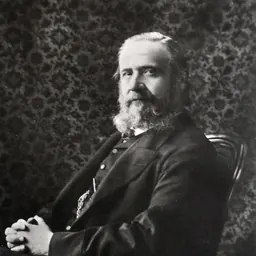
Arthur Rusmiselle Miller Spaid (July 27, 1866 – March 16, 1936) was an American educator, school administrator, lecturer, and writer. He served as principal of Alexis I. duPont High School (1894–1903) in Wilmington, Delaware, superintendent of New Castle County Public Schools (1903–1913) in Delaware, superintendent of Dorchester County Public Schools (1913–1917) in Maryland, and Delaware State commissioner of Education (1917–1921).
Born in West Virginia, Spaid began his career in education as a schoolteacher in Virginia and as a school administrator in Ohio. After a decade as a principal Spaid became a superintendent; in this role he argued for compulsory education and the consolidation of New Castle County's rural public schools, instituted pay raises for teachers to mitigate a teacher shortage, and served on a committee to revise the state public school system's curriculum.
Spaid received a Master of Arts degree in education from Columbia University in 1917, the same year he became the Delaware State Commissioner of Education. As commissioner, Spaid worked to bring efficiency to the state's public school system; his efforts resulted in the Delaware State Board of Education's adoption of a new school code in 1919. He left Delaware in 1921 and engaged in Chautauqua-related work before becoming the head of the Education Department at Salem University in Salem, West Virginia, from 1926 to 1936.
Spaid was a naturalist by hobby and took hundreds of photographs, using them to illustrate his nature study articles and lecture slides. Throughout his career as a school administrator, he served as an instructor, lecturer, and speaker for multiple courses, institutes, and organizations. Spaid was also an avid writer, and he published articles in Scientific American and Country Life in America. He had planned to author a book on his nature studies, for which he had written notes and collected specimens; however, his home and notebooks were destroyed in a fire in 1917. Spaid died at the home of his daughter in Winchester, Virginia, in 1936. According to historians Hu Maxwell and Howard Llewellyn Swisher, Spaid "placed himself in the front rank of the educational works of Delaware, and received the commendation of the press and the educators for his advanced ideas."
Early life and education Arthur Rusmiselle Miller Spaid was born on July 27, 1866 in Capon Springs, West Virginia, to John W. Spaid and his wife, Margaret Elizabeth Brill Spaid. Arthur Spaid was the eldest of six children, with two brothers and three sisters: Luther Lore "Boyd" Spaid (1868–1877), Elia May Spaid (1870–1911), Martha Evalona Spaid (1875–1921), William Pohe Spaid (1878–1885), and Eleanor "Nellie" Love Spaid (1881–1963). His great-great-grandfather, George Nicholas Spaid (né Spaht), originated from Kassel, Germany, and settled in Hampshire County along the Cacapon River in the late 18th century. Arthur Spaid and his siblings were raised by their parents on a small farm on Timber Ridge. He completed his primary education in 1886 and earned his teaching certificate shortly thereafter. In the spring of 1886, he attended Professor Taylor's private school in Lacey Spring, Virginia, for three months and won prizes in spelling and history while there. During his time in Broadway, he was a member of the Broadway Literary Society. After completing Kelso's term, Spaid returned to his studies, finished his course in 1893, and earned his Bachelor of Arts degree from Wilmington College in Wilmington, Ohio, where he was president of his class and participated in the Dorian Literary Society. Spaid completed his graduate studies in American history and earned a Master of Arts degree from Haverford College in 1894.
Spaid relocated to Delaware in 1894 He served as the principal of Alexis I. duPont High School until 1903. He was one of three county superintendents in Delaware; the other two administered the public schools in Kent and Sussex counties. Throughout his tenure, Spaid argued for compulsory education and the modernization and consolidation of the county's public schools. In November 1904, a special session of the Delaware State Board of Education appointed Spaid and the other two county superintendents to a committee charged with proposing and explaining legislation to improve and modernize the state's public school system to the Delaware Senate and Delaware House of Representatives. In May 1908, the Delaware State Board of Education appointed Spaid and the county superintendents to a committee charged with revising the state public school system's curriculum.
While serving as New Castle County superintendent, Spaid's support of prohibition brought him into a public conflict with Wilmington's German American community. In 1907, Spaid received a letter from William J. Hogan who inquired about his position on prohibition. Philanthropist Pierre S. du Pont was secretary of the Delaware State Board of Education while Spaid served in this position.
In May 1918, Spaid held meetings of the Delaware State Board of Education at Stanton and locations across Delaware to hear from residents in school districts affected by the Delaware General Assembly's 1915 alteration of school district boundaries, to include consolidation of districts. As state commissioner, he convened a State Teachers' Institute in Newark in August 1918.
During his tenure as state commissioner, Delaware's public school system was impacted by World War I and the 1918 influenza pandemic. The pandemic caused Delaware's State Board of Health to shutter the state's public schools for three to four weeks. In November 1918, Spaid issued a four-page bulletin entitled, Our Children Must Be Educated, in which he appealed to parents and school administrators to address rising teacher resignations, school children withdrawals and other conditions affecting the state's public school system. According to Spaid its purpose was to provide an equal education for all Delaware students. Spaid and the state board also recommended that school children bring flowers from home, place them at veterans' graves in local cemeteries, and be dismissed for the remainder of the school day.
Later years In 1921, after resigning as Delaware's State Commissioner of Education, Spaid left Delaware and began engaging in Chautauqua-related work. "Eggs and Feathers", and "Leaves and Blossoms." In 1901, Spaid delivered a lecture on reptiles entitled "Fangs, Fins and Stings" in the Breck's Mill Area of Wilmington, and in February and April 1904, he presented a lecture tour across northern Delaware with illustrated lectures on "Eggs and Feathers", "The Picturesque Luray Caverns", and "Historic Shenandoah Valley." Between 1903 and 1905, Spaid gave 100 public lectures to around 10,000 people, including a new lecture entitled, "Delaware, Nesting Place of the Blue Hen's Chickens". In November 1917, he addressed the annual convention of the Delaware Woman's Christian Temperance Union in Seaford on the importance of scientific temperance instruction in public schools. In June 1919, Spaid held an open-air meeting on faith and asserted that "one outstanding result" of World War I "was a return to elemental Christian faith."
In addition to his public lectures, Spaid delivered 100 lectures in the county's schools while serving as the New Castle County superintendent.
Publications In addition to public speaking, Spaid was an avid writer. His articles on the subjects of history and nature included:
Spaid had planned to write a book on his nature studies, for which he had written notes and collected specimens. and died of heart failure the following day. Spaid was interred at Mount Hebron Cemetery in Winchester. Spaid's obituary in the Wilmington Morning News wrote that he had "devoted his life to educational work". Mary Margaret Spaid LaFollette (January 26, 1906 – June 26, 1965), He served as a state director of Delaware's National Education Association and was a member of the National Society for the Promotion of Vocational Education. and one of the founders of the McCabe Memorial Methodist Episcopal Church. He became a member of the American Museum of Natural History in 1935.
Don’t just read it —
keep it.
Full-length biographies made to live with: read them, listen on the way to work, watch them tonight.
- E-book
- Audio
- Video
Instant download · yours to keep · every purchase keeps this site free
Important facts
People in Arthur R. M. Spaid's life
Named in this biography and alive at the same time

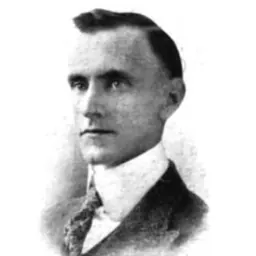
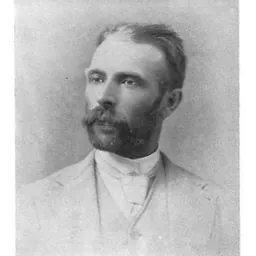

Related people
Same field, nearest in time

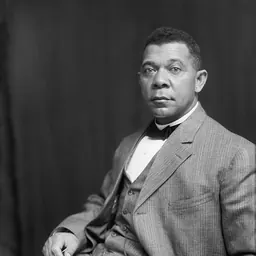




Contemporaries
People whose lives overlapped Arthur R. M. Spaid's
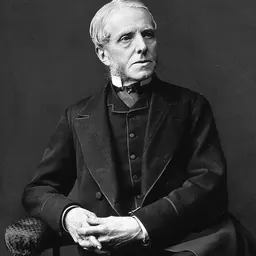

Frequently asked questions
Who was Arthur R. M. Spaid?
American educator and writer (1866-1936)
When was Arthur R. M. Spaid born?
Arthur R. M. Spaid was born on 27 July 1866 in Capon Springs.
When did Arthur R. M. Spaid die?
Arthur R. M. Spaid died on 16 March 1936 in Winchester, Virginia.
What was Arthur R. M. Spaid's occupation?
Arthur R. M. Spaid was an educator.
What nationality was Arthur R. M. Spaid?
Arthur R. M. Spaid was American.
Sources & further reading
· Wikipedia: Arthur R. M. Spaid
Cite this page
APA: Biography.guide. (2026). Arthur R. M. Spaid. https://biography.guide/arthur-r-m-spaid/
MLA: "Arthur R. M. Spaid." Biography.guide, https://biography.guide/arthur-r-m-spaid/.
Chicago: "Arthur R. M. Spaid." Biography.guide. https://biography.guide/arthur-r-m-spaid/.
Data last updated: 2026-09-25 · Spot an error? Report a correction.
Page generated 2026-09-27 05:12 UTC