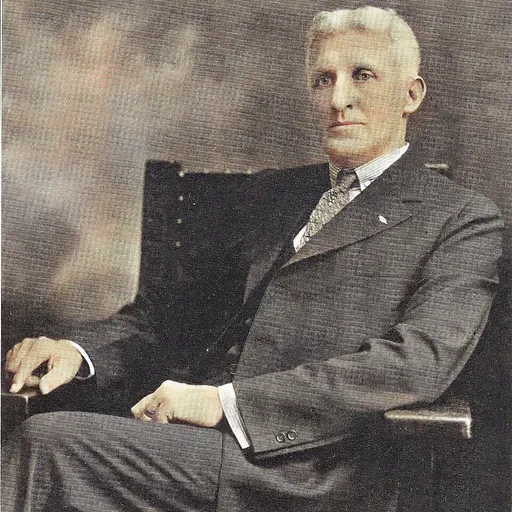
About Arthur Nash
Lived 1870 – 1927 (aged 57). Arthur Nash was a businessperson, writer and public speaking.
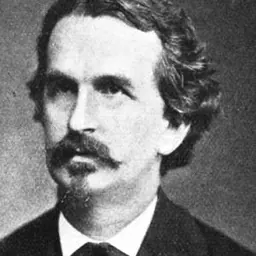
Arthur Nash (June 26, 1870 – October 30, 1927) was an American business man, author, and popular public speaker who achieved recognition in the 1920s when he determined to run his newly purchased sweatshop on the basis of the Golden Rule, and his business prospered beyond all expectation.
More than anything else, he was a man of faith. I do not mean faith in creeds or theology ... I do not mean the faith that is a surrender to reason or a refuge for mental indolence and mediocrity. But I do mean the faith that Christ meant exactly what he said when he pronounced the Golden Rule as the rule and guide for the lives of men. —Champe S. Andrews, National Folding Box Company Whenever there is anything wrong with human relationships in this world, it is because they are out of harmony with the law which was revealed by the Great Teacher of Galilee ... "Therefore all things whatsoever ye would that men should do to you, do ye even so to them, for this is the law and the prophets." —Arthur Nash His parents, Evermont "Mont" and Rachel Mitchell Nash, were strict Seventh-day Adventists, sending their son to religious school when he was thirteen years old. Nash graduated from high school at Greentown, Indiana, and then from the Adventist Theological Seminary in Battle Creek, Michigan. Ordained in 1894, he subsequently took a position as an instructor at the Adventist school for ministers and missionaries in Detroit.
Soon after he began teaching in Michigan, Nash befriended an elderly woman, Agnes "Mother" d'Arcambal, visiting her every week for eight or nine months. calling her his "life partner." Described by Nash as being "possessed by a strong, robust faith," under Maude's influence, Nash came to view his arguments as being not against Christianity itself, but against its misinterpretation. He reentered the ministry with the Christian Church (Disciples of Christ), and in 1900, accepted the pastorate of a small church in Bluffton, Ohio. But Nash's rekindled career in religious work ended with "bewildering suddenness," when, in a funeral sermon, he extolled the many virtues of a kindhearted but professedly unreligious man, recently departed. The Disciples of Christ called for Nash's resignation forthwith.
William Albert Nash, born January 9, 1890
Married Maude Lena Southwell, April 9, 1899 Grace Nash Straehlev, born 1902
Career With a wife and three children to support, Nash was persuaded by a group of Chicago clothing salesmen to join their crew, and it soon became apparent that he made a better salesman than preacher. he immediately joined up with the Marines.
Distraught at having two sons involved in a war to which he viscerally objected, Nash experienced his darkest hour. Though he still thought himself an atheist, his mind harkened back to the teachings of his youth. In his own words: "Under great agony of soul I was finally driven to my knees, and there was torn from my heart perhaps the first real prayer that I had ever uttered. It was, 'O God, if there is a God, show me the way and I will walk in it.'" Nash said to them, in part:
First, I want you to know that Brotherhood is a reality with me. You are all my brothers and sisters, children of the same great Father that I am, and entitled to all the justice and fair treatment that I want for myself. And so long as we run this shop [which to Nash meant three or four months longer] God being my helper, I am going to treat you as my brothers and sisters, and the Golden Rule is going to be our only governing law. Which means, that whatever I would like to have you do to me, were I in your place, I am going to do to you. (though A. Nash Company workers never staged a walk-out his workforce largely inexperienced, and he required credit with bankers and suppliers, and so he concluded that his should remain an open shop. Though many accused Nash of standing with the anti-union movement, according to Philip I. Roberts—who, for a posthumous edition of Nash's autobiography, wrote of the four years intervening between its publication and Nash's death—this is "an absolute mistake." During the first week of the strike, which lasted from March through mid-June, Going from one floor, to six, and hesitant to advertise, Nash told his employees that if they liked their jobs, to spread the word to their friends and neighbors, and then bring them into the factory and train them themselves. Nash's workforce quickly grew six hundred percent, without a single want ad.
The year 1921 Despite the Depression of 1920-21—while industrial activities were shrinking and many businesses failing—the A. Nash Company again reached factory capacity and bought Cincinnati's vacant Moerlein Brewering Company bottling works, located on the southeast corner of Henry and Elm. Neither the bottling works, nor the converted distillery, were well adapted to the purpose of a clothing factory, and before extensive remodeling took place, Nash came under much criticism for not providing adequate facilities for his workers, especially the women. Nash went on record as saying, "I am opposed to this open shop movement, although the A. Nash Company is not unionized. So long as the present avaricious organizations of capital continue, I can conceive of no worse condition of abject servitude than for labour to be unorganized."
About six months prior to Colton's journalistic investigation, a man by the name of John Sydell held up and robbed the A. Nash Company cashier of the plant's weekly payroll. When he was pronounced guilty, concern for Sydell's wife and four young children prompted a discussion between Nash and his employees on how they might be of service to the family. Colton was present at the factory meeting when it was decided Mrs. Sydell would be put on the company payroll at $20 per week, provided she agreed to use the money to make a good home for her children. And it was "Hattie Clark" that all six hundred workers present voted should deliver the money to Mrs. Sydell each week, and make sure that it was spent correctly. During this meeting, immediately following the vote, Colton revealed her true identity.
The year 1923 In early spring, it was reported that Nash had established a vegetarian cafeteria for his 2,100 employees, having hired a dietician from the Washington Institute to plan well-balanced meals that created "brains as well as brawn." Though there is no evidence that Nash himself practiced abstaining from meat once he left the Adventist faith, he credited his parents' (both then in their mid-70s) longtime vegetarianism for their longevity.
In July, Nash announced the 35-hour work week for women, stating that, "it was an insult to the Master himself to talk about building the kingdom of heaven on earth when women workers are bending over machines for forty hours a week," and instead of reducing the wage scale, he established a minimum wage of fifty cents an hour.
Before the year's end, Nash's autobiography, The Golden Rule in Business was published,
An article in a Bradford, Pennsylvania, newspaper in October encouraged every employer and employee in the city to attend the first of four meetings of "unusual interest," organized by the Board of Commerce. Nash was expected to lecture on how it was possible to combine an honest endeavor and a great spiritual principle, "and transform a group of common people into a most uncommon fellowship."
Nash had lowered prices, raised wages repeatedly, reduced both the workday and the workweek, and stabilized employment. And yet the money kept coming in. Nash believed his employees were entitled to these profits because their labors had made the money; he felt, in fact, that he would be, "the arch fiend of the ages," were he to personally appropriate the riches.
The year 1925 In January, the J.C. Penney Company hosted a great Mercantile convention at the Ambassador Hotel in Atlantic City. Six special Pullman trains were required to carry the attendees from around the country to the three-day event. Nash was listed among the notable speakers, along with Mr. James Cash Penney.
Addressing the Universalist Laymen's Association at New York's Hotel Commodore, also in January, Nash offered up a check for $1,000, stating he would add $20,000 more per year, for five years, if other churchmen of any denomination would raise $900,000. This fund was meant to advance the brotherhood movement in the United States, regardless of denomination or creed.
Making a habit of attending all the sessions of the general religious conventions wherein he was invited to speak, Nash came to the conclusion that sectarianism seemed to be the universal law with churches. This perplexed him, prompting him to join the Universalists. He became a trustee of their general convention. Under Nash's leadership, the lay members of the Universalist Church, who believed that great opportunities for constructive spiritual progress existed in Turkey, gave $25,000, with the promise of $50,000 more each year for five years, to what would be known as the Turkish-American Club. Nash founded and endowed the Brotherhood of Man movement in Turkey with $100,000 of his own money, intended to promote amity between young Turks and their Christian neighbors. Missionary work was organized, having as its objective the brotherhood of man, without any one religious sect predominating. Invitations to speak at religious, civic, and industrial functions poured in, and as his company and workforce grew, Nash felt compelled to spend more and more of his time out in the field. Deprived of his personality and direct influence, morale in Nash's company began to suffer. Subordinate executives "failed to maintain either the standard of their chief's idealism, or the equity consequent upon its adoption," and soon favoritism, discrimination, and shoddy workmanship reared their ugly heads. —for a great mass meeting at the Shubert Theater in Cincinnati he challenged them, in part: "Are we to be pointed to as an example, and quoted as an argument, why avaricious organizations should be allowed to exploit their labour, and grind their dollars out of the very sweat and blood of our brothers and sisters in their factories; or shall we join with this great group of organized workers, who are striving to loose the bonds of wickedness, lift the burdens of the heavy-laden and let the oppressed go free?" Through its pages, Roberts wrote, Nash, "could find free expression."
In the second issue, Nash wrote one of the journal's most frequently quoted articles, in which he said:
Whatever success has come to The A. Nash Company, in living the Golden Rule, has come, because there has been just enough business knowledge to enable us to live it to just that degree, and whenever we have failed in exercising the very highest and keenest business judgment on a truly ethical basis, it has been because we did not have sufficient insight to understand our obligation measured by the Golden Rule. In other words, perfect and infallible living of the Golden Rule would require infallible mentality and undaunted courage. This we do not claim ... However, we are more and more convinced of the immutability and the infallibility of the Golden Rule, as we approach nearer and nearer to the ability to live it.
The two years following unionization of Nash's company were the busiest in his life. He labored fervently, giving countless addresses at innumerable functions. "The tax upon his physical resources," Roberts wrote, "was appalling." In the summer of 1927, it was Nash's friends who convinced him to seek medical care. Soon it seemed the crises had been averted, but it later came to light that Nash had secretly continued suffering agonizing attacks of angina pectoris.
Death and afterward On Saturday, October 29—less than a week after forming his management board
The last issue of The Nash Journal, "In Memoriam," was published on November 28, 1927, with transcripts of eulogies and many other glowing tributes to Nash—of which the following snippets are a sample—gracing its pages:
He proved in his factory what he somehow knew, that Catholic, Protestant, Jew, and unbeliever know alike how to love, how to be friends, how to stand by one another in a great undertaking. Our differences are theological and racial rather than of the soul. Never have racial and religious prejudice been so rebuked ... than by the Nash experiment. —Worth M. Tippy, of the Federal Council of Churches
Philosophical and religious views At the beginning of his business venture—though Nash thought the Golden Rule right—he saw it as impractical idealism, and was skeptical that a business could be successfully operated on that principle. When prosperity came, Nash believed he had been given too much credit, and that his real role had been merely to provide an opportunity for the operation of the Golden Rule in industry. When asked, "Do you think I could apply the Golden Rule in my business?" Nash answered, "You might just as well resolve to fly through the air without an airplane as to resolve to live the Golden Rule without proper equipment. Indispensable to that equipment is the right attitude toward one's fellows. So long as they are 'dubs' and 'foreigners,' it is impossible." Nash wrote; "The Golden Rule is the divine law governing human relationships, accepted by all religions and proclaimed by all prophets and teachers of every creed. It is the only infallible, workable, industrial and economic law in the universe today." Nash diagnosed the trouble with Christianity as sectarianism he described as, "denominational cussedness rather than consciousness." He told of preachers, when he was a boy, who, rather than devoting their time to discoursing on brotherly love, gave most of their efforts to defending their own church's creed, while harshly criticizing the creeds of others, "and the more that they lambasted other creeds," Nash said, "the more it pleased their congregations." Nash's anti-war views are exemplified in The Nash Journal article entitled, "The Abolition of War": "all that is necessary to abolish war is that the nations of each should come together and unanimously agree that this horrible wasting of lives and economic values should never again be resorted to as a method of settling international difficulties, because it settles nothing." Nash did not believe in time clocks. Nash regarded the accumulation of great wealth as incompatible with living by the Golden Rule. The Dictionary of American Biography printed of Nash: "[He was] a shrewd business man, with a flair for leadership and a full understanding of the value of the publicity secured by his speeches, Nash was by nature and training a sincere and aggressive evangelist. To him the 'Golden Rule in Business' was a religion, and not merely a successful advertising slogan." Arthur Nash: "If we can't have clothes without taking the mothers of the next generation, we can go without them [clothes, that is]." Nash forever insisted that no system or group action could take the place of individual effort. He believed that the will to serve, rather than the will to govern and control, must be the individual aim and motive of all group members, or else end up with "nothing other than an aggregation of illiberality and the pooled selfishness of units." Philip Roberts: "The truth of the whole matter lay in the moral rather than the industrial stratum of the situation."
Notes/further reading Atkins, Willard E. (1922). "The Personnel Policies of the A. Nash Company". Journal of Political Economy. 30 (2): 212–228. Boyles, Cheryl Suffelette (2013). A Man Golden: A Screenplay Based on the Life of Golden Rule Arthur Nash. Chilton, Bruce D. (2008). The Golden Rule: Analytical Perspectives. University Press of America. . Chilton, Bruce D. (2009). The Golden Rule: The Ethics of Reciprocity in World Religions. New York: Continuum International Publishing. . DePuy, E. Cora (1891). Pebbles and Pearls: Sketches of the Life Work of Mrs. Agnes L. d'Arcambal. Agnes L. d'Arcambal. Gensler, Harry J. (2013). Ethics and the Golden Rule. New York: Routledge. . Josephson, Matthew (1952). Sidney Hillman: Statesman of American Labor. New York: Doubleday. Nash, Arthur (1923). The Golden Rule In Business. New York: Fleming H. Revell Company. Wattles, Jeffrey (1996). The Golden Rule. New York: Oxford University Press. .
Archival sources
Amalgamated Clothing Workers of America records, 1914–1980, 1920–1950, Collection Number 5619 (207.5 linear ft.) are housed at the Kheel Center for Labor-Management Documentation and Archives, Martin P. Catherwood Library at Cornell University.
Don’t just read it —
keep it.
Full-length biographies made to live with: read them, listen on the way to work, watch them tonight.
- E-book
- Audio
- Video
Instant download · yours to keep · every purchase keeps this site free
Important facts
People in Arthur Nash's life
Named in this biography and alive at the same time




Related people
Same field, nearest in time


Contemporaries
People whose lives overlapped Arthur Nash's


Frequently asked questions
Who was Arthur Nash?
American businessman (1870-1927)
When was Arthur Nash born?
Arthur Nash was born on 26 June 1870 in Tipton County.
When did Arthur Nash die?
Arthur Nash died on 30 October 1927 in Good Samaritan Hospital.
What was Arthur Nash's occupation?
Arthur Nash was a businessperson, writer and public speaking.
Sources & further reading
· DBpedia: Arthur Nash (businessman)
Cite this page
APA: Biography.guide. (2026). Arthur Nash. https://biography.guide/arthur-nash-businessperson/
MLA: "Arthur Nash." Biography.guide, https://biography.guide/arthur-nash-businessperson/.
Chicago: "Arthur Nash." Biography.guide. https://biography.guide/arthur-nash-businessperson/.
Data last updated: 2026-09-20 · Spot an error? Report a correction.
Page generated 2026-09-27 05:09 UTC