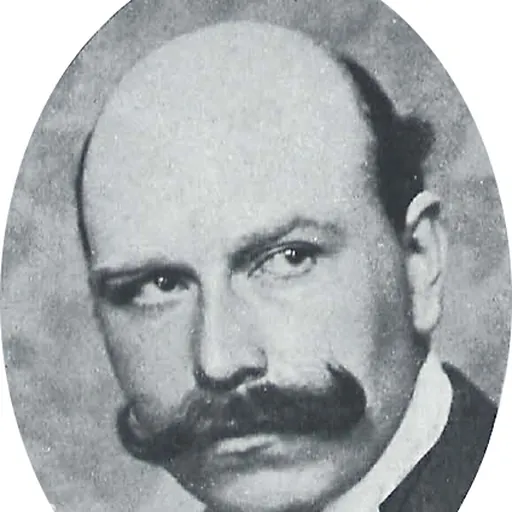
About Arthur Kampf
Lived 1864 – 1950 (aged 85). Arthur Kampf was a German painter, university teacher, teacher, draftsperson and visual artist.
Spanische Tänzerin (likely Rosario Guerrero), oil on canvas 78 x 61 ½ in. (198.1 x 156.2 cm.)thumb A Summer Outing On The Rheinwiese by Düsseldorf (1900), oil on panel 25.5 x 35 cm. (10 x 13.8 in.)thumb Bildnis einer Dame mit Blumen (1887), oil on canvas 82 x 63 cm. (32.3 x 24.8 in.)thumb Der Sündenfall (1898), oil on wood 42 x 31.5 cm. (16.5 x 12.4 in.)thumb Uberfall 1917 (1917), oil on canvas 160 x 114 cm. (62.9 x 44.9 in.) thumb Arthur Kampf (28 September 1864 – 8 February 1950) was a German painter. He was associated with the Düsseldorf school of painting.
Life Kampf studied under Peter Janssen, among others, at the Kunstakademie Düsseldorf from 1879 to 1881.
In 1886, Kampf exhibited The Last Statement. The painting's enormous size (112.2 x 142.5 in.) and controversial subject matter brought Kampf instant fame, and laid the foundation for the types of works he would be characterized by for the rest of his career.
In 1888, a second painting, Exhibition of remains of Emperor William I in Berlin, solidified Kampf's artistic renown as a painter specializing in historical documentation. After completing his education, he became a professor at the Kunstakademie and taught there until 1889, when he moved to Berlin. There he continued to teach at the local Kunstakademie.
In 1911, Kampf was assigned the role of creating the German pavilion at the International Art Exposition of Rome.
In 1914, Kampf and art historian Ludwig Justi created the "Künstler Club", a social group of prominent German artists: Max Liebermann, Max Slevogt, Hugo Lederer, Louis Tuaillonn, Gaul, Fritz Klimsch, architect Ludwig Hoffmann, musicians, Richard Strauss and Engelbert Humperdinck, and film director Max Reinhardt.
From 1915 to 1924, Kampf was president of the Hochschule für Bildende Künste in Berlin. He also became a member of the Prussian Academy of Arts, and gave drawing lessons, notably to Prince August Wilhelm, son of Wilhelm II.
Between 1933 and 1945, the Nazi regime in Germany actively promoted and censored forms of art in accordance with Adolf Hitler's strong personal artistic preferences for classical style and heroic themes. After the Nazis seized power, Kampf became a member of the Nazi Party, his fluency with traditional German art styles and expertise at creating large-scale murals allowing him to become one of the regime's contract artists.
In 1939's "Great German Art Exhibition" (Große Deutsche Kunstausstellung) at the Haus der Kunst in Munich, he was represented by numerous works, including The Struggle of Light Against Darkness, on loan from the Reich Chancellery. This guaranteed him immunity from interference in artistic work during the Second World War.
In 1944, at the age of 79, Kampf was one of 24 artists, architects, authors, composers, actors, and singers added to the Gottbegnadeten list, meaning he was considered absolutely indispensable to German culture. In Lower Slesia, Kampf's wife, Mathilde, was killed in a traffic accident.
Shortly before his death in 1950, at the age of 85, Kampf published a memoir called Aus Meinem Leben.
Throughout his life, Kampf held membership in the Association of Rhine-Westphalian Artists (honorary membership), the Society of German Watercolorists and the Association of German Illustrators, and he belonged to the Society of Berlin Artists in Berlin (1900–1930). In Düsseldorf, Kampf belonged to the Malkasten Artists‘ Society (1887–1898, honorary member after 1947), the St. Luke’s Artist’s Club (1892–1903), the Society of Düsseldorfer Artists, and to the Free Federation of Düsseldorf Artists.
Kampf's father, August Kampf was an Aachen painter and Imperial court photographer. Kampf's older brother, Eugen, was also a well known painter.
Style Kampf's work is most strongly associated with the genre of traditional history painting, though throughout his lifetime he explored styles influenced by Impressionism and Art Nouveau. He was also celebrated for large scale portrait work and in particular children's portraiture. Kampf also worked extensively as an illustrator, contributing drawings to volumes by Shakespeare (1925), R. Herzog, History of Prussia (1913) and J.W. Goethe, Faust (1925). Critically reviewing street names, the Department of Geoinformation and Land Planning, supported by the City Archives of Aachen, announced in May, 2020 an initiative to explore details of Kampf's personal life.
Notable works
The Last Statement (1886) Der Choral von Leuthen (1887) Wilhelm I. on the Katafalk (1888) Portrait einer jungen Dame mit Hut und roter (1890) Rede Friedrichs des Grossen an seine Generale bei Köben (‘Speech of Frederic the Great to his Generals at Köben’ (1893) Das Rendez-vous Volksopfer 1813, Gold gab ich für Eise (1894) Der Sündenfall (The Fall of Adam and Eve) (1898) Friedrich der Grosse nach der Rückkehr aus dem siebenjährigen Kriege (1902) Otto des Grossen Beziehungen zu Magdeburg (1906) Spanische Tänzerin (1906) Artist (1907) Knabe in Rot (1907) Emperor Wilhelm II (1908) Die Wissenschaft bringt der Menschheit Erleuchtung und Erlösung Portrait eines Mädchens in blauem Kleid (1910) Selfportrait (1911) Inder (1912) Überfall. Entwurf, 1917 (‘The Raid') (1917) Der Einsame (1918) A Portrait of Wolfgang (1921) Venus und Adonis (1924) Der Kampf des Lichts gegen die Finsternis Rückkehr des Sohnes’ (‘Return of the Sun’) (1929) Portrait einer Dame im Art-Déco-Kleid mit goldenem Collier, Armreif und Ring Jungfrau von Hemmingstedt (1939) Die Wehrmacht schützt den Frieden des Landes (1940) Die Verteidigung der Güter des Friedens im Kampf gegen den Überfall der Feinde’, or ‘The Defence of the Peace’ (1941) Christ Teaching (1946) Elf Handzeichnungen, Studien zu dem Gemälde des SLM Aachener Bürger bitten General Jourdan um Schonung der Stadt Nr. 1 Marschal Jourdan (Bleistift und Kohle), L 63, B 48 cm Nr. 2 Säbel des Jourdan (Kreide), L 31, B 48 cm Nr. 3 Dr. Vossen (Kreide), L 64, B 48 cm Nr. 4 Dr. Vossen im Reisemantel, (Blei u. Kohle), H 50, B 37 cm Nr. 5 Hand mit Stadtschlüssel (Kreide), H 47, B 32,5 cm Nr. 6 Der Verwundete, sign A. Kampf, (Blei u. Kreide), H 36, B 31 cm Nr. 7 Der Verwundete u. ein Sitzender, sign A. Kampf, (Blei u. Kreide), L 33, B 31,5 cm Nr. 8 Soldatenkopf, Rückseite General Mariette (Kohle), L. 48, B 32 cm Nr. 9 Soldat mit erhobener Hand, sign. A. Kampf, (Kohle), L 41, B 29 cm Nr. 10 Soldat mit Pfeife in der Hand, sign. A. Kampf, (Kohle), L 45,5, B 32 cm Nr. 11 Soldat mit Pfeife im Mund, L 64, B 30 cm Nr. 13 Ölstudie General Jourdan, Lw., Wert 1.000 Mark, GK 651 Nr. 14 Sitzendes Mädchen mit Krug Nr. 16 Federzeichnung mit symb. Darstellung des Roten Kreuzes, sign. A. Kampf 94 Nr. 48 Studie zum Aachener Historienbild, Kreide auf Papier.
Don’t just read it —
keep it.
Full-length biographies made to live with: read them, listen on the way to work, watch them tonight.
- E-book
- Audio
- Video
Instant download · yours to keep · every purchase keeps this site free
Important facts
more
PROFESSOR A. KAMPF, kampf a., arthur kamp, prof. artur kampf, prof. arth. kampf, prof. a. kampf, Arthur von KampfPeople in Arthur Kampf's life
Named in this biography and alive at the same time


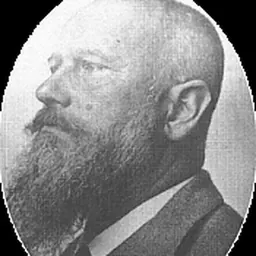
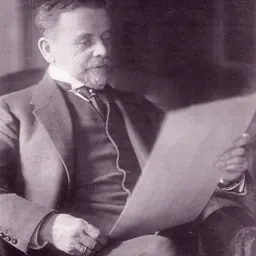
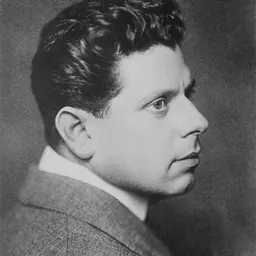
Related people
Same field, nearest in time
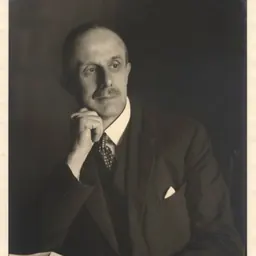

Contemporaries
People whose lives overlapped Arthur Kampf's


Frequently asked questions
Who was Arthur Kampf?
German history painter (1864-1950)
When was Arthur Kampf born?
Arthur Kampf was born on 26 September 1864 in Aachen.
When did Arthur Kampf die?
Arthur Kampf died on 8 February 1950 in Castrop-Rauxel.
What was Arthur Kampf's occupation?
Arthur Kampf was a painter, university teacher, teacher, draftsperson and visual artist.
What nationality was Arthur Kampf?
Arthur Kampf was German.
Sources & further reading
Cite this page
APA: Biography.guide. (2026). Arthur Kampf. https://biography.guide/arthur-kampf/
MLA: "Arthur Kampf." Biography.guide, https://biography.guide/arthur-kampf/.
Chicago: "Arthur Kampf." Biography.guide. https://biography.guide/arthur-kampf/.
Data last updated: 2026-09-20 · Spot an error? Report a correction.
Portrait: Wikimedia Commons · author & licence
Page generated 2026-09-27 04:58 UTC