
About Arthur Bates Jennings
Lived 1849 – 1927 (aged 77–78). Arthur Bates Jennings was an American architect.
Burrage Library of Olivet College in Michigan, designed by Jennings and completed in 1890. The former Westminster Presbyterian Church in Bloomfield, New Jersey, completed in 1892. The All Saints Memorial Episcopal Church in Meriden, Connecticut, completed in 1893. The Old Gym of Washington & Jefferson College in Pennsylvania, completed in 1893. The Second Congregational Church in Winsted, Connecticut, completed in 1899. The former Salem Baptist Church in New Rochelle, New York, completed in 1904 and burned in 2011. Arthur Bates Jennings FAIA (April 30, 1849 – March 30, 1927) was an American architect in practice in New York City from to 1919.
Life and career Arthur Bates Jennings was born April 30, 1849, in North Brookfield, Massachusetts, to Joel Albert Jennings, a lawyer, and Susan Frances (Bates) Jennings. He earned an A.B. from the College of the City of New York in 1870 and received architectural training in the offices of John Correja, George B. Post and Russell Sturgis. He opened his own office , and initially worked on suburban developments in New Jersey for Stewart Hartshorn and others. He later became well-known as an architect of public buildings, including churches and college buildings.
Jennings's buildings followed popular styles, and frequently utilized multiple towers and bold ornament. They were constructed across the United States, from Portland, Maine, to Seattle, and at least as far south as Hot Springs, Arkansas. He retired from practice in 1919.
Personal life Jennings was married in 1881 Caroline Jerusha Allen of Meriden, Connecticut, and had three children: Edward Allen, Arthur Bates Jr. and Helen Bates. He died March 30, 1927, in New York City at the age of 79.
Legacy At least five buildings designed by Jennings have been listed on the United States National Register of Historic Places, though one has been substantially demolished.
Works In New York City James V. S. Woolley houses, 115-121 E 91st St, Manhattan (1876–77) Lucien C. Warner house, 2042 5th Ave, Manhattan (1883, demolished) Charles L. Guillaume houses, 133-145 W 87th St, Manhattan (1884) Stephen F. Sherman house, 410 Riverside Dr, Manhattan (1884, demolished 1906) - Better known as the residence of George Noakes. Joseph J. Kittell house, 495 Riverside Dr, Manhattan (1885, demolished) David S. Brown houses, 170-176 W 72nd St, Manhattan (1886) - Built by Brown and various family members. No. 174, the only survivor, was occupied by Albert S. Roe. No. 172 was occupied by Jacob A. Chamberlain. E. August Neresheimer house, 176 Malcolm X Blvd, Manhattan (1886, demolished 1901) Christian Blinn house, 3 W 81st St, Manhattan (1888, demolished) George Daiker houses, 718-730 St Nicholas Ave, Manhattan (1889–90) J. C. Desuris house, 607 W 113th St, Manhattan (1889, demolished 1910) Webb Institute, Fordham Hill Oval, the Bronx (1890–93, demolished) George E. Clay house, 21-49 45th Rd, Queens (1891) Bay Ridge Reformed Church, 8101 Ridge Blvd, Brooklyn (1896–97)
In the New York metropolitan area John P. Allen house, 66 New England Ave, Summit, New Jersey (1881, demolished) Joseph T. Low house, 76 Rumson Rd, Rumson, New Jersey (1885, demolished) First Congregational Church, 95 N Main St, Winsted, Connecticut (1900–01) Norumbega Castle, 63 High St, Camden, Maine (1886–87, NRHP 1974) Norumbega Carriage House, High St, Camden, Maine (1886, NRHP 1982) Denny Hotel, 3rd Ave and Virginia St, Seattle (1888–93, demolished 1906) - Construction resumed and completed in 1903 as the Washington Hotel. Demolished when Denny Hill was leveled. Burrage Library, Olivet College, Olivet, Michigan (1889–90) First Baptist Church, 212 S Lincoln St, Spokane, Washington (1890, demolished) Old Gym, Washington & Jefferson College, Washington, Pennsylvania (1892–93) St. Timothy's Protestant Episcopal Church, 226 SE 3rd St, Massillon, Ohio (1892, NRHP 1979) Cranston Street Baptist Church, 475 Cranston St, Providence, Rhode Island (1893) First Baptist Church, 202 Milton Ave, Ballston Spa, New York (1896) First Baptist Church, 229 N King St, Hampton, Virginia (1909, burned 1914) First Baptist Church, Westover and Moran Aves, Norfolk, Virginia (1909–10, burned) Rice Memorial Hall, Oberlin College, Oberlin, Ohio (1909–10, altered) First M. E. Church, 17 E 6th St, Dunkirk, New York (1916)
Don’t just read it —
keep it.
Full-length biographies made to live with: read them, listen on the way to work, watch them tonight.
- E-book
- Audio
- Video
Instant download · yours to keep · every purchase keeps this site free
Important facts
People in Arthur Bates Jennings's life
Named in this biography and alive at the same time


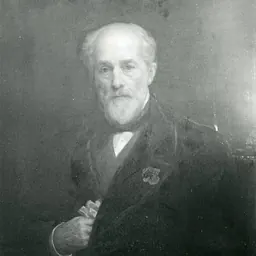


Related people
Same field, nearest in time


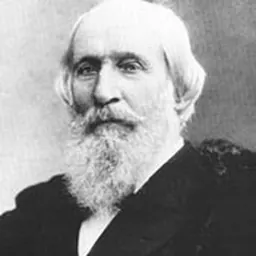
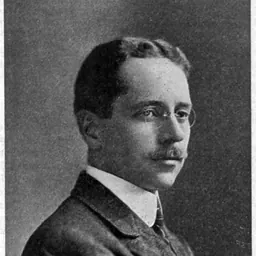
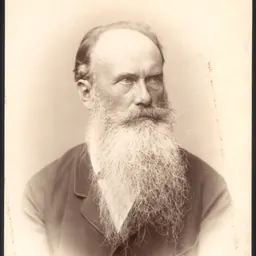
Contemporaries
People whose lives overlapped Arthur Bates Jennings's



Frequently asked questions
Who was Arthur Bates Jennings?
American architect
When was Arthur Bates Jennings born?
Arthur Bates Jennings was born in 1849.
When did Arthur Bates Jennings die?
Arthur Bates Jennings died on 30 March 1927 in New York.
What was Arthur Bates Jennings's occupation?
Arthur Bates Jennings was an architect.
What nationality was Arthur Bates Jennings?
Arthur Bates Jennings was American.
Sources & further reading
· Wikipedia: Arthur Bates Jennings
· DBpedia: Arthur Bates Jennings
Cite this page
APA: Biography.guide. (2026). Arthur Bates Jennings. https://biography.guide/arthur-bates-jennings/
MLA: "Arthur Bates Jennings." Biography.guide, https://biography.guide/arthur-bates-jennings/.
Chicago: "Arthur Bates Jennings." Biography.guide. https://biography.guide/arthur-bates-jennings/.
Data last updated: 2026-09-20 · Spot an error? Report a correction.
Page generated 2026-09-27 05:27 UTC