
About Arthur Allan Thomas
Born 1938. Arthur Allan Thomas is a New Zealand farmer.
Arthur Allan Thomas (born 2 January 1938) is a New Zealand man who was twice wrongfully convicted of the murders of Harvey and Jeannette Crewe in June 1971.
Early life Thomas was one of nine children born to Allan and Ivy Thomas. He was raised on his parents' 272-acre farm in the small affluent community of Pukekawa, on New Zealand's North Island. At age 14, Allan Thomas pulled his son from school to work on their farm; Arthur would spend the next five years as an unpaid labourer on his father's farm. In 1957, when he turned 19, Arthur began working as a Ferry Captain on the Mercer Ferry. Thomas later stated that, while in school, he had a "crush" on Jeannette Demler and asked her out on several occasions. He received no encouragement and eventually gave up. When Demler was travelling in the UK, Thomas sent her letters and gifts. He was politely rebuffed.
Arthur moved to a new job, working for a crop-dusting company. This involved travel in the area and, after Demler returned to New Zealand and was teaching in the Manawatū District, the two would occasionally run into each other. Their interactions were casual and friendly. Two months later, Jeannette's body was found in the Waikato River; a month later, Harvey Crewe's body was found downstream. Both had died by being shot in the head with a .22 calibre rifle.
Initially, the police suspected Jeannette's father, Len Demler, who had no alibi, and who behaved strangely from the outset. Following the search for the weapon, and after being told that Arthur Thomas had "pestered" Jeannette, the investigation's focus shifted to Thomas.
Evidence against Thomas Arthur Thomas owned a .22 calibre rifle. While there was no definitive proof that his gun was used in the murders, a detective said: "Arthur, it was your rifle that was used to kill the Crewes. What do you say to that?" Arthur replied, "If you say it was my gun, it must have been, but I didn't do it."
When Harvey Crewe's body was dumped in the river, the front axle from a vehicle was used to weigh down the body. Police traced the part to a custom-built trailer sold in 1959 to Athur's father Allan Thomas. On October 11th, police found wire at the Thomas farm which matched the wire used to attach the axle to Harvey's body. On October 15th, Detective Len Johnston searched the garbage dumps on the Thomas farm for the rear axles to match the front axle found with Harvey Crewe's body. Arthur Thomas helped in the search. The trailer was not on the property, and no axles were found. On October 20th, Johnston returned to search again. This time, he found both rear axles.
On October 25th, Detective Inspector Hutton called Arthur Thomas into the police station to make a statement. Thomas re-stated the particulars of his alibi, which were that, on the night of the murders, he was at his farm with his wife and cousin, and that the three were dealing with a sick cow. He eventually had to shoot the cow, and used his .22 calibre rifle. He stated that he did not know what had happened to his father's old trailer, and he did not know how the axles and wire came to be found on his farm. In his statement, Thomas indicates that he was told that a pair of overalls which he kept in his car had blood on them, however this 'discovery' was never mentioned again.
With Arthur in prison, Vivian Thomas campaigned for a new trial, and his legal team petitioned the Court of Appeal, which declined to order a new trial. While referencing the shell casing found in the Crewe's garden, the court said that the defence would have to prove that the bullets that killed the Crewes did not come from Arthur's gun.
Arthur went back to Pare. Five weeks later, the Court of Appeal rejected his case again.
It was also discovered that Bob Rock, the jury foreman at Thomas's second trial, was an old friend of Detective Sergeant Hughes, who gave evidence at the trial and who was the officer who first interviewed Thomas and took the statement about his alibi.
There was also the allegation that both the bullet casing and the rear axles were planted in order to frame Arthur. This suspicion deepened when it was discovered that, in July of 1973, Hutton ordered the disposal of 135 exhibits of evidence pertaining to the case.
A Royal Commission of Inquiry was ordered to review the wrongful conviction of Thomas. The hearings, headed by retired New South Wales Justice Robert Taylor, were contentious, marked by angry exchanges between the judge and police lawyers and witnesses. Chris Birt, author of All the Commissioner's Men reported that police leaked evidence from the commission's closed sessions to the media and sought an injunction in the High Court of New Zealand to try to halt the commission's proceedings.
The commission delivered its report to the Governor-General in November 1980. It "rejected entirely the notion that any of the evidence put forward... established a motive by Arthur Allan Thomas to kill the Crewes". The fact that the jury foreman and one of the detectives were friends was, on its own, sufficient to justify describing the second trial a miscarriage of justice. The commission found that the spent cartridge case from Thomas's gun, Exhibit 350, had not been left by the murderer, but had been created by police using his impounded gun and ammunition, then planted at the Crewe farmhouse. The Commission's report implicated Detective Inspector Bruce Hutton and Detective Sergeant Lenrick Johnston in police misconduct, and found that the prosecution of Thomas for the murders had been unjustified.
Despite the commission's description of Hutton and Johnston's conduct as an "unspeakable outrage", Solicitor-General Paul Neazor recommended against prosecuting them, as a number of police officers disputed the claims that the cartridge had been planted, and it would be too difficult to prove the case against the detectives. Johnston died in 1978. Hutton died in 2013. To the end of his life, Hutton denied planting evidence and insisted that he had arrested the right person. At his funeral, Deputy Commissioner Mike Bush delivered Hutton's eulogy and stated that "his integrity is beyond reproach."
Police review In 2010, Rochelle Crewe asked police to reopen the investigation in a bid to find out who killed her parents. This was refused but a review was later determined to be necessary. In 2013, in the process of their review, the police interviewed Arthur Thomas, two of his brothers, his sister and her husband. In the course of these interviews, the police told Thomas' sister, Margaret Stuckey, that "The Thomas rifle had not been eliminated from the inquiry, that the Crewes were murdered by Arthur Thomas' gun." Mr Stuckey said: "They said to us more than once that the bulk of the evidence still pointed towards Arthur."
In 2014, the 328-page review was released. It stated that evidence available in the murder of the Crewes was insufficient for any new prosecution. The review acknowledged that a key prosecution exhibit in the trials had been fabricated by detectives, but stated that there was no mystery woman on the property and that the baby had not been fed after the murders. The review ruled out Len Demler as having been the killer. While commenting on the review, Arthur Thomas's brother Des stated that he knew the identity of the killer. The police review cleared all other suspects and implied that Arthur Thomas remained a suspect.
Subsequent events In 2009 Arthur Allan Thomas travelled to Christchurch to support David Bain, who also had criminal convictions against him overturned. In 2010 he collaborated with investigative journalist Ian Wishart on the book Arthur Allan Thomas. Wishhart suggested that Sergeant Johnston may have been responsible for the murders.
In 2012, Keith Hunter published The Case of the Missing Bloodstain in which he pointed the finger at Jeannette Crewe's father, Lenard Demler - who the police initially suspected - for the murders. Demler's wife died four months before the murders which occurred on 17 June 1970. This was one day after Jeannette Crewe signed the document which made her trustee for her mother's will. According to Chris Birt, this meant half of Demler's farm and $12,000 of shares he had paid for were now controlled by Jeanette Crewe. Demler died in 1992 and so the police were unable to interview him again when they conducted their review in 2014.
In late 2019 Thomas, then aged 81, faced one charge of rape and four of indecent assault against two women. The alleged offending occurred many years earlier. Thomas pleaded not guilty and elected trial by jury. The Defence claimed the charges were fabricated and motivated by money. The jury failed to reach a verdict and was discharged on 28 June 2021.
On 14 October 2021 Crown Prosecutor Charlie Piho told the Manukau District Court the Crown wished to continue with the prosecution. However, in September 2022, an indefinite stay of prosecution was granted in response to Thomas now being considered unfit to stand trial due to deteriorating mental health. In effect, this ended the prosecution.
Reputational damage to the justice system In 2012, Keith Hunter said the royal commission finding that the police force framed Arthur Allan Thomas introduced a deep disillusionment, and undermined confidence in police. He said that suspicion of the justice system now existed in the cases of Peter Ellis, Scott Watson, Mark Lundy, John Barlow, Rex Haig, David Tamihere and others.
In 2015 an honours degree thesis analysed the role of the police, the judges and the jury in the Thomas case and determined that "the conduct of actors within the courts inhibited the fair administration justice and as a result, exposed themselves to profound derision." The author noted that: the police and the prosecution employed unfair tactics, attempted to fabricate evidence about exhibit 350 and were solely interested in the preservation of their reputations which had been undermined by the extensive litigation; that the judiciary was devoted to defending and maintaining the guilty verdict which "rendered the appeals process virtually useless." and that evidence showed the jury was also affected by the undeclared relationship between the jury foreman and a Crown witness, and the development of favourable crown-jury relations during the second trial. As a result, the jury was far from impartial.
The thesis concluded that the Arthur Allan Thomas case saw public trust in New Zealand's criminal justice system diminish dramatically and that, had it not been for the intervention of Robert Muldoon, Thomas would not have been freed.
Books The Crewe Murders by Evan Swain, Wilson and Horton 1971 Bitter Hill: Arthur Thomas, The Case for a Retrial by Terry Bell, Auckland Avant-Garde Publishing 1972 The Fate of Arthur Thomas: Trial By Ambush by Pat Booth, South Pacific Press 1975 Quash the Verdicts – The Thomas Affair by Earl Bailey, Hawkes Bay Arthur Thomas Committee 1976 ABC of Injustice: The Thomas Case by Jim Sprott with Pat Booth, Arthur Thomas Retrial Committee 1976 Beyond Reasonable Doubt? by David Yallop, Hodder & Stoughton 1979 The Final Chapter: If Arthur Allan Thomas Didn't Kill Jeanette and Harvey Crewe – Who Did? by Chris Birt, Penguin Books 2001 Arthur Allan Thomas: The Inside Story: Crewe Murders: New Evidence by Ian Wishart and Arthur Allan Thomas, Howling at the Moon Publishing 2010 The Case of the Missing Bloodstain by Keith Hunter, Hunter Productions 2011 All The Commissioner's Men by Chris Birt, Stentorian Publishing 2012 The Crewe Murders: Inside New Zealand's Most Infamous Cold Case by Kirsty Johnston and James Hollings, Massey University Press 2023
Don’t just read it —
keep it.
Full-length biographies made to live with: read them, listen on the way to work, watch them tonight.
- E-book
- Audio
- Video
Instant download · yours to keep · every purchase keeps this site free
Important facts
People in Arthur Allan Thomas's life
Named in this biography and alive at the same time


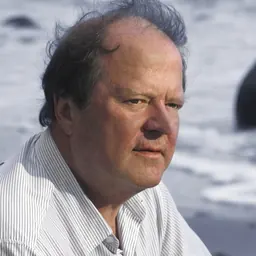


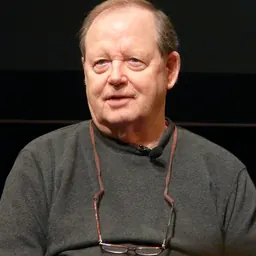

Related people
Same field, nearest in time
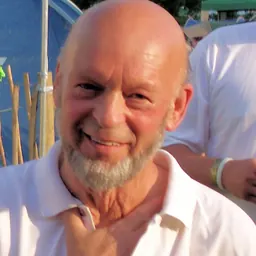

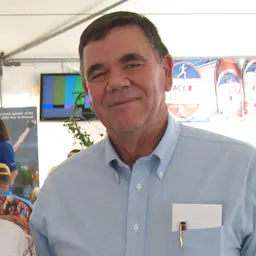

Contemporaries
People whose lives overlapped Arthur Allan Thomas's



Frequently asked questions
Who is Arthur Allan Thomas?
New Zealand whose conviction for murder was overturned
When was Arthur Allan Thomas born?
Arthur Allan Thomas was born on 2 January 1938.
What is Arthur Allan Thomas's occupation?
Arthur Allan Thomas is a farmer.
What nationality is Arthur Allan Thomas?
Arthur Allan Thomas is New Zealand.
Sources & further reading
· Wikipedia: Arthur Allan Thomas
· DBpedia: Arthur Allan Thomas
Cite this page
APA: Biography.guide. (2026). Arthur Allan Thomas. https://biography.guide/arthur-allan-thomas/
MLA: "Arthur Allan Thomas." Biography.guide, https://biography.guide/arthur-allan-thomas/.
Chicago: "Arthur Allan Thomas." Biography.guide. https://biography.guide/arthur-allan-thomas/.
Data last updated: 2026-09-20 · Spot an error? Report a correction.
Page generated 2026-09-27 05:16 UTC