
About Arnold Freeman
Lived 1886 – 1972 (aged 85). Arnold Freeman was a British actor, writer and philosopher.
Arnold James Freeman (24 March 1886 – 8 March 1972) was a British writer, philosopher, anthroposophist, adult educator, actor, director, Fabian Socialist, Labour Party candidate and co-founder of the anthroposophical magazine, The Golden Blade. He was the founder and first Warden of the Sheffield Educational Settlement.
Early years Freeman came from a middle-class, non-conformist background, the family involved in importing tobacco and manufacturing cigars. At various times they lived in different houses within the Hoxton area of London. He is the brother of Sir Ralph Freeman consulting engineer for the Sydney Harbour Bridge and of Labour M.P. Peter Freeman. He and his brothers all attended Haberdashers' Aske's School. On completing school in 1905, Arnold went on to study at St John's College, Oxford where, being a committed Socialist, he joined the Fabian Society. He was a vegetarian and engaged in social work from an early age, having been a member of the Highbury Quadrant Congregationalist church.
He and his sister Daisy spent a year at the Quaker Settlement in Woodbrooke, Birmingham and thereafter he began to do extramural work in tutorial classes for the Universities of Sheffield, London and Oxford. He also began lecturing at the same time he started to teach History and Economic History for the Workers' Educational Association, gradually expanding this into a concern with human nature and human idealism as expressed through Literature, Art and Philosophy. Particularly his work in Sheffield brought him into the mining areas of South Yorkshire.
The Sheffield Settlement
In 1918 he became founding Warden of the Sheffield Educational Settlement in Shipton Street, Upperthorpe, Sheffield at first under the YMCA and later under a Council that included notable local figures. It was part of the university Settlement movement, which "sought to bring education, improvement and hope to the lives of the poor and socially disadvantaged in the decades before the development of the Welfare State following the Second World War. The early decades of the Sheffield Settlement coincided with the serious hardship of the post-First World War era, typified by the Depression and mass unemployment."
These convictions caused some conflict amongst some members of the Settlement's Council but it was Freeman's main aim to achieve spiritual values through education. He had come to Sheffield as a university tutor, and members of the university's staff played a major role in the work of the Settlement, though it had no formal association with the university. There were a lot of activities besides: courses of handicrafts, rambles, camping expeditions and involving the membership in the performance of plays. "The Settlement's Little Theatre put on a great variety of productions by the best serious dramatists, with some of whom Freeman corresponded. He never compromised over the quality of the work selected for presentation. Several notable local people, including industrialists, supported the work with donations, and a number of people later active in the public life of the city were associated with the Settlement."
In 1923 Freeman stood as a Labour Parliamentary candidate in the Hallam constituency.
When Freeman retired in 1955 at the age of 69 the Wardenship went to Christopher Boulton, an anthroposophist and lover of theatre. In 1961 the Shipton Street Settlement, along with its Little Theatre, vanished. In its place Christopher Boulton founded a Rudolf Steiner Settlement where the Merlin Theatre and the Arnold Freeman Hall still flourish. The Sheffield Repertory Company also started with the plays its members presented at the Little Theatre before they became independent in 1923.
Arnold Freeman died in 1972.
Books
As Arnold Freeman
Who was Rudolf Steiner?: What is anthroposophy? Arnold Freeman A. Freeman (1944) ASIN B0007K7TDY RUDOLF STEINER'S MESSAGE TO MANKIND Published by Sussex: New Knowledge Books, 1963 St. Paul : a play by Arnold Freeman and Rom Landau. Bodley Head, 1938 Meditation: Under the Guidance of Rudolf Steiner Sheffield educational settlement, 1957 What Rudolf Steiner Says Concerning Initiation And Meditation Kessinger Pub Co (30 September 2004) Seasonal Trades by Sidney Webb and Arnold Freeman BiblioBazaar (18 November 2009)
As Arnold James Freeman
The spiritual foundations of reconstruction; a plea for new educational methods by Arnold James Freeman and F H. Hayward. Ulan Press (31 August 2012) ASIN B00B77PUBO An introduction to the study of social problems University of California Libraries (1 January 1918) ASIN B006YZTJYS Great Britain After The War (1916) by Sidney Webb and Arnold James Freeman. Kessinger Publishing, LLC (20 March 2009)
Don’t just read it —
keep it.
Full-length biographies made to live with: read them, listen on the way to work, watch them tonight.
- E-book
- Audio
- Video
Instant download · yours to keep · every purchase keeps this site free
Important facts
People in Arnold Freeman's life
Named in this biography and alive at the same time


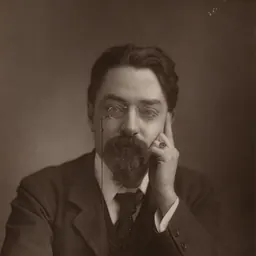

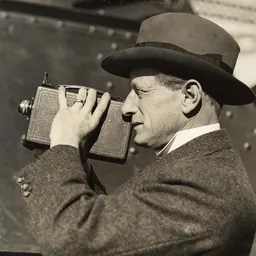
Related people
Same field, nearest in time
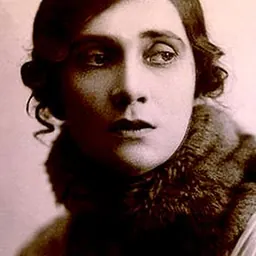

Contemporaries
People whose lives overlapped Arnold Freeman's





Frequently asked questions
Who was Arnold Freeman?
English educator, anthroposophist (1886-1972)
When was Arnold Freeman born?
Arnold Freeman was born on 24 March 1886 in London Borough of Hackney.
When did Arnold Freeman die?
Arnold Freeman died on 8 March 1972.
What was Arnold Freeman's occupation?
Arnold Freeman was an actor, writer and philosopher.
What nationality was Arnold Freeman?
Arnold Freeman was British.
Sources & further reading
Cite this page
APA: Biography.guide. (2026). Arnold Freeman. https://biography.guide/arnold-freeman/
MLA: "Arnold Freeman." Biography.guide, https://biography.guide/arnold-freeman/.
Chicago: "Arnold Freeman." Biography.guide. https://biography.guide/arnold-freeman/.
Data last updated: 2026-09-20 · Spot an error? Report a correction.
Page generated 2026-09-27 05:25 UTC