
About Arnaldo Cortesi
Lived 1897 – 1966 (aged 69). Arnaldo Cortesi was an Italian journalist.
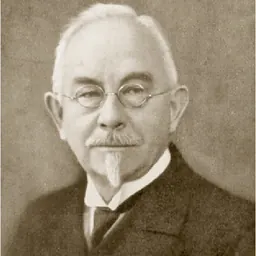
Arnaldo Cortesi (21 September 1897 – 26 November 1966) was an American journalist and foreign correspondent for The New York Times. He won the 1946 Pulitzer Prize for Correspondence for his reporting from Buenos Aires during 1945, which the Pulitzer Board cited as distinguished foreign correspondence.
Early life and education Arnaldo Cortesi was born in Rome in 1897. He was educated in England and attended Sherborne School. He later studied engineering at the University of Birmingham and, after graduating, worked briefly for the British Westinghouse Electrical and Manufacturing Company at Trafford Park in Manchester.
Career Entry into journalism Cortesi subsequently entered journalism and joined The New York Times, beginning a career that would span more than four decades. He served as a foreign correspondent in several countries, primarily in Europe and Latin America.
Rome and Fascist Italy During the 1920s and 1930s, Cortesi was based in Rome as a correspondent for The New York Times. His reporting covered Italian political life during the rise and consolidation of Benito Mussolini’s Fascist regime. Contemporary accounts describe the working conditions of American correspondents in Fascist Italy as constrained by state censorship, requiring caution in reporting sensitive political developments.
In the late 1930s, following Italian government restrictions on the employment of Italian nationals by foreign newspapers, Cortesi left Rome and was reassigned to other foreign postings.
Buenos Aires and Pulitzer Prize During the Second World War, Cortesi was posted to Buenos Aires, where he reported on Argentine politics and foreign relations in 1945, a period marked by the rise of Juan Perón. His reporting from Argentina formed the basis of his receipt of the Pulitzer Prize the following year.
In 1946, Cortesi was awarded the Pulitzer Prize for Correspondence for distinguished foreign reporting, with the Pulitzer Board citing his Buenos Aires dispatches as exemplars of high-quality international journalism.
Post-war Italy and later career After the war, Cortesi returned to Italy and served as The New York Times Rome bureau chief during the post-war reconstruction period. His reporting covered the fall of Fascism, the Allied occupation, and the early political development of the Italian Republic.
According to his obituary in The New York Times, Cortesi’s foreign assignments over the course of his career also included postings in Geneva and Mexico City. He retired from active reporting in 1963.
Pulitzer Prize Cortesi received the Pulitzer Prize for Correspondence in 1946 for his foreign reporting during 1945. The award recognised his coverage of political developments in Argentina during a critical period in the country’s modern history.
Death Arnaldo Cortesi died on 26 November 1966 at the age of 69.
Don’t just read it —
keep it.
Full-length biographies made to live with: read them, listen on the way to work, watch them tonight.
- E-book
- Audio
- Video
Instant download · yours to keep · every purchase keeps this site free
Important facts
People in Arnaldo Cortesi's life
Named in this biography and alive at the same time


Related people
Same field, nearest in time



Contemporaries
People whose lives overlapped Arnaldo Cortesi's


Frequently asked questions
Who was Arnaldo Cortesi?
American journalist and foreign correspondent
When was Arnaldo Cortesi born?
Arnaldo Cortesi was born on 21 September 1897 in Rome.
When did Arnaldo Cortesi die?
Arnaldo Cortesi died on 26 November 1966 in Milan.
What was Arnaldo Cortesi's occupation?
Arnaldo Cortesi was a journalist.
What nationality was Arnaldo Cortesi?
Arnaldo Cortesi was Italian.
Sources & further reading
Cite this page
APA: Biography.guide. (2026). Arnaldo Cortesi. https://biography.guide/arnaldo-cortesi/
MLA: "Arnaldo Cortesi." Biography.guide, https://biography.guide/arnaldo-cortesi/.
Chicago: "Arnaldo Cortesi." Biography.guide. https://biography.guide/arnaldo-cortesi/.
Data last updated: 2026-09-20 · Spot an error? Report a correction.
Page generated 2026-09-27 05:01 UTC