
About Armande de Polignac
Lived 1876 – 1962 (aged 86). Armande de Polignac was a French composer, violist and woman conductor.
Armande de Polignac, comtesse de Chabannes-La Palice (Marie Armande Mathilde; 8 January 1876 – 29 April 1962) was a French composer, the niece of Prince Edmond de Polignac and Princess Winnaretta de Polignac, the patron of Ravel, Stravinsky and Milhaud. She studied privately with Eugène Gigout and Gabriel Fauré, as well as with Vincent d'Indy at the Schola Cantorum.
De Polignac married the Comte de Chabanne la Palice.
Biography Born in 1876, Armande de Polignac was the only daughter from the first marriage of Camille de Polignac and Marie Adolphine Langenberger; Marie Adolphine died within a week of giving birth. From a very young age, Armande de Polignac was passionate about foreign languages, speaking a dozen of them, and cultivated a lifelong attraction to and strong taste for musical creation.
She began her harmony studies in London.
She supported Edgar Varèse, whom she had met at the Schola Cantorum, by raising funds in 1915 so that he could travel to the United States.
From its founding in 1905, Armande de Polignac became a contributor to the Mercure musical, a journal founded by Louis Laloy. From its inception, Claude Debussy, Romain Rolland, Jean Marnold, and Willy also contributed to the journal, and she published several articles as a critic under the title "Pensées d'Ailleurs" (Thoughts from Elsewhere).
In 1920, she composed her cycle of eight songs on Chinese poems translated by Franz Toussaint, La Flûte de Jade (The Jade Flute), and a short collection, L'Amour fardé (Make-Up Love). She set a text by Lucie Delarue-Mardrus to music and published songs based on poems by Melchior Polignac, Edouard Guyot, Louis Longepierre, Robert d'Humières, Georges de Dubor, and others. With Willy, she wrote songs such as Café Maure (Moorish Café), Chemin de Mihaïl (Mihail's Path), Le Dernier Menuet du Roy (The King's Last Minuet), Nuit à Capri (Night in Capri), Poème (Poem), Pastel (Pastel), and Soir de Jardin (Garden Evening). She also composed several settings of poems by Françoise d'Antoine: Le Vieux clavecin, Printemps morts, Mélancolie, and Berceuse.
Her piano music is equally significant: Danses Brèves, which she orchestrated and conducted in concert; Six Préludes; Toccata, dedicated to Ricardo Viñes; Berceuse; Échappée; Pluie; Carillon; Dans le steppe; and Bazar d'orient, a nocturne for harp (1912); and the Petite Suite pour clavecin (1939), dedicated to Marcelle de Lacour. She also composed three string quartets, two sonatas for violin and piano, a piano quintet dedicated to Louis Laloy (February 19, 1918), two pieces for wind quintet, and various pieces for flute and piano, violin and piano, or cello and piano. She presented works six times at the Société musicale indépendante between 1911 and 1922. Maurice Ravel showed some interest in her music.
Dramas and operas La Petite Sirène, Opera in three acts (libretto: Henry Gauthier-Villars) (1908) Les Roses du calife, lyric drama in 1 act, Georges de Dubor (1909) Judith de Béthulée, scène dramatique (1916)
Ballets Urashima (1900) La Source Lointaine
Don’t just read it —
keep it.
Full-length biographies made to live with: read them, listen on the way to work, watch them tonight.
- E-book
- Audio
- Video
Instant download · yours to keep · every purchase keeps this site free
Important facts
People in Armande de Polignac's life
Named in this biography and alive at the same time

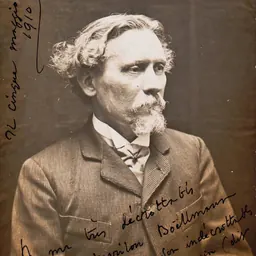


Related people
Same field, nearest in time
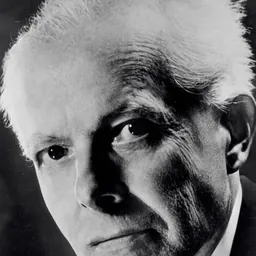



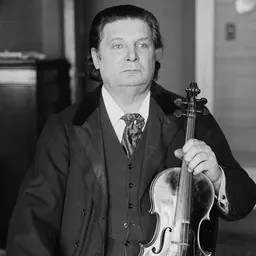

Contemporaries
People whose lives overlapped Armande de Polignac's
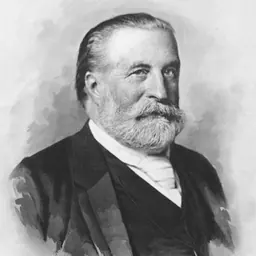
Frequently asked questions
Who was Armande de Polignac?
composer (1876-1962)
When was Armande de Polignac born?
Armande de Polignac was born on 8 January 1876 in 16th arrondissement of Paris.
When did Armande de Polignac die?
Armande de Polignac died on 29 April 1962 in Neauphle-le-Vieux.
What was Armande de Polignac's occupation?
Armande de Polignac was a composer, violist and woman conductor.
What nationality was Armande de Polignac?
Armande de Polignac was French.
Sources & further reading
· Wikipedia: Armande de Polignac
· DBpedia: Armande de Polignac
Cite this page
APA: Biography.guide. (2026). Armande de Polignac. https://biography.guide/armande-de-polignac/
MLA: "Armande de Polignac." Biography.guide, https://biography.guide/armande-de-polignac/.
Chicago: "Armande de Polignac." Biography.guide. https://biography.guide/armande-de-polignac/.
Data last updated: 2026-09-26 · Spot an error? Report a correction.
Page generated 2026-09-27 05:15 UTC