
About Ari Juels
Ari Juels was a computer scientist.
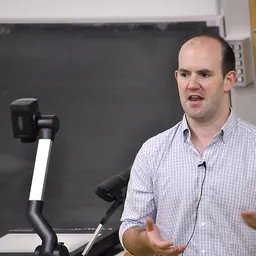
Ari Juels is an American Cryptographer. , he is currently the Weill Family Foundation and Joan and Sanford I. Weill Professor at Cornell Tech and the co-director at the Initiative for CryptoCurrencies and Contracts.
He is also the chief scientist at Chainlink Labs. He co-authored the first Chainlink white paper in 2017 with Sergey Nazarov and Steve Ellis. The smallest denomination of the LINK token, the Juel, is named in his honor.
Juels was an employee of RSA Security from 1996 until 2013, with the title Chief Scientist starting in 2007.
On January 20, 2022, he testified before the United States House Energy Subcommittee on Oversight and Investigations regarding the Environmental impact of the cryptocurrency industry. Client puzzles (1999): Developed proof-of-work-based countermeasures against denial-of-service attacks that are widely used today. Fuzzy cryptography (1999, 2006): Co-developed error-tolerant cryptographic primitives—fuzzy commitment schemes and fuzzy vaults—for securing noisy data such as biometric templates. Privacy-preserving targeted advertising (2001): Proposed the first protocols for targeted advertising that preserve user privacy. Coercion-resistant voting (2005): Introduced the concept of coercion-resistance, which has become a standard security property for electronic voting systems designed to resist bribery and voter coercion. Social recovery (2006): Introduced social recovery mechanisms for credential restoration using trusted social connections, sometimes called "fourth-factor authentication." RFID and NFC security (2003–2009): Developed security technologies for RFID and NFC tags, including the "blocker tag" privacy-protection mechanism and soft blocking techniques, as well as an influential survey paper on RFID security and privacy. Proofs of retrievability (PoRs) (2007): Introduced the first efficient cryptographic technique for verifying the complete availability and integrity of remotely stored files in cloud storage systems. Blockchain oracles (2016, 2020): Developed Town Crier, the first blockchain oracle system using trusted execution environments, and DECO, a cryptographic oracle protocol. Both privacy-preserving systems have been deployed by Chainlink. Model-extraction attacks (2016): Introduced the concept of adversarial attacks that steal machine learning models through strategic queries. Maximal extractable value (2020): Coined the term "miner extractable value" (MEV, later generalized to "maximal extractable value") and initiated its systematic study, contributing to the foundation of what has become a significant market in blockchain systems.
Juels has published two thriller novels: Tetraktys (2009), a cryptography thriller, and The Oracle (2024), a cryptocurrency and blockchain thriller.
Don’t just read it —
keep it.
Full-length biographies made to live with: read them, listen on the way to work, watch them tonight.
- E-book
- Audio
- Video
Instant download · yours to keep · every purchase keeps this site free
Important facts
Related people
Same field, nearest in time




Frequently asked questions
Who was Ari Juels?
Ph.D. University of California, Berkeley 1996
What was Ari Juels's occupation?
Ari Juels was a computer scientist.
Sources & further reading
Cite this page
APA: Biography.guide. (2026). Ari Juels. https://biography.guide/ari-juels/
MLA: "Ari Juels." Biography.guide, https://biography.guide/ari-juels/.
Chicago: "Ari Juels." Biography.guide. https://biography.guide/ari-juels/.
Data last updated: 2026-09-20 · Spot an error? Report a correction.
Page generated 2026-09-27 05:31 UTC