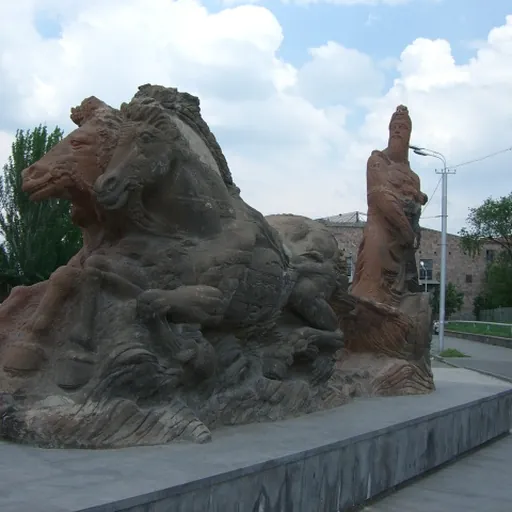
About Argishti I of Urartu
Lived 827 BC – 764 BC (aged 62–63). Argishti I of Urartu was a monarch.
Argišti I, was the sixth known king of Urartu, reigning from 786 BC to 764 BC. He founded the citadel of Erebuni in 782 BC, which is the present capital of Armenia, Yerevan. Alternate transliterations of the name include Argishtis, Argisti, Argišti, and Argishtish. Although the name is usually rendered as Argišti (read: Argishti), some scholars argue that Argisti is the most likely pronunciation. This is due to the belief that the Urartians used the cuneiform symbol š to voice an s-sound, as opposed to representing the digraph sh.
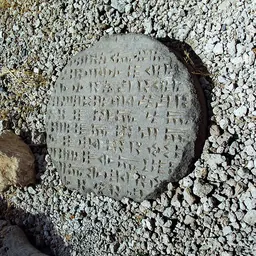
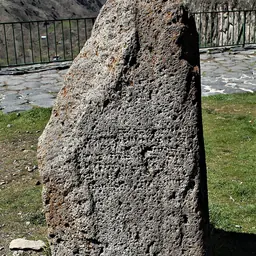
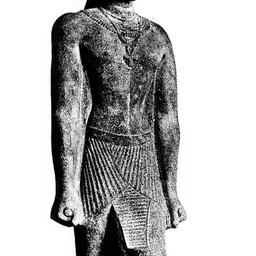
Stele with an inscription by Argišti I, known as the Arinçkus Argishti I Stele, Bitlis Ahlat Museum. A son and the successor of Menua, he continued the series of conquests initiated by his predecessors, apparently campaigning every year of his reign. He was involved in a number of inconclusive conflicts with the Assyrian king Shalmaneser IV. He conquered the northern part of Syria and made Urartu the most powerful state in post-Hittite Asia Minor. He also expanded his kingdom north to Lake Sevan, conquering much of Diauehi and the Ararat Valley. After an uprising by the inhabitants of the newly conquered regions, Argišti deported them and repopulated the area with subjects from other parts of his empire. In those territories, Argišti built Erebuni Fortress in 782 BC, settling it with 6,600 prisoners of war from Hatti and Supani. He also founded the fortress of Argištiḫinili in 776 BC, on the site of Armavir, the first capital of the later Kingdom of Armenia. Inscriptions belonging to the Urartian king Argišti I were found in Kepenek Castle, located on a hill near Muş.
He was succeeded by his son Sarduri II.
Philologist Armen Petrosyan proposes an Indo-European etymology for the name Argišti, deriving it from the Proto-Indo-European root 'white bright', 'swift, fast', from which also Greek 'white, bright' and 'quick'; this etymology was suggested by Robert Eisler. Petrosyan also considers possible a connection with Greek 'best'.
Don’t just read it —
keep it.
Full-length biographies made to live with: read them, listen on the way to work, watch them tonight.
- E-book
- Audio
- Video
Instant download · yours to keep · every purchase keeps this site free
Important facts
People in Argishti I of Urartu's life
Named in this biography and alive at the same time
Related people
Same field, nearest in time

Contemporaries
People whose lives overlapped Argishti I of Urartu's
Frequently asked questions
Who was Argishti I of Urartu?
King of Urartu
When was Argishti I of Urartu born?
Argishti I of Urartu was born in 827 BC.
When did Argishti I of Urartu die?
Argishti I of Urartu died in 764 BC.
What was Argishti I of Urartu's occupation?
Argishti I of Urartu was a monarch.
What nationality was Argishti I of Urartu?
Argishti I of Urartu's recorded nationality: Urartu.
Sources & further reading
· Wikipedia: Argishti I of Urartu
Cite this page
APA: Biography.guide. (2026). Argishti I of Urartu. https://biography.guide/argishti-i-of-urartu/
MLA: "Argishti I of Urartu." Biography.guide, https://biography.guide/argishti-i-of-urartu/.
Chicago: "Argishti I of Urartu." Biography.guide. https://biography.guide/argishti-i-of-urartu/.
Data last updated: 2026-10-02 · Spot an error? Report a correction.
Portrait: Wikimedia Commons · author & licence
Page generated 2026-10-04 11:29 UTC